Quality Products

At a Fair Price

Wholesale Provider

Of Valves & Fittings

  • Corporate Office: 1301 Greengrass Drive Houston, TX 77008
  • 1-800-237-2512

Quality Products

At a Fair Price

Wholesale Provider

Of Valves & Fittings

2026 Best Flange Gasket Types for Global Buyers

Choosing the right flange gasket can determine whether a global piping project runs reliably or develops costly leakage. Buyers must evaluate pressure, temperature, fluid compatibility, flange design, installation quality, and service conditions. A gasket that performs well on a steam line may fail quickly in chemical processing. The difference can be seen in the details.

John B. Wills, a recognized gasket technology specialist, stated, “A gasket is a sealing element, not a structural member.” This practical reminder remains important in 2026. A flange gasket cannot compensate for warped flanges, damaged sealing faces, incorrect bolt loads, or poor alignment. Material selection matters. PTFE suits many corrosive services, while graphite handles high temperatures and spiral-wound designs support demanding industrial connections. Elastomeric gaskets may perform well with water, air, and moderate chemical exposure. Yet every application requires verification.

This guide examines the best flange gasket types for global buyers. It compares construction, materials, operating limits, installation demands, and common failure risks. It also considers practical purchasing issues, including documentation, dimensional accuracy, traceability, and supplier consistency. Small details matter. A few millimeters of mismatch can create a serious sealing problem. Certification alone is not enough. Buyers should review test data, material grades, pressure ratings, and surface-finish requirements before ordering.

The final choice is rarely obvious. Service conditions change. Installation practices vary. Even experienced teams can overlook bolt relaxation or thermal cycling. Careful selection, realistic specifications, and honest technical review provide the strongest starting point for safer, longer-lasting flange connections.

2026 Best Flange Gasket Types for Global Buyers

Flange Gasket Basics and Their Role in Piping Systems

A flange gasket is a sealing element placed between two joined pipe flanges. It prevents liquid, gas, or steam from escaping through microscopic surface gaps. When bolts apply pressure, the gasket compresses and adapts to uneven flange faces. Small surface defects matter. In piping systems, this seal protects workers, equipment, and nearby environments from uncontrolled leakage.

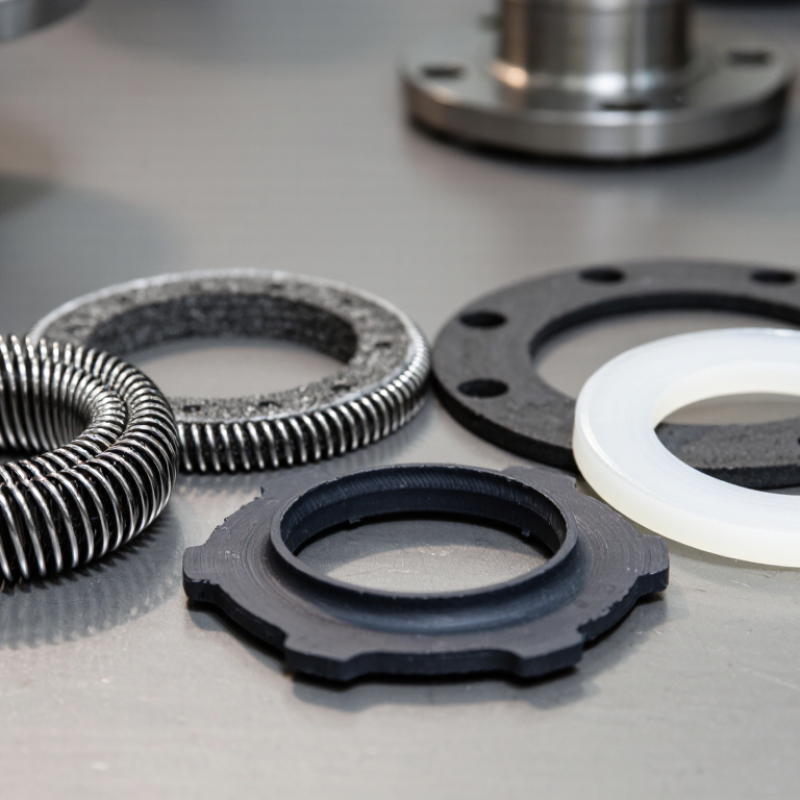
Common types include non-metallic sheet gaskets, spiral-wound gaskets, ring-type joint gaskets, and metal-jacketed designs. Each type responds differently to temperature, pressure, chemicals, and flange movement. Soft gaskets often suit moderate service conditions and flat faces. Spiral-wound gaskets can handle demanding thermal cycles when installation is controlled. Metal designs require accurate flange alignment and sufficient bolt load. A familiar type is not automatically the correct choice.

Selection should begin with the fluid, operating temperature, pressure, flange face, and bolt condition. Confirm dimensions against the applicable project specification and recognized piping standards. Check material compatibility instead of relying only on past practice. Field experience shows that many failures come from poor centering, damaged faces, uneven tightening, or reused gaskets. Even a carefully selected gasket can leak when installation discipline is weak. I have also seen specifications overlook start-up temperature changes, which deserves a second review. Clear product marking, inspection records, and traceable material data improve confidence for buyers managing international projects.

Major Flange Gasket Types and Their Structural Differences

2026 Best Flange Gasket Types for Global Buyers

Major Flange Gasket Types and Their Structural Differences

Flange gaskets differ mainly in structure, compression behavior, and resistance to operating conditions. Compressed fiber gaskets use layered, resilient material with a relatively simple profile. They suit many low-to-medium pressure services, but excessive bolt load can crush their sealing surface.

Not interchangeable. Spiral wound gaskets combine alternating metal winding and filler layers around an inner support ring. Their flexible structure tolerates flange movement and temperature changes better than basic sheet gaskets. Inner and outer rings improve centering, compression control, and handling.

Metal-jacketed gaskets contain a soft filler inside a formed metal shell. They resist heat and chemical exposure, yet require suitable flange alignment and sufficient seating force. Fit matters.

Ring-type joint gaskets use solid metal rings with oval or octagonal profiles. They seal through controlled plastic deformation inside machined grooves, making them suitable for severe pressure applications.

Kammprofile gaskets use a grooved metal core with a thin sealing layer on each face. Their design combines mechanical strength with lower compression requirements.

In practice, flange measurements, groove condition, surface finish, and bolt calibration often matter as much as gasket selection. Measure twice.

A field inspection may reveal corrosion or uneven loading that catalogue data cannot show. The choice is not always obvious, and installation records should be reviewed before repeating an old specification.

How to Match Gasket Materials with Fluids, Pressure, and Temperature

2026 Best Flange Gasket Types for Global Buyers

How to Match Gasket Materials with Fluids, Pressure, and Temperature

Gasket selection starts with the fluid, not the flange size. Hydrocarbons, steam, acids, and oxygen demand different sealing materials. PTFE handles many aggressive chemicals, but creep can increase under high heat and compression. Flexible graphite performs well in high-temperature service, yet strong oxidizers require careful review. Elastomeric gaskets suit moderate pressure and temperature, but swelling may occur in oils or solvents.

Pressure and temperature must be checked together. A gasket rated for 200°C may lose sealing stress at high pressure. ASME B16.20 and EN 13555 provide useful testing frameworks for dimensions, leakage, and compression behavior. The NACE IMPACT study estimated global corrosion costs at about US$2.5 trillion annually. That figure shows why fluid compatibility deserves more attention than low purchase price. Field investigations also reveal a common error: installers trust generic charts without checking bolt load, flange finish, or cycling conditions.

Tips: Confirm the actual fluid concentration, operating temperature, pressure peaks, and cleaning chemicals. Use spiral-wound or graphite designs for demanding thermal cycles, when engineering data supports them. Consider PTFE for chemical resistance, but verify creep limits. Always compare test results with ASME, EN, or ASTM requirements. A gasket chart is helpful, not complete. The overlooked detail is often installation torque.

Global Standards, Dimensions, and Certification Requirements

2026 Best Flange Gasket Types for Global Buyers

Selecting a flange gasket starts with the piping standard, not the gasket material. ASME B16.5 and B16.47 cover common NPS flange dimensions, while EN 1092-1 uses DN and PN ratings. JIS B 2220 follows different bolt circles and facing details. A gasket that fits a DN100 flange may fail on a similar-looking NPS 4 flange. Check the inside diameter, outside diameter, thickness, bolt pattern, pressure class, and facing type.

Spiral wound gaskets suit many steam, oil, and process applications when compression is controlled. Graphite gaskets handle elevated temperatures, but oxidation limits must be reviewed. PTFE offers strong chemical resistance, although creep can reduce sealing pressure. Ring-type joint gaskets require accurately machined grooves and matching dimensions under ASME B16.20. Flat gaskets need careful selection for flange flatness and bolt loading. Small details matter.

Certification should match the destination market and service risk. Request material certificates, preferably EN 10204 3.1 where applicable, along with dimensional inspection records and traceability data. For critical systems, verify pressure, temperature, chemical compatibility, fire performance, and applicable local requirements. ISO 9001 certification supports process control, but it does not prove every gasket is suitable. This distinction is often missed. Supplier drawings should be checked against the actual flange, because catalog dimensions can contain revisions or errors. I still treat unverified paperwork as incomplete evidence.

2026 Best Flange Gasket Types for Global Buyers - Global Standards, Dimensions, and Certification Requirements

Gasket Type Typical Materials Primary Applications Global Standards Dimension and Size Basis Typical Service Capability Common Certification and Documents Key Purchasing Checks
Compressed Non-Metallic Flat Gasket Aramid fiber, graphite, elastomer binder, PTFE, or expanded PTFE Water, air, mild chemicals, low-to-medium pressure piping, raised-face and flat-face flanges ASME B16.21; EN 1514-1; EN 12560-1; DIN 2690; JIS B 2404 Outside diameter, inside diameter, and thickness are selected from the flange standard, nominal size, pressure class, and facing type. Common thicknesses include 1.5 mm, 2.0 mm, 3.0 mm, and 3.2 mm, subject to the applicable standard. Material-dependent; many compressed-fiber products are used approximately from -40°C to 200–350°C, while PTFE grades may be used approximately from -200°C to 260°C. Material test report where specified; EN 10204 type 3.1; ISO 9001 quality documentation; FDA 21 CFR 177.1550 or EU food-contact documentation for applicable PTFE grades. Confirm flange face, bolt load, media compatibility, thickness, seating stress, and whether the application requires a full-face or raised-face gasket.
Spiral-Wound Gasket Stainless steel or alloy winding strip with flexible graphite, PTFE, mica, or other filler; optional inner and outer guide rings Steam, hydrocarbons, refinery, chemical, power-generation, and high-temperature process lines ASME B16.20; EN 1514-2; EN 12560-2; ASME B16.5; ASME B16.47 Winding diameter and ring dimensions are matched to NPS/DN, pressure class or PN rating, flange facing, and standard. ASME B16.5 generally covers NPS 1/2 through NPS 24; ASME B16.47 covers large-diameter NPS 26 through NPS 60 flanges. Commonly selected for high-temperature and high-pressure service; actual limits depend on winding metal, filler, flange load, media, and design code. EN 10204 type 3.1 for metallic components; filler identification; PMI report when required; ISO 9001; fire-safe or fugitive-emission test reports when specified by the project. Specify winding material, filler, inner ring, outer ring, nominal size, flange class or PN, facing, centering requirements, and winding density or construction code.
Kammprofile / Serrated Metal Gasket Serrated stainless steel, carbon steel, or nickel-alloy core with graphite, PTFE, mica, or other facing Heat exchangers, flue gas systems, high-temperature ducts, process equipment, and applications requiring low creep EN 1514-6; EN 12560-6; EN 13555 for gasket performance parameters; project-specific ASME design requirements where applicable Core outside diameter, inside diameter, thickness, and facing dimensions are selected for the flange standard and sealing surface. Typical core thicknesses are approximately 2.0–4.0 mm, with facing thickness specified separately. Suitable for demanding thermal cycling when correctly designed and compressed; limits depend on core alloy, facing material, flange rigidity, and bolt load. EN 10204 type 3.1; EN 13555 test data when required; PMI for alloy verification; ISO 9001; emission or fire-safe reports for regulated services. Check flange flatness, serration condition, facing material, minimum seating stress, compression stop design, and bolt-load capability.
Metal-Jacketed Gasket Metal jacket of stainless steel, carbon steel, nickel alloy, or copper with soft filler such as graphite or ceramic fiber Heat exchangers, boilers, vessel covers, exhaust systems, and narrow sealing surfaces ASME B16.20; EN 12560-4; selected EN 1514 requirements depending on flange system Dimensions are normally manufactured to equipment drawings or the relevant flange standard. Inside and outside diameters, jacket overlap, partition bars, and thickness must be defined for each heat-exchanger or vessel joint. Good resistance to elevated temperature when the jacket and filler are correctly selected; not normally preferred for large flange movement or severely damaged sealing faces. EN 10204 type 3.1; material certificates for jacket and filler; dimensional inspection report; PMI where required; ISO 9001. Provide a drawing or complete dimensional schedule, including pass partitions, bars, jacket material, filler, thickness, and allowable compression.
Ring-Type Joint (RTJ) Gasket Soft iron, low-carbon steel, stainless steel, alloy steel, or nickel alloy High-pressure and high-temperature oil, gas, petrochemical, subsea, and critical process connections ASME B16.20; ASME B16.5; ASME B16.47; API 6A for applicable wellhead and Christmas-tree equipment; ISO 10423 for applicable equipment Oval and octagonal ring numbers are matched to the groove dimensions, nominal size, pressure class, and flange standard. R, RX, and BX series are not interchangeable and require the correct groove and gasket designation. Designed for high-pressure metal-to-metal sealing; pressure and temperature limits depend on the ring material, flange design, groove condition, and applicable equipment code. EN 10204 type 3.1; hardness report; PMI; dimensional inspection; coating or plating certificate where specified; API or ISO conformity documentation for applicable equipment. Verify ring number, series, material compatibility, hardness differential, groove condition, surface finish, and whether the ring is for a standard or sour-service application.
PTFE Envelope Gasket PTFE envelope surrounding a compressed fiber, elastomer, or graphite insert Corrosive chemicals, acids, alkalis, solvents, food-processing lines, and low-emission services EN 1514-3; EN 12560-3; ASME B16.21 for applicable non-metallic gasket dimensions; FDA 21 CFR 177.1550 for applicable PTFE materials Inside and outside diameters follow the selected flange standard; envelope construction, seam type, insert thickness, and total gasket thickness must be specified. Common nominal thicknesses are approximately 2.0–4.0 mm. Excellent chemical resistance; continuous-use temperature is commonly limited to approximately 260°C for standard PTFE, subject to pressure, creep, and the insert design. FDA 21 CFR 177.1550 or EU food-contact declaration where applicable; material composition statement; dimensional report; ISO 9001; EN 10204 for metallic inserts if used. Check chemical compatibility, cold-flow resistance, flange compression, insert material, seam orientation, and food or pharmaceutical documentation requirements.
Graphite Foil / Flexible Graphite Gasket Flexible graphite foil, expanded graphite, or graphite reinforced with stainless-steel tang or wire mesh Steam, hot oil, exhaust gas, chemical processing, valves, pumps, and thermal cycling service ASME B16.21 for applicable flat-gasket dimensions; EN 1514-1; EN 12560-1; EN 13555 where performance testing is required Usually supplied as cut flat gaskets, laminated sheets, or metal-reinforced profiles. Dimensions follow the flange or equipment drawing; common sheet thicknesses include approximately 0.8–3.2 mm. Strong thermal resistance in non-oxidizing service; oxidation resistance, maximum temperature, and pressure depend on purity, reinforcement, and exposure to air or oxidizing media. Graphite purity and ash-content report; material safety data; EN 10204 for metal reinforcement; ISO 9001; fugitive-emission or fire-safe testing when required. Specify graphite grade, purity, reinforcement, oxidation exposure, thickness, flange type, and storage protection against contamination and mechanical damage.
Rubber-Elastomer Flange Gasket EPDM, NBR, FKM, neoprene, silicone, or other specified elastomers with fabric or metal reinforcement where applicable Water, wastewater, compressed air, low-pressure chemicals, sanitary systems, and flexible-pipe connections EN 1514-1; EN 12560-1; ASME B16.21 for applicable dimensions; EN 681-1 for elastomeric seals in water and drainage applications Full-face, raised-face, and pipe-insertion profiles are dimensioned according to the flange or coupling system. Hardness, thickness, bolt-hole pattern, and sealing bead geometry must be controlled. Generally used at low or moderate pressure; approximate temperature ranges vary by compound, such as EPDM around -50°C to 150°C and NBR around -30°C to 100°C. EN 10204 where metal reinforcement is included; EN 681-1 approval for applicable water or drainage service; WRAS, NSF, or equivalent potable-water approval where required; ISO 9001. Match elastomer to the medium, temperature, pressure, ozone exposure, potable-water rules, flange compression, and required hardness.
Corrugated Metal Gasket Corrugated stainless steel, nickel alloy, or other corrosion-resistant metal with graphite, PTFE, mica, or ceramic facing Large-diameter flanges, exhaust systems, air and flue-gas ducts, heat exchangers, and low-leakage applications EN 1514-4; EN 12560-5; EN 13555 for relevant performance parameters Inside diameter, outside diameter, corrugation pitch, core thickness, and facing width are selected according to the flange or equipment drawing. Large custom diameters are common. Suitable for thermal cycling and relatively low bolt-load systems when properly designed; allowable pressure and temperature depend on facing, profile, and flange stiffness. EN 10204 type 3.1; dimensional inspection; facing and core material certificates; EN 13555 data where required; ISO 9001. Confirm flange rotation, surface finish, bolt load, corrugation profile, facing material, and whether a centering arrangement is required.
Dimension and certification note: Gasket dimensions must be ordered against the complete flange designation, including nominal size, pressure class or PN rating, flange standard, facing type, and gasket construction. Pressure and temperature values are selection guidance rather than universal ratings; final suitability should be confirmed against the applicable design code, media compatibility data, bolt-load calculation, and project specification.

Selection, Installation, Inspection, and Maintenance Guidelines

2026 Best Flange Gasket Types for Global Buyers

Selection, Installation, Inspection, and Maintenance Guidelines

Selecting a flange gasket begins with pressure, temperature, fluid, and flange surface conditions. Spiral-wound gaskets suit many demanding services, while graphite gaskets tolerate high temperatures. PTFE options help manage aggressive chemicals, but temperature limits still require careful review. A reliable choice should match the flange standard, bolt load, and operating cycle. One overlooked detail can cause early leakage.

Installation quality matters as much as gasket material. Clean both flange faces and remove old residue without damaging the sealing surface. Check for warping, deep scratches, and uneven bolt holes. Center the gasket carefully, then tighten bolts in a cross-pattern with a calibrated torque tool. Follow the selected gasket’s technical data. More torque is not always better. It may crush the gasket or distort the flange.

Tips: Keep gaskets dry, flat, and sealed in their original packaging. Never reuse a compressed gasket. During inspection, look for staining, bulging, bolt loosening, and repeated temperature changes. Maintenance teams should record torque values, service conditions, and replacement dates. That record supports safer decisions during the next shutdown. Field conditions can differ from design assumptions, so review failures without blaming one component too quickly. Small alignment errors are easy to miss. Yet they often explain recurring leaks.

2026 Best Flange Gasket Types for Global Buyers

Indicative continuous service-temperature ranges for commonly specified flange gasket materials. Actual limits depend on pressure, chemical compatibility, flange condition, bolt load, and the specific gasket construction.

Selection, Installation, Inspection, and Maintenance Guidelines

  • Selection: Match the gasket to the fluid, pressure, temperature, flange material, surface finish, and applicable standards. PTFE is commonly selected for broad chemical resistance, graphite for high-temperature service, and spiral-wound or compressed fiber designs for general industrial piping.
  • Installation: Use clean, undamaged flange faces; center the gasket correctly; apply a controlled, cross-pattern bolt-tightening sequence; and follow the specified torque or bolt-load procedure.
  • Inspection: Check for leakage, flange distortion, corrosion, damaged sealing surfaces, bolt relaxation, and signs of gasket extrusion or blowout during commissioning and routine shutdowns.
  • Maintenance: Replace a gasket after disassembly unless the applicable procedure explicitly permits reuse. Investigate the root cause of leakage before selecting a replacement gasket.

Temperature values are indicative engineering ranges, not universal ratings. Always confirm the specific gasket grade, pressure class, chemical compatibility, and applicable standards before purchase or installation.

Top
error: Content is protected !!