
Quality Products

At a Fair Price

Wholesale Provider

Of Valves & Fittings

  • Corporate Office: 1301 Greengrass Drive Houston, TX 77008
  • 1-800-237-2512

Quality Products

At a Fair Price

Wholesale Provider

Of Valves & Fittings

2026 Top Quick Connect Fitting Types for Global Buyers

Global buyers need more than a product list when selecting a Quick Connect Fitting for 2026 projects. They need clear distinctions between connection design, pressure capability, sealing method, and operating environment. A coupling used on a compact pneumatic tool may fail quickly in a high-cycle hydraulic circuit. The appearance can be similar. The performance is not.

This guide introduces the main Quick Connect Fitting types used across hydraulic, pneumatic, agricultural, construction, and industrial systems. It will examine ISO 7241 general-purpose couplings, ISO 16028 flat-face designs, screw-to-connect models, push-to-connect versions, and cam-lock fittings. Each type has practical strengths and limitations. Flat-face couplings help reduce fluid loss during connection. Screw couplings can provide strong resistance against vibration. Cam-lock designs support fast hose changes, but they require careful locking and compatibility checks. Small details matter.

Field conditions decide the better option.

Buyers should compare working pressure, burst pressure, flow rate, temperature range, media compatibility, material grade, and sealing compounds. Stainless steel may suit corrosive surroundings, while plated carbon steel can offer a more economical choice. However, coating quality and maintenance still influence service life. Product labels alone may not prove full compatibility. Confirm thread standards, valve configuration, interchange requirements, and test documentation with the manufacturer.

No single coupling wins every application. A neat specification table can still hide installation errors, contamination, or an unsuitable seal. This outline encourages a more careful purchasing process, supported by recognized standards, supplier evidence, and real operating conditions. Requirements differ by market, and assumptions deserve review. Reliable sourcing begins with questions, not attractive packaging.
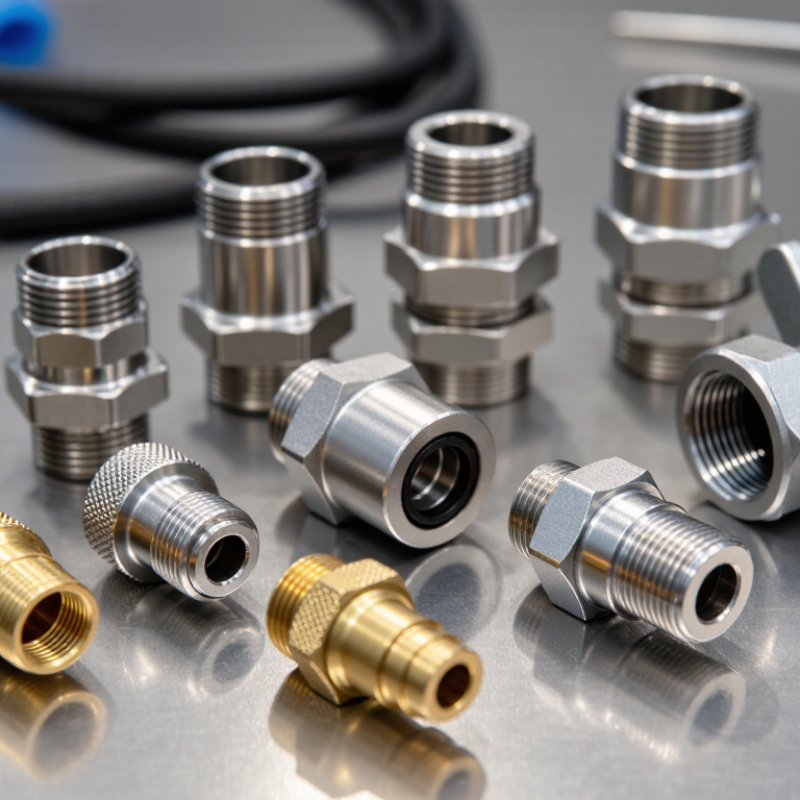
2026 Top Quick Connect Fitting Types for Global Buyers

Quick Connect Fittings: Definition, Purpose, and Core Components

Quick connect fittings are detachable connectors that join fluid or gas lines without lengthy tool work. Their purpose is practical: reduce connection time, limit spills, and support repeated maintenance in tight workspaces.

A typical fitting has a socket, plug, locking sleeve, valve, seal, and body. The socket receives the plug, while the sleeve locks both halves together. Internal valves close when disconnected, preventing unnecessary leakage. Seals usually use elastomers selected for temperature, pressure, and chemical compatibility. ISO 7241 and ISO 16028 provide widely used dimensional and performance references for hydraulic quick couplings. Standards help, but they do not replace application testing.

Market data shows why this component matters. MarketsandMarkets estimated the industrial hose market at about USD 14.4 billion in 2024, with projected growth toward USD 18.6 billion by 2029. That expansion increases demand for dependable connection hardware. In real inspections, a fitting may look sound while its seal has hardened, its sleeve feels rough, or its plug is partly misaligned. Small details matter. Pressure ratings must match the complete assembly, not only the fitting body. This is where purchasing teams sometimes move too quickly. Lower unit cost can hide higher downtime, replacement, and contamination risks. I would also question universal compatibility claims, because similar thread shapes can still fail under different standards or working conditions.

Main Types of Quick Connect Fittings for Industrial Applications

Main Types of Quick Connect Fittings for Industrial Applications

Quick connect fittings reduce installation time and simplify hose replacement. Their design differs by pressure, media, temperature, and connection frequency. A 2024 MarketsandMarkets analysis places industrial fluid handling among major growth areas, driven by automation and maintenance efficiency.

Pneumatic push-in fittings suit compressed air lines and compact machines. They use a collet and polymer tube, allowing fast tool-free assembly. Hydraulic screw-to-connect fittings handle higher pressure and stronger vibration. Flat-face hydraulic couplings also reduce fluid loss and surface contamination during separation. ISO 16028 covers many flat-face designs, while ISO 7241 addresses widely used hydraulic quick couplings.

Cam-and-groove fittings work well for water, chemicals, and bulk transfer hoses. Their handles lock quickly, but they need careful inspection under pressure. Dry-break couplings limit leakage when operators disconnect fuel, coolant, or process lines. Threaded quick couplings offer secure sealing, although repeated manual tightening can damage threads.

The global quick disconnect coupling market was valued at more than USD 7 billion in recent industry estimates from Grand View Research. Pneumatic and hydraulic demand remains strong across manufacturing, energy, and mobile equipment. Selection should include pressure ratings, seal material, flow capacity, and accidental-release protection. A perfect fitting does not exist. Field audits often reveal mismatched seals or oversized couplings. That small oversight can cause leaks, downtime, and unsafe maintenance.

2026 Top Quick Connect Fitting Types for Global Buyers — Main Types for Industrial Applications
Fitting Type Typical Connection or Standard Common Industrial Applications Key Characteristics Selection Considerations
Hydraulic ball-valve coupling Push-to-connect coupling with poppet or ball-valve shutoff; designs are available in ISO 7241 Series A and Series B configurations. Mobile equipment, agricultural machinery, hydraulic tools, and general-purpose hydraulic circuits. Connects and disconnects quickly; shutoff valves help limit fluid loss when separated. Compatibility depends on the coupling series and size. Check the applicable series, pressure and flow requirements, fluid compatibility, temperature range, and whether connection under residual pressure is permitted.
Flat-face hydraulic coupling Flat-face, push-to-connect design; commonly associated with ISO 16028 dimensional and performance requirements. Construction equipment, forestry machinery, hydraulic attachments, and applications where frequent connection occurs in dirty environments. Flat mating faces are easier to wipe clean and generally reduce fluid spillage during connection and disconnection. Confirm ISO 16028 compatibility, operating pressure, flow capacity, seal material, and the manufacturer’s limits for connecting under pressure.
Screw-to-connect hydraulic coupling Threaded sleeve or union-style connection; available in designs suited to demanding hydraulic service. High-pressure equipment, hydraulic cylinders, presses, and systems exposed to vibration or pressure surges. Threaded engagement can provide secure retention and help prevent accidental separation when correctly installed. Verify thread form, pressure rating, torque or tightening instructions, sealing method, and resistance to vibration and pressure spikes.
Pneumatic quick coupling Plug-and-socket connection; pneumatic quick-action couplings are covered by ISO 6150 in applicable designs. Compressed-air tools, assembly lines, maintenance stations, and pneumatic control equipment. Designed for rapid air-line changes. Many socket designs include a valve that shuts off the supply when disconnected. Match the plug and socket profile, nominal bore, working pressure, airflow demand, and compressed-air quality requirements.
Dry-break fluid coupling Valve-equipped coupling designed to minimize leakage during separation; connection geometry varies by application. Chemical transfer, process equipment, fuel handling, and other fluid-transfer tasks where spills must be controlled. Both halves may close automatically on disconnection, limiting product release when used and maintained as specified. Check chemical compatibility, seal material, allowable pressure and temperature, flow rate, and the coupling’s rated leakage performance.
Cam-and-groove coupling Lever-operated cam arms engage a grooved adapter; dimensional requirements are commonly referenced in A-A-59326. Tank and tanker transfer, water handling, agriculture, and industrial hoses carrying compatible liquids or dry materials. Tool-free connection is possible by closing the cam arms over the adapter. This design is generally used for low- to moderate-pressure transfer, subject to product ratings. Confirm size, adapter style, gasket compatibility, material, service pressure, and whether the connection is suitable for the specific medium.
Bayonet-style coupling Interlocking lugs or pins engage with a short turn; configurations are application-specific. Cooling circuits, process lines, laboratory equipment, and selected industrial fluid or gas systems. Fast quarter-turn-style engagement can provide positive mechanical retention in compatible designs. Check the exact mating profile, locking method, seal design, pressure and temperature limits, and intended fluid or gas service.
Electrical quick-disconnect connector Plug-and-socket electrical interface; connector geometry and ratings depend on the applicable electrical standard and application. Industrial sensors, control panels, test equipment, lighting, and modular machinery wiring. Allows electrical circuits to be separated without individually removing conductors; some designs provide environmental sealing. Verify voltage, current, pin configuration, ingress protection, cable type, grounding, and whether connection or disconnection under load is allowed.

How to Choose the Right Fitting by Material, Size, and Pressure

Choosing a quick connect fitting starts with the fluid, not the catalog photo. Stainless steel often suits higher pressures and demanding environments, while brass can work well in many general-purpose air and water systems. Engineering plastics may reduce weight and resist certain chemicals, but compatibility depends on the exact fluid and temperature. Check the fitting maker’s material data before installation. A familiar material is not automatically a safe choice.

Size must match the connection and the flow requirement. Measure thread diameter and pitch, and confirm whether threads are tapered or parallel. Then compare the hose’s inside diameter with the fitting’s passage. A mismatch can restrict flow or create a leak, even when the parts seem to fit. Small details matter. I have seen a connection look secure on the bench, then seep once vibration began.

Pressure ratings deserve the same care. Compare the fitting’s working-pressure rating with the system’s maximum operating pressure, including likely spikes. Do not use burst pressure as a working limit. Temperature can also reduce a rating, so review the manufacturer’s pressure-temperature chart for the actual service conditions. Before ordering in volume, test a sample under normal operating conditions and inspect the seal after repeated connection cycles. Selection is rarely perfect on paper; real installation conditions can reveal what a specification sheet cannot.

Connection Standards, Compatibility, and Global Sourcing Requirements

2026 Top Quick Connect Fitting Types for Global Buyers

Connection Standards, Compatibility, and Global Sourcing Requirements

For global buyers, quick connect fittings should be selected by interface, not appearance. Hydraulic systems commonly use ISO 7241 poppet couplings or ISO 16028 flat-face couplings. Pneumatic lines may require different valve designs and flow expectations. Thread choice matters just as much. NPT, BSPP, BSPT, metric, and SAE threads are not automatically interchangeable. A fitting can tighten smoothly and still leak.

Compatibility begins with pressure, temperature, media, and mating dimensions. Check working pressure, burst pressure, flow rate, seal material, and connection size. For example, a 3/4-inch port does not prove that two fittings will mate. Measure thread pitch, sealing method, plug profile, and locking clearance. Use technical drawings and sample testing before approving a large order. This step can reveal partial engagement, difficult disconnection, and unexpected pressure loss.

Global sourcing also depends on reliable documentation. Request material certificates, dimensional reports, pressure-test records, batch identification, and packing details. Confirm control over heat treatment, plating, cleaning, and seal assembly. Export packaging should protect ports from dust and impact during long transit. No selection chart is perfect. A catalog code may change across factories. Request a cross-reference table, but verify every dimension independently. Standards reduce risk, yet they cannot replace engineering judgment.

Installation, Maintenance, Safety, and 2026 Market Considerations

2026 Top Quick Connect Fitting Types for Global Buyers

Installation, Maintenance, Safety, and 2026 Market Considerations

Quick connect fittings support pneumatic, hydraulic, water, and process lines. Select the type by pressure, temperature, fluid, and connection size. A fitting that works well in clean air may fail with abrasive liquids. During installation, inspect threads, seals, and locking sleeves. Cut tubing squarely, insert it fully, and perform a gentle pull test. Never connect under pressure.

Safety depends on controlled habits. Isolate the system, release stored pressure, and wear suitable eye protection. Check for leaks with an approved method, not an open flame. Maintenance teams should inspect O-rings, corrosion, contamination, and coupling wear during scheduled shutdowns. Replace damaged seals early. Small leaks can become expensive failures. In practice, rushed installations still happen. That deserves honest review.

Tips: Keep fittings capped during storage. Mark line media and flow direction. Record coupling cycles and replacement dates. For 2026 purchasing, global buyers should compare total ownership cost, not unit price alone. Consider material traceability, regional availability, pressure documentation, and compatibility with automated equipment. Requirements may differ by market, so verify applicable technical standards before ordering. A cheaper fitting can create delays when spare parts are unavailable. That risk is often underestimated.

2026 Top Quick Connect Fitting Types for Global Buyers

Installation, maintenance, safety, and market considerations are rated on a 1–5 comparative planning scale, where 5 indicates a stronger practical advantage. Final selection should be verified against working pressure, temperature, fluid compatibility, size, standard, and regional regulations.

Reading the chart: Flat-face and dry-break couplings score highly for contamination control and maintenance. Ball-lock couplings generally support fast installation, while threaded screw-to-connect designs are favored where vibration resistance and secure connection are priorities.

Top
error: Content is protected !!