
Quality Products

At a Fair Price

Wholesale Provider

Of Valves & Fittings

  • Corporate Office: 1301 Greengrass Drive Houston, TX 77008
  • 1-800-237-2512

Quality Products

At a Fair Price

Wholesale Provider

Of Valves & Fittings

2026 Top Tungsten Carbide Ceramic Types for Global Buyers

Tungsten Carbide Ceramic is moving from a specialist material into a strategic purchasing category. Its appeal is easy to see. A cutting insert can face intense abrasion, heat, and repeated impact, while keeping a sharp working edge. Yet “ceramic” can hide important differences. Grain size, cobalt content, porosity, binder chemistry, and surface treatment may change performance dramatically.

The U.S. Geological Survey reported estimated global tungsten mine production of 81,000 metric tons in 2024. China supplied about 67,000 metric tons, showing the supply concentration behind many carbide products (USGS, Mineral Commodity Summaries 2025). The International Tungsten Industry Association also identifies cemented carbide as the largest tungsten application. These figures matter to global buyers. Material selection is also a supply-chain decision.

Professor Randall M. German, a recognized powder-metallurgy researcher, has emphasized that “processing history shapes powder-compact performance.” That principle applies directly to Tungsten Carbide Ceramic. Two products may share the same grade label, yet behave differently after sintering, grinding, or coating. Buyers should request density, hardness, transverse rupture strength, grain-size data, and inspection records. Ask about lot consistency, too.

The market is not perfectly transparent. Some published forecasts use different product definitions, making comparisons unreliable. That weakness deserves attention. This 2026 guide therefore examines major Tungsten Carbide Ceramic types through measurable properties, application demands, supplier capability, and total cost. A polished datasheet is useful. Real evidence is better.
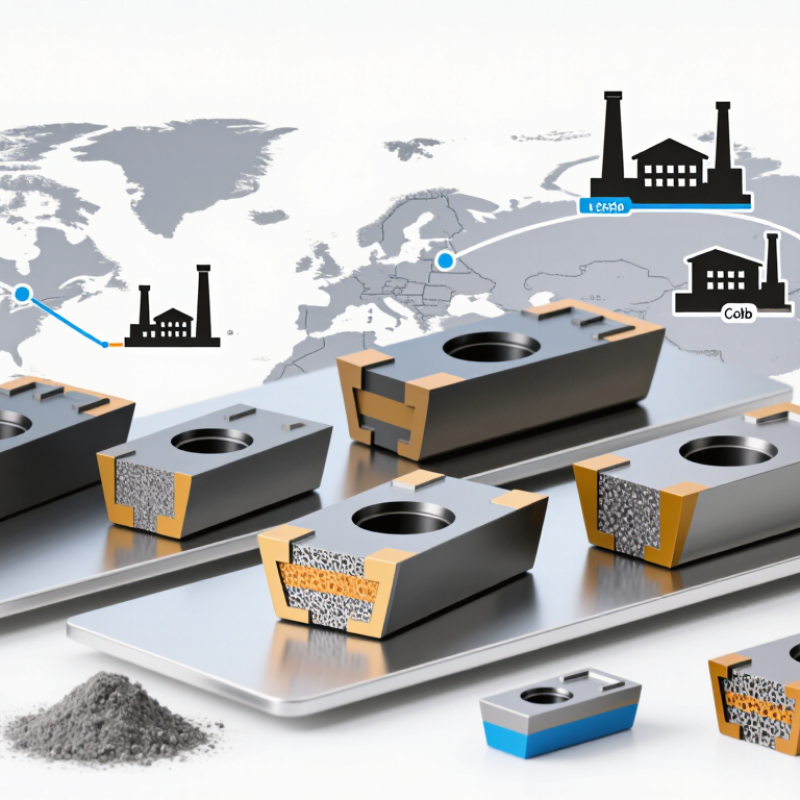
2026 Top Tungsten Carbide Ceramic Types for Global Buyers

Tungsten Carbide Ceramics: Definition, Composition, and Key Properties

In 2026, global buyers will continue examining tungsten carbide ceramics for cutting, forming, mining, and wear-resistant components. The term “ceramic” can mislead. Tungsten carbide is a hard composite, not always a traditional oxide ceramic. It usually contains tungsten carbide grains bonded with cobalt, nickel, or iron-based metals.

The carbide phase provides exceptional hardness and abrasion resistance. The binder adds toughness and helps the material survive impact. Grain size matters. Fine grains generally improve hardness and edge retention, while coarser grains may handle shock better. Binder-free compositions offer strong chemical stability, but they can be less tolerant of sudden loading. There is no perfect grade.

Key properties include high density, low deformation under pressure, and strong performance at elevated temperatures. Thermal conductivity can help control heat near a cutting edge. Corrosion behavior depends on the binder and working environment. Acids, moisture, and chlorides deserve careful testing. A component that performs well in dry sand may struggle in a wet chemical process.

Practical buyers should request composition ranges, grain-size data, hardness values, transverse rupture strength, and test conditions. Surface finish also affects service life. Small pores or grinding damage can become failure points. In my experience, choosing only by hardness is risky. Load cycles, temperature changes, mating materials, and maintenance conditions deserve equal attention. Supplier data should be checked against application trials, because laboratory numbers may not reflect field wear.

Top Tungsten Carbide Ceramic Types Available to Global Buyers in 2026

Top Tungsten Carbide Ceramic Types Available to Global Buyers in 2026

In 2026, global buyers can choose several tungsten carbide ceramic types for demanding industrial work. Standard WC-Co grades offer a practical balance between hardness, toughness, and price. They suit cutting tools, wear plates, mining components, and forming dies. Submicron grades use finer carbide grains. They provide sharper edges and stronger wear resistance in precision tools. Ultrafine grades can improve surface finish, but they may require stricter sintering control.

Binderless tungsten carbide offers very high hardness and strong corrosion resistance. It fits chemical, semiconductor, and high-abrasion environments where cobalt binders may be unsuitable. Low-cobalt grades provide better wear performance than conventional grades, yet they can fracture more easily under impact. Buyers should not judge quality by hardness alone.

A reliable selection process compares grain size, binder content, density, transverse rupture strength, and tested hardness. Ask for batch certificates, dimensional tolerances, and application-specific test data. Pay close attention to thermal cycling and edge chipping. A grade that performs well in dry cutting may struggle in wet slurry service. That detail is often missed. No type wins everywhere. Machining method, operating temperature, load direction, and surface finish can change the result. A neat product table may still hide important differences, so trial samples and independent inspection remain worthwhile for critical orders.

Performance Differences Among Tungsten Carbide Ceramic Grades

2026 Top Tungsten Carbide Ceramic Types for Global Buyers

Performance Differences Among Tungsten Carbide Ceramic Grades

Tungsten carbide ceramic grades differ mainly in binder content, grain size, hardness, and fracture resistance. Fine-grained grades usually provide sharper wear resistance and smoother machined surfaces. However, they may chip under sudden impact or heavy vibration. Coarser grades often tolerate shock better, but their cutting edges can wear sooner. Hardness alone is not enough.

Binderless tungsten carbide offers excellent chemical stability and very high hardness. It suits precision wear parts, nozzles, seals, and forming tools exposed to abrasion. Cemented grades contain a metallic binder, which improves toughness and reduces brittle failure. More binder generally means greater impact resistance, but lower hardness and weaker resistance to some corrosive environments. The right balance depends on load, temperature, lubrication, and contact pressure.

In practical sourcing reviews, buyers should request grain size, binder percentage, density, hardness, transverse rupture strength, and corrosion data. A polished sample can reveal pores, edge chipping, or uneven microstructure. Check tolerances after grinding, not only before it. Small details matter.

Thermal cycling deserves attention. A grade performing well at room temperature may crack beside a hot cutting zone. This is where specifications can mislead. Testing should reproduce the real feed rate, coolant, pressure, and impact pattern. No grade wins everywhere. A small compromise remains.

Industrial Applications and Suitable Material Choices

In 2026, global buyers should match tungsten carbide ceramic grades to the actual failure mode. WC-Co cemented carbide remains practical for cutting tools, dies, rock drilling, and wear plates. Cobalt improves toughness, while finer WC grains improve edge retention. Binderless WC offers higher chemical stability and hardness, but it is less forgiving under impact. Nano-grained grades can sharpen performance. They also raise cost and processing sensitivity. Harder is not always better.

The USGS Mineral Commodity Summaries 2025 estimated 2024 global tungsten mine production at 81,000 metric tons of contained tungsten. China accounted for about 67,000 tons. This concentrated supply makes recycled carbide, traceable powder, and stable sintering capacity important purchasing criteria. The European Commission’s 2023 Critical Raw Materials Assessment also identified tungsten as critical. These figures describe raw-material exposure, not finished ceramic quality.

For high-speed cutting, choose fine-grained WC-Co with controlled porosity and verified transverse rupture strength. For abrasive slurry pumps, mining nozzles, and seal faces, prioritize wear resistance, corrosion behavior, and surface finish. Binderless WC may suit aggressive chemistry, yet thermal shock can still cause cracking. Specifications often fail because buyers compare hardness alone. Ask for grain size, binder content, density, coercivity, hardness, and fracture data. Test the grade under the real load cycle. Laboratory results can mislead.

2026 Top Tungsten Carbide Ceramic Types for Global Buyers - Industrial Applications and Suitable Material Choices

Material Type Typical Composition Density
(g/cm³)
Hardness
(HV30)
Fracture Toughness
(MPa·m1/2)
Key Performance Characteristics Typical Industrial Applications Suitable Choice for Buyers
Fine-Grain WC-Co Cemented Carbide WC with approximately 6–12 wt% cobalt binder; WC grain size generally 0.5–0.8 μm 14.2–14.9 1,500–1,900 8–12 High hardness, strong wear resistance, and a good balance between toughness and edge retention. Solid carbide drills, end mills, precision milling tools, micro-tools, wear inserts, and forming dies. Choose for high-speed cutting and abrasive wear where sharp edges and dimensional stability are important.
Ultra-Fine-Grain WC-Co Cemented Carbide WC with approximately 6–10 wt% cobalt binder; WC grain size generally 0.2–0.5 μm 14.3–14.9 1,800–2,200 6–9 Very high hardness and compressive strength with excellent resistance to edge chipping in precision tools. Printed-circuit-board drills, carbide micro-drills, small-diameter cutters, precision punches, and miniature wear parts. Choose for fine finishing, small tool diameters, and highly abrasive non-ferrous or composite materials.
Medium-Grain WC-Co Cemented Carbide WC with approximately 10–15 wt% cobalt binder; WC grain size generally 0.8–2.0 μm 13.8–14.5 1,200–1,700 10–14 Higher fracture toughness and impact tolerance than fine-grain grades, while maintaining strong wear resistance. Rock drilling buttons, mining picks, road-milling tools, stamping dies, cold-heading tooling, and general wear components. Choose for intermittent impact, shock loading, and applications where chipping resistance is more important than maximum hardness.
Coarse-Grain WC-Co Cemented Carbide WC with approximately 12–20 wt% cobalt binder; WC grain size generally 2–6 μm 13.0–14.0 900–1,400 12–18 High toughness, impact resistance, and resistance to catastrophic fracture under heavy mechanical loading. Heavy-duty mining buttons, oil and gas drilling components, rock excavation tools, impact dies, and wear blocks. Choose for severe impact, hard-rock drilling, and heavy-duty service where toughness is the primary requirement.
WC-Ni Cemented Carbide WC with approximately 6–20 wt% nickel-based binder; may include chromium or molybdenum additions 13.0–14.5 900–1,600 8–14 Good corrosion resistance and non-magnetic behavior compared with conventional cobalt-bonded grades. Corrosive slurry pumps, valve seats, chemical-processing wear parts, food-processing machinery, and marine components. Choose for wet, saline, acidic, or non-magnetic environments where cobalt-bonded carbide may be unsuitable.
Binderless WC Ceramic Typically more than 99 wt% WC, with no metallic binder; often produced from submicron WC powder 15.2–15.7 2,000–2,600 3–6 Exceptional hardness, high-temperature wear resistance, and superior chemical stability; lower toughness than cemented carbide. High-temperature wear plates, precision nozzles, seals, laboratory components, and specialized cutting or forming parts. Choose for extreme abrasion, elevated temperature, and chemical exposure when impact loading is limited.
WC-Co-Cr Thermal-Spray Grade WC with approximately 10–20 wt% cobalt-chromium metallic binder 12.5–14.5 900–1,500 Typically reported as coating-specific rather than bulk KIC Combines hard WC particles with a corrosion-resistant metallic matrix; applied as a coating rather than a solid ceramic body. Hydraulic rods, pump sleeves, aerospace actuators, printing rolls, seals, and components exposed to erosion or sliding wear. Choose when restoring or protecting a steel substrate is more economical than manufacturing a solid carbide component.
WC-Based Composite with TiC or TaC Additions WC with a cobalt or nickel binder and small additions of TiC, TaC, NbC, or mixed carbides 12.5–14.8 1,300–2,000 6–12 Improved crater-wear resistance, hot-hardness retention, and chemical stability during demanding metal cutting. Turning inserts, milling inserts, high-temperature cutting tools, stainless-steel machining, and difficult-to-cut alloys. Choose for high-temperature cutting, adhesive wear, and machining of steels or heat-resistant alloys.
Sintered WC Wear Plate or Liner Usually medium- or coarse-grain WC with approximately 10–20 wt% cobalt binder 13.0–14.5 1,000–1,600 10–16 Designed for extended service life under sliding abrasion, impact, and particle erosion. Chutes, hoppers, cyclone liners, pulverizers, mixing equipment, sand-processing systems, and bulk-material handling. Choose for large-area protection against mineral, coal, cement, sand, and other abrasive particles.
Cemented-Carbide Nozzle Grade Fine- or medium-grain WC with approximately 6–15 wt% cobalt or nickel binder 13.5–14.9 1,200–1,900 7–13 High resistance to particle erosion, dimensional wear, and pressure-driven flow damage. Water-jet cutting nozzles, abrasive blasting nozzles, sandblasting equipment, spray-drying nozzles, and drilling nozzles. Choose fine grain for precise orifices and maximum wear resistance; choose medium grain when impact resistance is higher.

Note: Values are typical engineering ranges for representative grades and may vary with WC grain size, binder content, porosity, sintering method, heat treatment, test standard, and component geometry. Hardness is commonly reported as Vickers hardness HV30; coating and composite properties may require application-specific testing.

Global Buying Criteria: Quality, Certification, and Supplier Evaluation

2026 Top Tungsten Carbide Ceramic Types for Global Buyers

Global buyers should evaluate tungsten carbide ceramics by application, not appearance alone. WC-Co grades suit many wear parts, while nickel-binder grades may better support corrosion-sensitive environments. Fine-grain materials usually offer sharper edges and stronger surface performance. Coarser grades can provide better impact resistance. The choice depends on load, temperature, media, and machining method.

Ask suppliers for complete grade data, not a sales summary. Key records include carbide grain size, binder percentage, density, hardness, transverse rupture strength, and porosity results. Request batch numbers and inspection reports. Independent testing from an ISO/IEC 17025 laboratory adds useful confidence. Certificates should match the delivered lot. They should not describe only a general product family.

Certification still needs careful review. Check ISO 9001 production controls, material traceability, and applicable market requirements such as RoHS or REACH documentation. During supplier evaluation, inspect sample packaging, edge quality, surface finish, and dimensional consistency. A cracked corner may reveal weak handling controls. Ask how nonconforming parts are isolated. A polished certificate can still hide poor process discipline.

In supplier audits, I have found that communication speed matters almost as much as laboratory data. Require clear drawings, tolerance agreements, sample approval, and written change notification. Do not rely on the lowest quotation. It may exclude testing, coating, or final grinding. My own review process is not perfect; small details, especially packing moisture and measurement methods, are easy to overlook. Those details deserve another check before a global purchase.

Top
error: Content is protected !!