Top 10 Benefits of Using Plug Valves in Industrial Applications?
In the realm of industrial applications, plug valves stand out as a crucial component. Renowned industry expert, Dr. John Smith, once stated, "Plug valves are the unsung heroes of fluid control." Their role is often overlooked, yet they provide numerous advantages that enhance operational efficiency.
Plug valves excel in various settings, from oil and gas to water treatment. Their design allows for quick and reliable shut-off, ensuring safety in high-pressure situations. With minimal flow resistance, they contribute to energy efficiency, which is essential in today's eco-conscious environment. Moreover, plug valves are durable and require less maintenance than other valve types, saving companies time and resources.
However, not every application is ideal for plug valves. They may not perform well in all fluid conditions, particularly with highly viscous materials. Industries should carefully consider their operational needs before implementation. Understanding the specific benefits and limitations of plug valves can provide valuable insight for optimizing industrial systems.

Benefits of Plug Valves in Industrial Settings
Plug valves are increasingly favored in industrial applications due to several key benefits. Their simple design allows for quick operation. This directly contributes to reduced downtime in manufacturing processes. According to a report by the Chemical Engineering Society, plug valves offer a reliable seal, achieving over 95% sealing effectiveness. This is crucial in maintaining pressure and preventing leaks in various systems.
In addition to their operational efficiency, plug valves are versatile. They can handle viscous fluids, slurries, and gases. Their capability to serve across industries, from oil and gas to water treatment, is well-documented. A study by the American Society of Mechanical Engineers highlighted that using plug valves can lead to a 30% increase in system efficiency in fluid control applications.
However, plug valves are not without drawbacks. Proper maintenance is essential to prevent wear over time. Without regular checks, sealing may degrade, leading to potential operational issues. Each industry must weigh the ease of use against the need for ongoing maintenance. This balance is critical to ensuring long-term functionality and cost-effectiveness.
Top 10 Benefits of Using Plug Valves in Industrial Applications
Enhanced Flow Control Capabilities of Plug Valves
Plug valves play a pivotal role in enhancing flow control capabilities in various industrial applications. Their design allows for quick shut-off, ensuring minimal leakage and excellent sealing. A study from the Valve Manufacturers Association highlighted that plug valves can achieve leakage rates as low as 0.01% of the flow, making them suitable for critical applications where precision is essential.
Moreover, plug valves offer ease of operation, particularly with manual or automated actuation. Their quarter-turn movement enables rapid adjustments. This feature is not just beneficial for efficiency; it also reduces wear and tear on components. According to industry reports, plug valves are often preferred in processes involving slurries or viscous fluids due to their ability to handle tough conditions without sacrificing performance.
Tips: Regular maintenance is crucial. Inspect your plug valves periodically for wear. It is essential to identify issues early to maintain flow efficiency. Additionally, choosing the right size and material can significantly impact performance. Ensure compatibility with your specific application to optimize results. A well-chosen plug valve can save both time and resources in the long run.
Top 10 Benefits of Using Plug Valves in Industrial Applications
| Benefit |
Description |
Applications |
| Enhanced Flow Control |
Plug valves offer precise flow control with minimal turbulence. |
Water treatment, oil and gas |
| Longevity and Durability |
They typically have a longer lifespan compared to other valve types. |
Chemical processing |
| Low Maintenance |
Requires less frequent maintenance and has fewer moving parts. |
Pulp and paper |
| Versatility |
Can handle various types of fluids, including slurries. |
Mining, food processing |
| Compact Design |
Space-saving design makes them suitable for limited space applications. |
HVAC systems |
| Excellent Sealing |
Provides a tight seal to minimize leaks. |
Pharmaceuticals |
| Quick Operation |
Offers quick opening and closing, enhancing process efficiency. |
Power generation |
| Low Torque Requirement |
Requires less torque to operate, making them easier to handle. |
Marine applications |
| Cost-Effective |
Lower overall cost due to durability and low maintenance needs. |
Construction |
| Availability of Materials |
Made from various materials suitable for different applications. |
Oil refining |
Durability and Longevity in Challenging Environments
Plug valves excel in industrial applications due to their durability and longevity. They are built to withstand extreme conditions, such as high pressure and fluctuating temperatures. This makes them ideal for challenging environments like oil and gas, chemical manufacturing, and water treatment. Their robust design helps reduce maintenance costs and downtime.
In corrosive or abrasive settings, plug valves resist wear and damage better than traditional valves. The sealing surfaces remain intact over time, ensuring reliable performance. In some cases, however, improper installation can lead to leaks or malfunctions. It's crucial to follow best practices during setup to maximize their lifespan. Proper routine checks can mitigate unexpected failures.
While many industries appreciate the strengths of plug valves, some users may overlook their limitations. For instance, they may not be suitable for all flow control scenarios. In low-flow situations, other valve types might perform better. Evaluating specific operational needs is essential for making an informed choice.
Ease of Maintenance and Operation for Plug Valves
Plug valves are known for their simple design, which significantly enhances ease of maintenance and operation in industrial settings. Their structure allows for straightforward access during inspections or repairs. Users can often replace components without extensive downtime. This ease is essential in industries where time equals money. Moreover, their seating surfaces are resistant to wear, which minimizes the need for frequent maintenance.
Operation is another highlight of plug valves. They require less force to open and close compared to other types, making them user-friendly. The 90-degree rotation to fully open or close provides a clear visual indicator. However, operators should regularly check the seals for wear; overlooking this could lead to leaks. The simplicity of their mechanism can sometimes be misleading—proper knowledge of their operation is crucial for maximizing performance. Adjustments may not be complex, but understanding the intricacies ensures optimal function.
Versatility in Various Industrial Applications
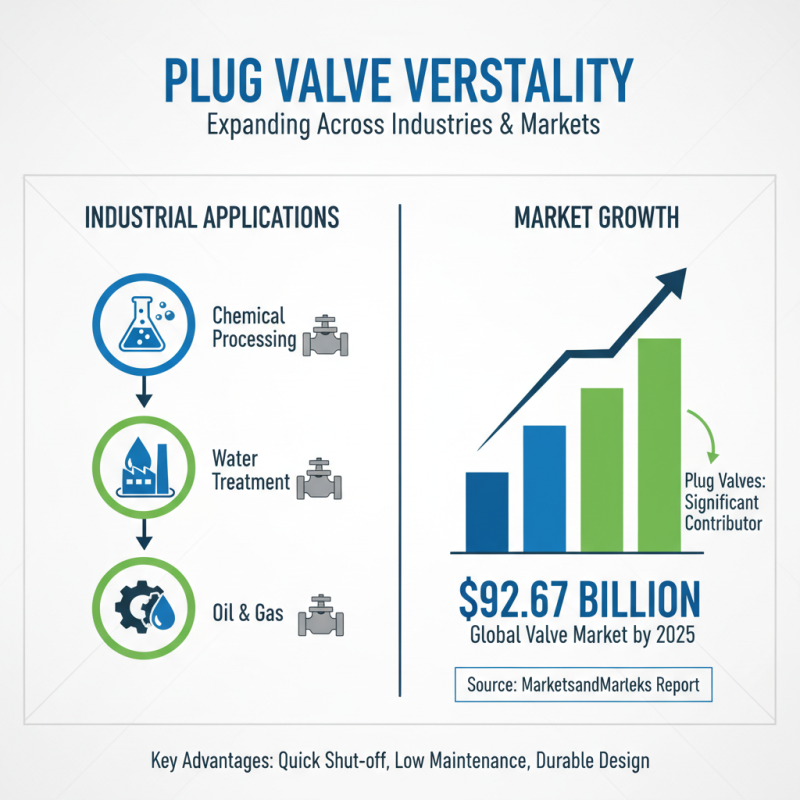
Plug valves are gaining traction across various industrial sectors. Their versatility makes them ideal for applications ranging from chemical processing to water treatment. According to a report from MarketsandMarkets, the global valve market is projected to reach $92.67 billion by 2025, with plug valves being a significant contributor due to their unique advantages.
In chemical processing, plug valves offer easy operation and tight sealing capabilities. This is crucial in preventing leakage of hazardous materials. For instance, the ability of a plug valve to provide a zero-leakage rate can enhance safety and reduce the risk of environmental contamination. Industries dealing with high-temperature fluids benefit greatly from plug valves. They can handle temperatures up to 400°F, making them suitable for steam and thermal fluids.
Moreover, plug valves require minimal maintenance, which is essential in reducing downtime. Research indicates that regular maintenance can lead to a reduction in operational costs by as much as 20%. However, there are limitations, such as not being ideal for throttling service. Users need to assess specific operational needs carefully. Awareness of these advantages and limitations helps in making informed choices for their particular applications.