What are the Benefits of Stainless Valves for Global Buyers?
Stainless valves have become essential components across various industries due to their durability and resistance to corrosion. According to a recent report by Allied Market Research, the global stainless valve market is expected to reach $10 billion by 2027, reflecting a compound annual growth rate of 5.3%. This growth underlines the increasing reliance on stainless valves in sectors such as oil and gas, water treatment, and food processing.
Industry expert Dr. James Smith, a leading authority on valve technology, emphasizes the importance of stainless valves. He asserts, "Stainless valves provide unmatched longevity, ensuring minimal maintenance costs for operators." This highlights the financial benefits for global buyers who prioritize long-term value in their procurement strategies.
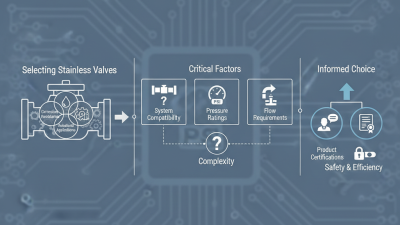
Despite their advantages, it's crucial to recognize potential challenges. Not all stainless valves are created equal, and selecting the right type can be complex. Factors such as pressure ratings and compatibility with different media must be considered carefully. Buyers might face a steep learning curve when navigating these variables.
Understanding Stainless Valves and Their Importance in Various Industries
Stainless valves play a crucial role in various industries due to their durability and resistance to corrosion. They are commonly used in environments that require sanitation and reliability. For example, in the food processing industry, stainless valves prevent contamination and maintain product integrity. A report by MarketsandMarkets estimates that the global stainless steel valve market is projected to reach $22.5 billion by 2027, reflecting its growing importance.
When considering materials, stainless steel offers advantages over carbon steel and plastic. Its ability to withstand high temperatures and pressures makes it ideal for oil and gas applications. Furthermore, stainless valves require less maintenance, which can reduce operational costs over time. A study from Technavio reveals that stainless steel valves are expected to witness a compound annual growth rate (CAGR) of over 5% in the coming years.
In the selection process, it’s essential to focus on the specific application. Evaluate factors such as pressure, temperature, and fluid type. Understanding these parameters ensures optimal performance and longevity. Prioritize suppliers who provide clear product specifications. Maintaining awareness of potential industry regulations can also aid in compliance and safety.
What are the Benefits of Stainless Valves for Global Buyers?
| Industry |
Benefits of Stainless Valves |
Common Applications |
| Oil and Gas |
Corrosion resistance, high durability, and temperature tolerance |
Pipeline systems, drilling equipment |
| Food and Beverage |
Sanitary properties, easy cleaning, and non-reactive nature |
Processing equipment, storage tanks |
| Chemical Processing |
Resistance to aggressive chemicals and high temperatures |
Reactors, pipelines |
| Water Treatment |
Longevity, reliability, and minimal leaching |
Filtration systems, distribution networks |
| Pharmaceutical |
High purity, easy sterilization, and regulatory compliance |
Manufacturing processes, clean room environments |
Key Advantages of Using Stainless Valves in Global Markets
Stainless valves offer significant benefits for global markets. Their corrosion resistance is a major advantage. Environments with moisture or harsh chemicals can quickly degrade other materials. Stainless steel retains its integrity and performs reliably over time. This durability can lead to lower maintenance costs and fewer replacements.
Another key advantage is the hygiene factor. Stainless valves are easier to clean and sanitize. This is crucial in industries like food and pharmaceuticals. The smooth surface helps prevent bacterial buildup. As a result, operations run more smoothly, ensuring safety and product quality.
However, not all stainless valves are created equal. Buyers must understand the specific conditions and applications they face. Different grades of stainless steel may be required based on temperature, pressure, and fluid type. Failing to consider these factors can lead to poor performance. This highlights the need for knowledgeable suppliers and careful selection during procurement.
Benefits of Stainless Valves for Global Buyers
Durability and Corrosion Resistance of Stainless Steel Valves
Stainless steel valves are increasingly favored by global buyers due to their durability and corrosion resistance. These valves excel in harsh environments, where moisture and corrosive substances are prevalent. The non-reactive nature of stainless steel ensures a longer lifespan, reducing maintenance costs significantly. For industries like pharmaceuticals and food processing, this resilience is vital.
Corrosion resistance is particularly important in manufacturing and chemical processing. Stainless steel valves can withstand exposure to various chemicals without degrading. This quality not only ensures operational efficiency but also safeguards product integrity. Buyers often find that investing in these valves enhances their production reliability. However, it's crucial to consider the specific environment and application, as not every stainless steel grade is suitable for every situation.
While stainless steel valves offer many advantages, they are not without challenges. They can be costlier than other materials. Buyers must evaluate their budget against the long-term benefits. Despite the initial expense, investing in stainless steel valves often pays off in reduced downtime and lower replacement rates. Understanding these nuances can help buyers make informed decisions that align with their operational needs.
Cost-Effectiveness and Lifecycle Benefits of Stainless Valves
Stainless valves offer significant lifecycle benefits that global buyers find attractive. The durability of stainless steel is one of its key advantages. These valves resist corrosion and wear, extending their lifespan compared to other materials. A longer lifespan translates to lower maintenance costs over time. Fewer replacements mean reduced downtime and improved efficiency in industrial processes.
Moreover, stainless valves are often more cost-effective in the long run. Although the initial investment may be higher, their lasting performance results in substantial savings. For many industries, especially those involving harsh conditions, the upfront cost is worth it. International buyers must consider the value derived from reduced repairs and replacements.
However, it’s important to reflect on the installation and operational temperaments of stainless valves. Misapplication may lead to performance issues. Buyers should carefully assess specifications and operational demands before selection. This consideration helps avoid costly mistakes. Balancing upfront costs with long-term gains can be complex, but the benefits of stainless valves often outweigh the challenges.
Environmental Benefits and Sustainability of Using Stainless Steel Valves
Stainless steel valves have become a crucial component in various industries due to their environmental benefits. These valves significantly reduce the average life-cycle environmental impact compared to traditional materials. According to a report from the International Stainless Steel Forum, stainless steel can reduce greenhouse gas emissions by 60% when recycled. This capability contributes to sustainability, as recycled stainless steel uses only a fraction of the energy required for new material production.
Moreover, stainless steel is known for its durability and longevity. It requires less frequent replacement, which minimizes waste. The lifespan of stainless steel valves often exceeds 20 years. This longevity reduces the demand for new resources and helps in maintaining ecological balance. However, it is essential to consider the energy involved in the initial extraction and processing of raw materials. Continuous advancements in recycling practices can help address this concern.
Additionally, the resistance of stainless steel to corrosion prevents leakage and contamination. This feature is vital for industries handling critical substances, such as water treatment. While the initial cost may be higher than alternatives, the long-term benefits, both environmental and economic, are substantial. There are still challenges to overcome in ensuring optimal recycling processes are in place to maximize these benefits fully.