
Quality Products

At a Fair Price

Wholesale Provider

Of Valves & Fittings

  • Corporate Office: 1301 Greengrass Drive Houston, TX 77008
  • 1-800-237-2512

Quality Products

At a Fair Price

Wholesale Provider

Of Valves & Fittings

Best China Gas Densitometer Manufacturers and Suppliers?

Choosing among the best China Gas Densitometer manufacturers and suppliers requires more than comparing prices. A reliable Gas Densitometer should deliver stable density readings, clear calibration records, and practical support after delivery. In laboratories, refineries, food plants, and industrial gas facilities, a small measurement error can affect product quality, process control, and safety decisions. The right supplier understands these working conditions and explains performance limits honestly.

This guide examines Chinese manufacturers through measurable criteria, including sensor technology, repeatability, temperature compensation, software usability, and quality-control procedures. It also considers factory experience, export history, technical documentation, and response speed. Product samples, inspection reports, calibration certificates, and customer references can reveal more than polished websites. Ask for details. Vague answers deserve caution.

A strong supplier should help users select the correct measurement range, connection type, sample pressure, and operating environment. Support should continue after purchase, with training, troubleshooting, spare parts, and recalibration guidance. No manufacturer is perfect. Some suppliers may show impressive specifications but provide limited field evidence. Others may offer dependable instruments while lacking refined English documentation. That difference matters.

The following sections compare leading China Gas Densitometer manufacturers and suppliers from a practical buyer’s perspective. The aim is not to declare one universal winner. Instead, it is to identify dependable options for different applications, budgets, and technical requirements. Verify every important claim before ordering. Good data begins with good questions.
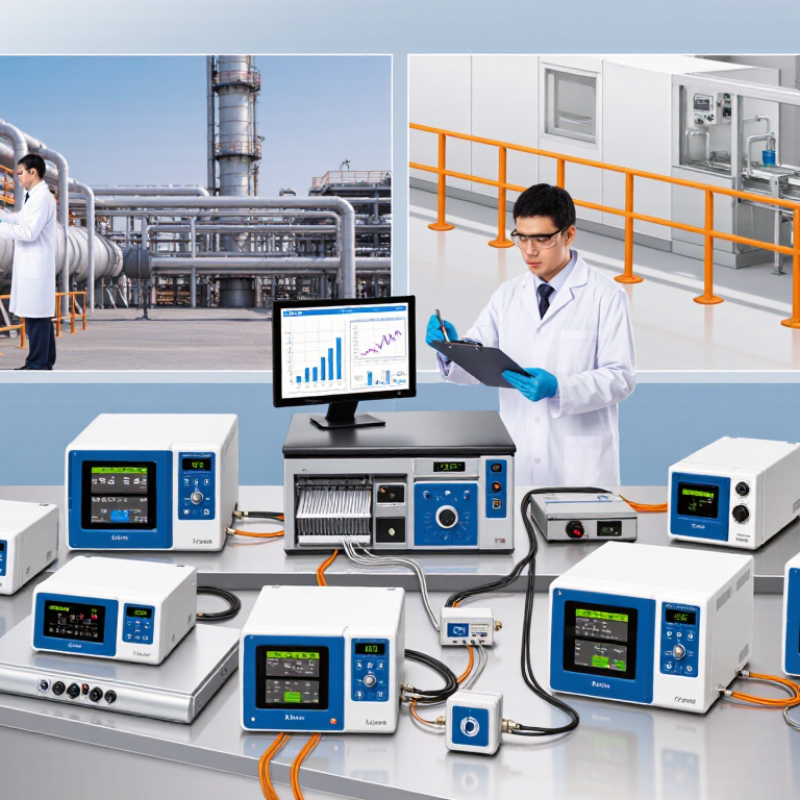
Best China Gas Densitometer Manufacturers and Suppliers?

What Is a Gas Densitometer and How Does It Work?

Best China Gas Densitometer Manufacturers and Suppliers?

What Is a Gas Densitometer and How Does It Work?

A gas densitometer measures gas density under controlled pressure and temperature. Most modern units use an oscillating tube. Gas enters the tube, and its mass changes the vibration frequency. Higher density usually produces a lower frequency. Sensors then compensate for pressure and temperature changes. The result appears as density, specific gravity, or related process data.

That matters.

The IEA’s Global Methane Tracker 2024 estimated about 120 million tonnes of methane emissions from fossil fuel operations in 2023. The World Bank’s Global Gas Flaring Tracker Report 2024 recorded roughly 148 billion cubic metres of gas flared during 2023. These figures show why reliable gas measurement matters in processing, storage, and emissions monitoring. However, a densitometer does not identify every gas component. Composition changes can affect density readings, especially in mixed streams.

When comparing Chinese manufacturers and suppliers, buyers should examine calibration traceability, pressure range, temperature compensation, response time, and uncertainty data. ISO/IEC 17025-accredited calibration evidence is valuable. Ask for test records using certified reference gases, not only promotional specifications. A practical trial should check readings during start-up, pressure changes, and long-term operation. Small errors accumulate. I would also inspect sample conditioning, tubing materials, software records, and service response. A low purchase price may become expensive when calibration support is weak. The specification sheet may look convincing, but field stability is harder to prove.

Key Features of China’s Gas Densitometer Manufacturers

Best China Gas Densitometer Manufacturers and Suppliers?

Key Features of China’s Gas Densitometer Manufacturers

China’s gas densitometer manufacturers increasingly focus on measurement stability, traceability, and application-specific design. The IEA Gas 2024 report projects global gas demand to grow by about 2.5% annually through 2029. That trend increases demand for reliable density data in storage, transport, laboratories, and process control.

A capable manufacturer should offer vibrating-element or oscillating-tube technology, with automatic temperature and pressure compensation. A clear display helps technicians read values beside pipelines or sampling panels. Stable performance matters more than attractive software. Some suppliers provide measurement ranges near 0.1 to 1,500 kilograms per cubic metre, depending on the sensing method and gas composition. However, advertised ranges need careful verification under real operating conditions.

Calibration quality deserves close attention. Manufacturers following ISO/IEC 17025 principles can provide traceable calibration records and uncertainty estimates. Useful suppliers also test repeatability, response time, sensor drift, and resistance to moisture or contamination. According to NIST measurement guidance, temperature control is essential because gas density changes significantly with pressure and temperature. Field experience shows that sample conditioning often affects results more than the instrument itself. This point is easy to overlook. China-based suppliers may also support custom pressure ratings, communication protocols, and enclosure designs. Still, buyers should request raw test data, not only polished certificates.

Best China Gas Densitometer Manufacturers and Suppliers? - Key Features of China’s Gas Densitometer Manufacturers

Evaluation Dimension Typical Capability Offered by China-Based Suppliers Practical Buyer Consideration
Measurement Principle Common solutions include vibrating-element, thermal-conductivity, infrared, and optical measurement technologies. Vibrating-element systems are widely used for direct gas-density measurement, while thermal-conductivity models are suitable for selected binary or multicomponent gas mixtures.
Gas Density Range Typical laboratory and process instruments cover approximately 0.1 to 2.0 kg/m³, depending on gas type, pressure, temperature, and sensor design. The required range should be checked against the actual gas composition and operating conditions rather than against air density alone.
Relative Density Measurement Many systems calculate specific gravity or relative density by comparing the sample with a reference gas, commonly air, under defined conditions. Confirm the reference temperature, reference pressure, and calculation standard used by the instrument.
Accuracy Common advertised accuracy levels range from about ±0.1% to ±1.0% of reading or full scale, depending on the measurement method and application. Accuracy specifications should be reviewed together with calibration-gas uncertainty, temperature stability, pressure effects, and installation conditions.
Repeatability Typical repeatability is approximately ±0.05% to ±0.5% of reading for controlled laboratory or process conditions. Repeatability is especially important for leak testing, gas blending, filling, and quality-control applications.
Operating Temperature Typical operating ranges are approximately 0°C to 50°C for laboratory units and about −20°C to 60°C for selected industrial configurations. Temperature compensation and thermal stabilization are necessary when the sample or installation environment changes significantly.
Sample Pressure Low-pressure laboratory models commonly use controlled sample flow, while industrial versions may support pressure ranges from vacuum conditions up to several megapascals with suitable regulation. A pressure regulator, relief device, filter, and flow-control system may be required to protect the sensor and maintain stable readings.
Response Time Typical response times range from less than 1 second to approximately 30 seconds, depending on the sensor, internal volume, sample line length, and filtering settings. Fast response is beneficial for process control, while longer averaging may improve stability in noisy or fluctuating gas streams.
Sample Flow Requirement Many instruments operate with low sample flows, commonly around 50 to 500 mL/min, although the exact requirement varies by design. Stable flow and adequate gas flushing are important for repeatable measurements and for reducing sample carryover.
Gas Compatibility Configurations are commonly available for air, nitrogen, oxygen, hydrogen, carbon dioxide, natural gas, helium, refrigerants, and other non-corrosive gases. For corrosive, toxic, flammable, wet, or condensable gases, verify wetted materials, sealing design, purge requirements, and hazardous-area suitability.
Calibration Suppliers commonly provide zero calibration, span calibration, multi-point calibration, and calibration using certified reference gases. For regulated applications, request calibration certificates with traceability information and clearly stated reference conditions.
Data Output and Communication Common interfaces include digital displays, USB, RS-232, RS-485, Modbus RTU, analog 4–20 mA, relay outputs, and data-export software. Select interfaces that match the laboratory information system, PLC, SCADA platform, or remote-monitoring architecture.
Display and User Interface Portable and benchtop instruments commonly include digital displays, menu-based configuration, trend views, alarm settings, and internal result storage. A multilingual interface and password-controlled access can be useful for international laboratories and production facilities.
Materials and Construction Common wetted materials include stainless steel, glass, fluoropolymer seals, and other chemically compatible materials selected for the target gas. Material compatibility should be confirmed for hydrogen, oxygen-enriched gas, hydrocarbons, acidic gases, and high-moisture samples.
Application Areas Typical applications include gas-cylinder filling, natural-gas quality monitoring, gas blending, leak testing, semiconductor processing, environmental analysis, research, and laboratory quality control. The best configuration depends on whether the priority is portability, continuous monitoring, high pressure, rapid response, or high measurement accuracy.
Compliance and Documentation Export-oriented suppliers commonly provide technical datasheets, user manuals, factory test reports, calibration documentation, and compliance information such as CE or RoHS where applicable. Certification availability depends on the specific model and destination market; request the relevant declaration or test report before ordering.
Customization and OEM Support Available customization may include gas-specific calibration, fittings, communication protocols, enclosure design, sample-conditioning assemblies, language settings, and private-label documentation. Clarify minimum order quantities, engineering fees, validation procedures, lead time, and responsibility for final calibration.
After-Sales Service Common services include remote technical support, spare-part supply, calibration assistance, troubleshooting, software updates, and repair or replacement programs. Evaluate service response time, warranty duration, local support availability, and long-term sensor or seal replacement costs.

Note: Specifications shown are typical industry ranges and feature categories commonly available from China-based gas densitometer manufacturers and suppliers. Actual performance depends on the selected model, gas composition, pressure, temperature, calibration method, and sample-conditioning system.

How to Compare Chinese Gas Densitometer Suppliers

Comparing Chinese gas densitometer suppliers requires more than checking price and measurement range. The 2024 MarketsandMarkets Gas Analyzer Market report estimates steady global growth through 2029. This growth increases supplier choices, but not necessarily product consistency. Ask for documented accuracy, repeatability, pressure limits, temperature compensation, and response time. Short specifications can hide important limits.

Request calibration records linked to ISO/IEC 17025 laboratories. Also check whether the manufacturer operates an ISO 9001 quality system. A reliable supplier should provide raw test data, not only a polished certificate. Compare measurements using the same reference gas, pressure, and temperature. Small differences matter. For process control, verify cell materials and sealing performance against your gas composition. Request a factory acceptance test before shipment, with serial-number tracking and software screenshots.

Service capability deserves equal attention. Confirm spare-cell availability, remote troubleshooting, training, warranty terms, and typical response times. The 2023 International Energy Agency report shows continued investment in gas infrastructure, making dependable field support increasingly important. However, this does not prove every supplier is mature. My own comparison mistake would be trusting a low quotation before checking calibration evidence. Ask for three recent customer references and one complete sample report. A supplier that answers slowly may still have strong engineering, but unclear answers deserve careful review.

Major Applications of Gas Density Measurement Equipment

Gas density measurement equipment plays a practical role in natural gas processing, storage, and distribution. It helps operators verify gas composition, detect process changes, and maintain stable operating conditions. Density data can also support custody transfer calculations when pressure, temperature, and compressibility are properly controlled. Small errors may affect billing and process decisions.

In gas blending systems, continuous density readings help maintain the target heating value. Technicians can compare live measurements with laboratory results before adjusting flow rates. In separation units, unusual density changes may indicate poor fractionation, contamination, or unstable pressure control. These instruments are also useful for checking gas purity in industrial production, calibration laboratories, and controlled research environments.

Safety teams may use density trends to identify abnormal releases or ventilation problems. Heavy gases can collect near floors, while lighter gases rise toward ceilings. Placement matters greatly. Reliable equipment should provide temperature compensation, pressure correction, stable sampling, and traceable calibration records. However, density alone cannot identify every gas or confirm a leak source. It should support other measurements, not replace them. In field work, dust, moisture, vibration, and changing ambient temperatures can distort results. That is easy to underestimate. Regular inspection and documented uncertainty make the readings more defensible.

Major Applications of Gas Density Measurement Equipment

Gas density measurement supports process control, gas identification, purity verification, custody transfer, and safety monitoring. The chart compares the approximate densities of common gases at 0 °C and 1 atm.

Reference: Values are approximate standard-condition densities expressed in kg/m³. Actual readings vary with temperature, pressure, composition, and humidity.

How to Select a Reliable China-Based Supplier

Selecting a reliable China-based gas densitometer supplier requires more than comparing online prices. A polished website proves little. Request the manufacturer’s factory address, production photos, and a live video inspection of the assembly area. Check whether technicians explain measurement principles clearly, rather than repeating sales language.

Ask for calibration records linked to recognized standards, preferably from an accredited laboratory. The report should show test gases, temperature, pressure, uncertainty, and instrument identification.

Confirm the densitometer’s measuring range, repeatability, sample-cell materials, and compatibility with your gases. A supplier should also explain leak testing and sensor protection.

Vague answers deserve caution.

Request a sample inspection report before placing a large order. It should contain actual readings, not only factory specifications. Discuss software language, data export, power requirements, spare parts, warranty limits, and response times in writing.

Contact two recent customers if possible. Their comments about repair delays may be more useful than a brochure.

A low price can hide costly calibration work. That risk is easy to underestimate. I would also ask for a small trial order, although this adds time and shipping expense. Suppliers may resist. Their reaction can reveal how seriously they support quality control. Evaluate communication over several weeks, because reliable service is measured after payment, not during negotiation.

Top
error: Content is protected !!