
Quality Products
At a Fair Price
Wholesale Provider
Of Valves & Fittings
- HOME
- Products
- Ball Valves
- Bull Plugs & Swages
- Butterfly Valves
- Check Valves
- Cushion / Flow Tees & Bleed Rings
- Enhanced Oil Recovery
- Floating Ball Valves
- Foot Valves
- Forged Steel Fittings
- Forged Steel Outlets
- Gaskets-Insulation Kits
- Gate Valves
- Gate, Globe & Check Valves
- Malleable Fittings
- Needle Valves
- Nipples
- Piston Valves
- Plug Valves
- Stainless Steel Flanges, Fittings & Nipples
- Strainers
- Studs
- Trunnion
- Unions
- Weld Fittings & Flanges
- Manufacturers
- Advance
- American Block
- Anvil
- Balon
- Bonney Forge
- Champion
- Clayton Mark
- Crane
- Daniel
- DMIC
- GMI
- Galli & Cassina
- Hackney-Ladish
- JMC
- Lone Star
- MATCO
- Marpac-McCanna
- National Flange
- National Gasket
- Nordstrom
- Nutron
- PPI
- SHARPE
- SMI
- TEXSTEAM
- TEX-THREAD
- Titan
- USA Fastner
- Vogt
- Weld Bend
- Westbrook
- Wheatley
- Williams
- WKM
- Wolar
- Locations
- Contact
- Blog
- Careers
- Get a Quote
- HOME
- Products
- Ball Valves
- Bull Plugs & Swages
- Butterfly Valves
- Check Valves
- Cushion / Flow Tees & Bleed Rings
- Enhanced Oil Recovery
- Floating Ball Valves
- Foot Valves
- Forged Steel Fittings
- Forged Steel Outlets
- Gaskets-Insulation Kits
- Gate Valves
- Gate, Globe & Check Valves
- Malleable Fittings
- Needle Valves
- Nipples
- Piston Valves
- Plug Valves
- Stainless Steel Flanges, Fittings & Nipples
- Strainers
- Studs
- Trunnion
- Unions
- Weld Fittings & Flanges
- Manufacturers
- Advance
- American Block
- Anvil
- Balon
- Bonney Forge
- Champion
- Clayton Mark
- Crane
- Daniel
- DMIC
- GMI
- Galli & Cassina
- Hackney-Ladish
- JMC
- Lone Star
- MATCO
- Marpac-McCanna
- National Flange
- National Gasket
- Nordstrom
- Nutron
- PPI
- SHARPE
- SMI
- TEXSTEAM
- TEX-THREAD
- Titan
- USA Fastner
- Vogt
- Weld Bend
- Westbrook
- Wheatley
- Williams
- WKM
- Wolar
- Locations
- Contact
- About
- Careers
- Get a Quote
10 Camping Cooler Box Buying Tips for Global Buyers
Choosing a Camping Cooler Box for international use is not simply a matter of picking the largest model. Climate, transport distance, food habits, storage space, and power access can change the right choice completely. A box that performs well on a cool mountain trip may struggle on a humid beach.
Outdoor industry pioneer Yvon Chouinard once said, “The more you know, the less you need.” That idea fits cooler buying surprisingly well. Understanding insulation, sealing systems, drainage, capacity, and portability can prevent expensive overbuying. A 35-liter cooler may suit a couple carrying fresh food for two days, while a family travelling through hot regions may need stronger insulation and better ice retention. Bigger is not always better. It can become awkward, heavy, and difficult to clean.
These 10 Camping Cooler Box buying tips examine practical details that global buyers should check before ordering. They cover material quality, cooling performance, handle strength, wheel design, leak resistance, and compatibility with local transport conditions. They also consider voltage requirements for powered models, because electrical standards differ across countries. Small details matter. A weak latch can waste cold air. A narrow drain can leave melted ice inside.
Real-world use is rarely perfect. Product claims may come from controlled tests, not crowded campsites or long airport transfers. Buyers should compare independent reviews, warranty terms, replacement parts, and regional service support. A careful decision may take longer, but it usually prevents disappointment beside an empty cooler.
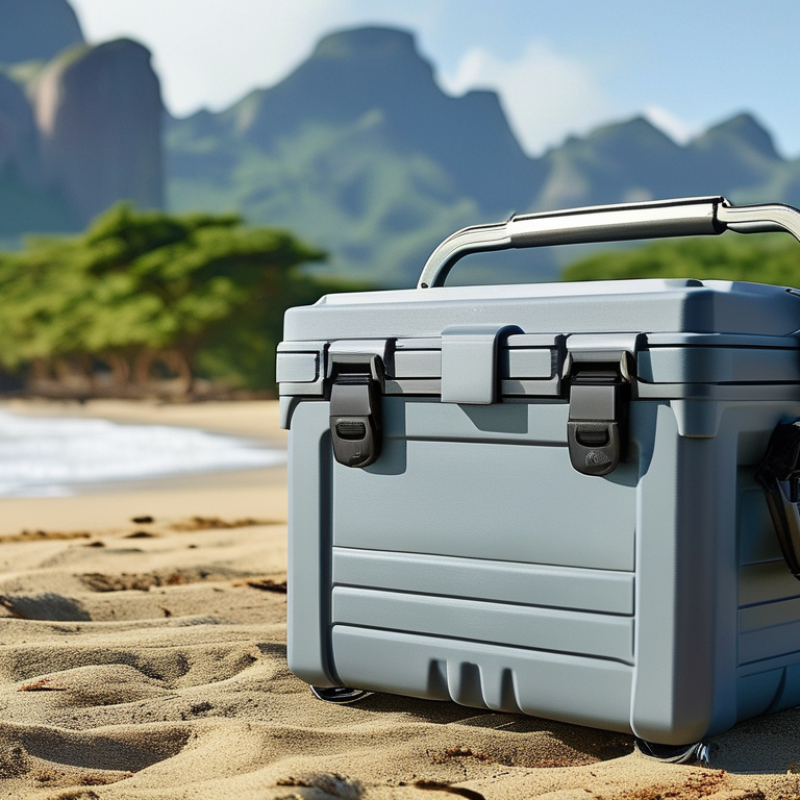
Classify Cooler Types by Use, Capacity, and Global Market Needs
10 Camping Cooler Box Buying Tips for Global Buyers
Cooler choice should follow the trip, not only the advertised capacity. Soft coolers suit short hikes and public transport because they are light and foldable. Hard coolers protect food during rough travel, beach use, and long road trips. Powered models can support extended journeys, but they need a reliable vehicle socket or suitable power source. I have found that a cooler advertised for ten people may feel crowded after adding ice and containers.
Tip: Measure usable space, not just the total litres. A 20-litre box may hold fewer meals than expected when thick walls reduce internal room. For solo camping, 15 to 25 litres often works well. Families may need 40 litres or more, especially in hot climates. Wheeled designs help on paved paths, while compact models work better on uneven ground.
Global buyers should match insulation, drainage, and materials to local conditions. Humid regions need secure seals and easy-clean surfaces. Cold areas may value stronger impact resistance more than maximum ice retention. Check measurements in centimetres and capacity in litres before ordering. For powered coolers, confirm voltage, plug type, and vehicle compatibility. Test the lid seal and handle strength when possible. Marketing claims can vary, and one mistake is trusting laboratory ice times over real campsite conditions. Pack a thermometer, separate raw food, and leave room for cold air circulation.
Compare Insulation: Foam R-Value, Wall Thickness, and Ice Retention
For a camping cooler, foam R-value matters, but it is not the whole story. The U.S. Department of Energy lists approximate insulation values of R-4 per inch for expanded polystyrene, R-5 for extruded polystyrene, and about R-6 to R-7 for polyurethane. These figures describe material performance under controlled conditions. They do not predict exact ice life inside a cooler.
Thickness still matters. A 50-millimeter wall with R-5 foam provides roughly R-10 before thermal bridges and panel joints. A thinner wall with better foam may perform similarly, but construction quality can reduce the advantage. Check the lid carefully. Heat often enters through thin covers, hinges, drains, and poor seals. Small gaps matter.
Ice retention claims need cautious reading. There is no single global test method that makes every “72-hour” claim directly comparable. ASTM C518 measures thermal transmission through insulation, not melting ice in a loaded cooler. In practical testing, sunlight, opening frequency, ambient temperature, ice size, and food temperature can change results sharply. I would request the test temperature and ice load. Ask for independent laboratory data when possible.
“Longer ice life” sounds clear. It often is not. A cooler used in a humid tropical market needs stronger sealing and thicker insulation than one used during cool alpine weekends. My own buying mistake was comparing foam numbers while ignoring the lid gasket. The ice melted early.
Check Food Safety: Keep Perishables Below 40°F (4°C), FDA Guidance
10 Camping Cooler Box Buying Tips for Global Buyers
Food safety should guide every camping cooler purchase. Perishable food needs to stay below 40°F (4°C), following FDA guidance. A cooler that feels cold may still be unsafe inside. Choose a model with thick insulation, a tight lid, and space for a separate thermometer. Built-in temperature displays can help, but they may need regular checking.
Pre-chill the cooler and food before leaving home. Pack meat, dairy products, and prepared meals in sealed containers. Keep them surrounded by ice packs, not loosely placed beside warm drinks. A full cooler usually holds temperature better than a half-empty one. Store it in vehicle shade, and open the lid briefly. Every opening releases cold air.
I once trusted ice alone during a long summer trip. The food looked fine, but the thermometer showed 45°F (7°C). That mistake changed my packing habits. Now I check the temperature before departure and during rest stops. A small digital thermometer is worth carrying. Keep raw meat away from ready-to-eat food, even inside the cooler. Discard perishables that stay above 40°F for too long, especially when time and temperature are uncertain. Local food safety requirements may differ, so global buyers should check the rules in their destination country. Safety is not always convenient.
| No. | Buying Dimension | Recommended Target or Requirement | Why It Matters | What Global Buyers Should Check |
|---|---|---|---|---|
| 1 | Food-Safe Temperature Control | Keep perishable food at or below 40°F (4°C). Use a food thermometer to verify the internal temperature. | Cold temperatures slow the growth of harmful bacteria and help reduce foodborne-illness risk. | Essential Confirm that the cooler can hold a safe temperature in the expected outdoor conditions and that a thermometer can be placed inside. |
| 2 | Insulation Performance | Choose thick, continuous insulation with a well-sealed lid and minimal thermal bridges. | Better insulation reduces heat entering the box and helps ice or frozen packs last longer. | Review insulation thickness, lid construction, gasket coverage, and any published cold-retention test conditions. |
| 3 | Usable Capacity | Select capacity according to the number of people, trip duration, food packaging, and required ice or cold-pack volume. | A cooler that is too small may not hold enough food and coolant; excessive empty space can reduce packing efficiency. | Compare internal dimensions and usable volume rather than relying only on external dimensions or nominal capacity. |
| 4 | Ice and Cold-Pack Compatibility | Allow sufficient room for ice or reusable cold packs around the food, including space above the contents. | Cold air distribution and direct contact with cold sources help maintain a more consistent temperature. | Check the recommended ice-to-content arrangement, cold-pack dimensions, drainage options, and whether packs are sold separately. |
| 5 | Leak Resistance and Drainage | Use a watertight gasket and secure drain plug when liquid retention is needed; provide controlled drainage for melted ice. | Leak prevention protects vehicles and gear, while drainage makes cleaning and drying easier. | Inspect gasket compression, drain-plug sealing, hinge alignment, and the ease of removing water without disturbing food. |
| 6 | Food-Contact Materials | Choose smooth, non-absorbent interior surfaces that are intended for food contact and easy to clean. | Non-porous surfaces help limit odor retention and make it easier to remove food residue. | Request material specifications, food-contact declarations where applicable, and cleaning instructions for the destination market. |
| 7 | Durability and Load Strength | Select impact-resistant construction, reinforced hinges, strong handles, and a lid designed for repeated use. | Camping conditions can involve rough transport, dust, moisture, and frequent opening and closing. | Review drop, hinge-cycle, handle-load, and lid-seal test information when available; verify the maximum recommended load. |
| 8 | Portability | Match empty weight, filled weight, handles, wheels, and carrying points to the intended travel environment. | A large cooler can become difficult or unsafe to move when filled with food and ice. | Measure packed weight, handle clearance, wheel suitability, vehicle fit, and lifting requirements for one or more users. |
| 9 | Cleaning and Cross-Contamination Control | Use a design with removable or accessible components, rounded internal corners, and surfaces that can be washed and dried thoroughly. | Raw meat, seafood, and poultry juices can contaminate ready-to-eat foods if the cooler is not cleaned properly. | Confirm whether the interior is easy to sanitize, whether parts are removable, and whether the care guide separates raw and ready-to-eat food handling. |
| 10 | Climate, Standards, and Documentation | Choose a cooler tested for the intended climate and supported by clear instructions, temperature guidance, and applicable market documentation. | High ambient temperatures, humidity, transport conditions, and local regulatory requirements can affect performance and market acceptance. | Request test conditions, operating limitations, packaging details, care instructions, and destination-country compliance documents. |
Evaluate Capacity Using the 2:1 Ice-to-Contents Ratio for Field Use
10 Camping Cooler Box Buying Tips for Global Buyers
When evaluating cooler capacity, use a 2:1 ice-to-contents ratio for field conditions. For every one liter of food or drinks, plan about two liters of ice. A 60-liter cooler may therefore hold only 20 liters of contents comfortably. The remaining space supports cooling performance, not extra cargo.
This ratio works best when food is already chilled before packing. Dense ice blocks help maintain temperature, while smaller cubes fill gaps around bottles and containers. Leave minimal air space, but avoid crushing delicate food. I once selected a cooler by its advertised volume and packed it too tightly. Cooling lasted less than expected. That mistake changed my buying method.
Check internal dimensions, not only the listed capacity. A tall box may fit bottles but waste space around flat meal containers. Buyers in hot, humid regions should allow more ice and consider thicker insulation. Frequent opening also increases ice demand. Field tests should include the actual travel distance, sunlight exposure, and access frequency. A drainage plug is useful after melting, but it cannot replace good packing discipline. Capacity estimates remain imperfect. Real conditions vary.
Verify Durability, Portability, and ASTM-Based Performance Claims
10 Camping Cooler Box Buying Tips for Global Buyers
A cooler’s durability should be checked beyond thick walls and confident advertising. Inspect hinge alignment, lid compression, handle joints, and drain fittings. These parts receive repeated stress during loading, travel, and cleaning. In field use, a strong body can still fail when a small hinge cracks. That detail is easy to miss.
ASTM-based performance claims require careful verification. ASTM standards usually describe test methods, not automatic product certification. Ask for the exact standard number, test conditions, sample size, and independent laboratory report. Check whether the test measured ice retention, leakage, impact resistance, or another feature. A general “ASTM tested” statement may not explain enough. I would also compare the reported temperature range with real camping conditions. Laboratory results can be useful, but they are not a promise for every trip.
Tips: Lift the cooler with one hand, then with both. Test the handle movement. Measure it against your vehicle and storage space. Review the empty weight before buying; portability often becomes more important after food and ice are added. Look for replaceable hardware and clear care instructions. Some buyers focus heavily on insulation and overlook cleaning access. I have made that mistake myself. A cooler that stays cold but is awkward to carry may become a poor everyday choice.
