
Quality Products

At a Fair Price

Wholesale Provider

Of Valves & Fittings

  • Corporate Office: 1301 Greengrass Drive Houston, TX 77008
  • 1-800-237-2512

Quality Products

At a Fair Price

Wholesale Provider

Of Valves & Fittings

China Top 10 Air Compressor Air Dryer Manufacturers

China has become a major source of compressed air equipment for factories, workshops, and process industries. This guide examines China’s top 10 Air Compressor Air Dryer manufacturers and their practical strengths. It focuses on product quality, engineering capability, certifications, service coverage, and export experience.

The evaluation considers refrigerated, desiccant, and membrane drying technologies. It also reviews pressure dew point, airflow capacity, energy consumption, noise levels, and maintenance access. These details matter beside a production line, where moisture can damage valves, tools, packaging, and finished goods. A dependable supplier should provide clear performance data, installation guidance, spare parts, and responsive technical support. Factory visits, test reports, and customer references can reveal more than attractive brochures.

Not every supplier fits every application. A food-processing plant may need stricter hygiene controls. A metal workshop may prioritize low operating costs and simple maintenance. Some manufacturers appear impressive online but offer limited support after shipment. That weakness deserves attention. Rankings can also change as technologies, certifications, and export services develop. This article therefore presents a practical comparison, not an absolute verdict. Readers should verify current specifications, warranty terms, and local compliance requirements before purchasing. The right Air Compressor Air Dryer should match the air demand, climate, pressure conditions, and production risks of each facility. Small details matter. A poorly selected dryer may increase energy bills, create water in pipelines, or interrupt production during humid seasons. Experiences from installers and users remain valuable, although they can contain bias. Careful buyers should compare evidence from several sources before making a final decision.
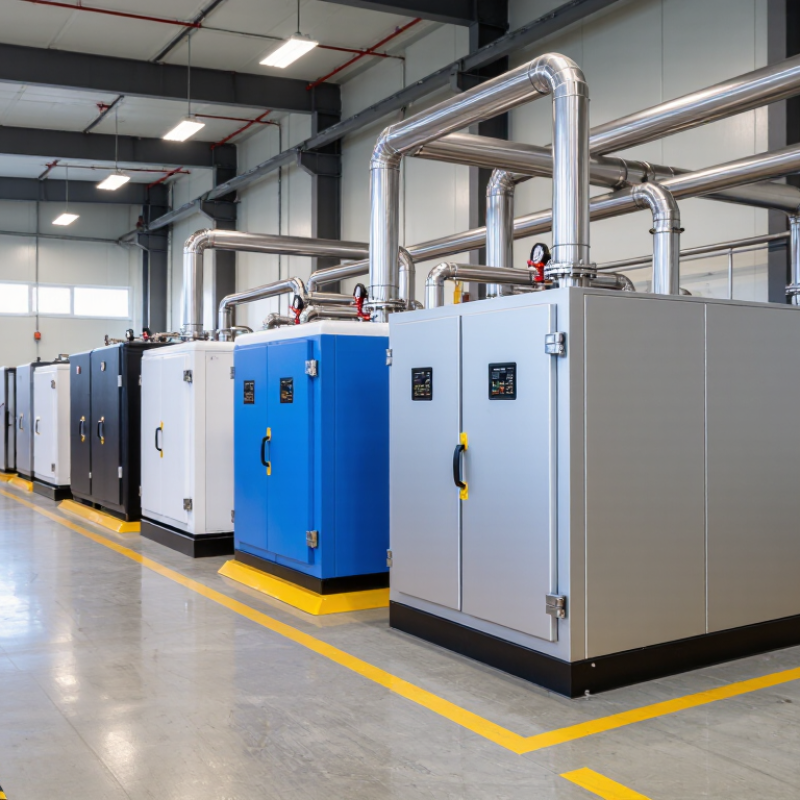
China Top 10 Air Compressor Air Dryer Manufacturers

Air Compressor Air Dryers: Types, Functions, and Industrial Applications

Air compressor air dryers remove moisture before compressed air reaches tools, valves, and production lines. Without treatment, water can cause rust, blocked filters, frozen control lines, and poor product quality. The main types are refrigerated, desiccant, and membrane dryers. Refrigerated models cool compressed air and condense water. They suit general factory air systems. Desiccant dryers use adsorption media to achieve much lower dew points. They support pharmaceutical, electronics, and precision coating processes. Membrane dryers are compact and useful where airflow demand remains moderate.

Choosing a dryer requires more than checking compressor size. Engineers should examine pressure, inlet temperature, ambient humidity, flow variation, and the required pressure dew point. A refrigerated dryer may waste energy if selected far above actual demand. A desiccant unit may perform well but consume purge air during regeneration. That hidden loss deserves attention. In my experience, poor drain design causes trouble faster than many buyers expect. Automatic drains, pre-filters, and clear service access improve daily reliability.

Industrial applications differ sharply. Machine shops often need clean, stable air for CNC equipment and pneumatic tools. Food packaging lines require careful moisture control and hygienic maintenance practices. Chemical plants may need corrosion-resistant materials and continuous monitoring. Chinese manufacturers commonly offer varied configurations for these conditions, but specifications still need independent verification. One catalogue number is not enough. Operators should record dew point, pressure drop, drain performance, and energy use after installation. Data often reveals an uncomfortable mistake.

How China’s Top Air Dryer Manufacturers Are Evaluated

Evaluating China’s top air dryer manufacturers requires more than comparing catalog prices. A credible supplier shows stable dew point readings under changing inlet temperatures and pressure. During factory visits, inspect drain valves, filters, heat exchangers, and control panels closely. Ask for test records, not polished claims. A reliable manufacturer explains how each result was measured, recorded, and verified. Numbers without context can mislead.

Production experience appears in small details. Look for consistent welding, clean assembly areas, traceable components, and documented quality checks. Request samples from different production batches. One excellent unit proves little. Performance testing should cover energy use, pressure drop, noise, corrosion resistance, and continuous operation. Independent laboratory reports add authority when methods follow recognized international standards. However, paperwork is not enough. After-sales response times, spare-part availability, installation guidance, and warranty terms also matter.

Tips: Match dryer capacity to actual airflow, not the compressor’s maximum label. Check local climate data and seasonal humidity. Ask whether maintenance staff can replace filters safely. Keep service intervals and fault records. Visit an operating installation when possible. Be cautious with unusually low quotations. Cheap equipment may create higher energy costs later. Evaluation is never perfectly objective. A checklist can miss operator skill, poor ventilation, or changing production loads. Leave room for field evidence.

China Top 10 Air Compressor Air Dryer Manufacturers - How China’s Top Air Dryer Manufacturers Are Evaluated

The following framework evaluates air dryer manufacturers using measurable technical, quality, compliance, service, and lifecycle criteria. It does not disclose company names, brand information, or unsupported company-specific rankings.

No. Evaluation Dimension Weight Verifiable Data or Benchmark Recommended Evidence
1 Product Range and Dryer Technology 12% Availability of refrigerated, desiccant, membrane, and high-temperature drying solutions for different compressed-air applications. Product catalogues, technical datasheets, operating-temperature limits, and application selection charts.
2 Pressure Dew Point Performance 15% Refrigerated dryers commonly target approximately +3°C pressure dew point; desiccant systems commonly target -40°C or -70°C, depending on configuration. Test reports, factory performance curves, and conformity with ISO 7183 testing methods.
3 Air Quality Capability 10% Capability to support the required ISO 8573-1 compressed-air quality class for moisture and other contaminants. ISO 8573-1 references, filtration layouts, oil carryover data, and particle or moisture test results.
4 Rated Flow and Pressure Range 12% Published air-flow capacity, inlet-pressure range, maximum working pressure, and correction factors for ambient conditions. Capacity tables stated in m³/min or m³/h, pressure-drop curves, and operating-condition assumptions.
5 Energy Efficiency 12% Specific power consumption, pressure drop, variable-speed operation, zero-loss drain design, and desiccant regeneration method. Power-consumption test data, kW ratings at defined conditions, pressure-drop results, and drain specifications.
6 Manufacturing and Quality Control 10% Documented production controls, pressure testing, leak testing, electrical safety checks, and final performance inspection. ISO 9001 certification, quality-control procedures, inspection records, and factory audit results.
7 Safety and Regulatory Compliance 8% Compliance documentation for applicable electrical, pressure-equipment, environmental, and market-entry requirements. Declaration of conformity, applicable test certificates, safety manuals, and regional compliance files.
8 Control, Monitoring, and Connectivity 7% Alarm functions, dew-point monitoring, remote contacts, controller data logging, and compatibility with plant-management systems. Controller manuals, alarm lists, communication protocols, wiring diagrams, and sample monitoring screens.
9 After-Sales Service and Spare Parts 8% Availability of manuals, maintenance schedules, replacement parts, technical support, and service coverage in target markets. Service network records, spare-parts lists, response-time commitments, warranty terms, and training materials.
10 Lifecycle Cost and Delivery Reliability 6% Total cost of ownership, maintenance intervals, consumable costs, quoted lead time, packaging quality, and export experience. Total-cost calculations, maintenance plans, delivery records, export documents, and customer reference checks.
Total Evaluation Weight 100% All scores should be based on comparable operating conditions and documented evidence.
Scoring guidance: Rate each dimension from 1 to 5, multiply the rating by the assigned weight, and compare manufacturers only after normalizing airflow, inlet pressure, inlet temperature, ambient temperature, and pressure dew point conditions.

China’s Top 10 Air Compressor Air Dryer Manufacturers

China’s top 10 air compressor air dryer manufacturers are judged by more than catalog size. Practical buyers inspect drying performance, service coverage, and documented testing. These manufacturers commonly supply refrigerated and desiccant dryers for factories, workshops, food packaging, electronics, and medical-air applications. Each application needs a different pressure dew point. That detail matters.

A credible manufacturer should explain airflow, inlet temperature, working pressure, and energy demand clearly. Factory visits can reveal assembly discipline, leak testing, electrical protection, and spare-parts storage. Look for calibrated instruments and traceable inspection records. Ask how dryers perform during humid summer shifts. Real experience appears in those answers. Not brochures.

Strong candidates combine engineering knowledge with responsive local support. They adapt controls, filters, drains, and heat exchangers to operating conditions. However, rankings can be imperfect. Export volume does not always equal stable field performance. Buyers should compare warranty terms, commissioning reports, noise data, and five-year maintenance costs. A smaller supplier may offer sharper customization, while a larger one may provide broader service. Check references carefully. Choose measured results over polished claims.

Product Comparison: Technologies, Capacities, and Performance

China Top 10 Air Compressor Air Dryer Manufacturers

Product Comparison: Technologies, Capacities, and Performance

China’s leading air dryer manufacturers typically offer refrigerated and desiccant technologies. Refrigerated dryers cool compressed air near 3°C pressure dew point. They suit workshops, assembly lines, and general pneumatic tools. Desiccant dryers can reach -40°C or lower, protecting sensitive instruments and outdoor pipelines. That protection costs more energy and may require regular desiccant replacement.

Capacity comparisons should use actual inlet conditions, not only the advertised flow rate. A unit rated at 10 m³/min may deliver less in a hot, humid factory. Check inlet temperature, working pressure, pressure loss, and seasonal moisture levels. Performance also depends on control systems, drain reliability, and heat exchanger cleanliness. In field inspections, small pressure drops often become expensive over long production shifts. Manufacturer testing is useful, but installation data deserves equal attention. One comparison can still be incomplete.

Tips: Match the dryer to the air quality standard and operating climate. Leave service space around the machine. Record dew point and pressure weekly. Oversizing seems safe, but it can increase purchase and operating costs. Undersizing is worse. A trial run under peak load can reveal problems that brochures miss.

China Top 10 Air Compressor Air Dryer Manufacturers - Product Comparison: Technologies, Capacities, and Performance

Anonymous product classes are used to compare representative specifications commonly published for industrial refrigerated and desiccant air dryers. Air flow is shown in m³/min, rated pressure in bar, pressure dew point in °C, and specific power consumption in kW per m³/min.

Higher air-flow capacity supports larger compressor systems. Lower pressure dew point indicates stronger moisture removal, while lower specific power consumption indicates better energy efficiency. Values represent typical rated performance ranges for comparable industrial air-dryer configurations.

How to Select a Suitable Chinese Air Dryer Manufacturer

China Top 10 Air Compressor Air Dryer Manufacturers

How to Select a Suitable Chinese Air Dryer Manufacturer

Selecting a Chinese air dryer manufacturer requires more than comparing purchase prices. The U.S. Department of Energy reports that compressed air can consume 10–15% of a plant’s electricity. Therefore, pressure loss, energy use, and maintenance deserve careful review. Ask for measured performance data, not only catalogue figures. Check inlet temperature, working pressure, flow rate, pressure dew point, and ambient conditions. These details strongly affect actual efficiency.

A reliable supplier should understand ISO 8573-1 air-quality classes and provide clear test methods. Request factory audit records, production traceability, and recent inspection reports. Review core components, drain reliability, heat-exchanger cleaning access, and alarm functions. For export projects, confirm spare-parts availability and response times. A low price can become expensive when one unavailable valve stops production. I would also compare total ownership cost over five years. This is often overlooked, including by experienced buyers.

Tips: Send the manufacturer your real operating data, including seasonal temperatures and compressor loading. Ask for a customized selection sheet. Compare at least three suppliers using identical conditions. Visit the factory when the project is critical. Online evidence is useful, but it is not perfect. One mistake is trusting claimed dew point without checking test standards. Independent verification may cost more, yet it can prevent unstable air quality and unexpected downtime.

Top
error: Content is protected !!