
Quality Products

At a Fair Price

Wholesale Provider

Of Valves & Fittings

  • Corporate Office: 1301 Greengrass Drive Houston, TX 77008
  • 1-800-237-2512

Quality Products

At a Fair Price

Wholesale Provider

Of Valves & Fittings

China Best Traction Lift Manufacturers for Global Buyers

Choosing reliable China Best Traction Lift Manufacturers requires more than comparing prices or viewing polished factory images. Global buyers need evidence of engineering capability, production consistency, safety awareness, and long-term service support. A Traction Lift should provide stable movement, accurate leveling, quiet operation, and dependable performance in demanding buildings.

Experienced manufacturers usually demonstrate their strengths through detailed technical documents, sample projects, and transparent quality procedures. Buyers should examine motor suppliers, gearbox or gearless systems, control cabinets, guide rails, ropes, brakes, and door operators. Factory visits can reveal practical details, such as organized assembly lines, calibrated testing equipment, and protected storage for electrical components. These details matter.

Safety comes first.

Reliable companies should explain how their products meet applicable regional codes and certification requirements. Documents must be verified, not simply accepted at face value. Load testing, emergency braking, overspeed protection, and power-failure procedures deserve careful attention. Installation guidance and spare-parts availability also affect the lift’s complete operating life.

However, no manufacturer is perfect. Delivery delays, communication gaps, and site-specific adjustments can still occur. That reality deserves honest discussion. Buyers may need to improve their own specifications, especially when local climate, building structure, or traffic patterns differ from standard designs. This guide evaluates leading Chinese manufacturers through practical criteria, including experience, technical expertise, manufacturing control, project references, and after-sales responsiveness. It aims to help developers, contractors, and distributors make informed decisions without relying on attractive claims alone. A strong partnership begins with clear questions, verified answers, and realistic expectations.
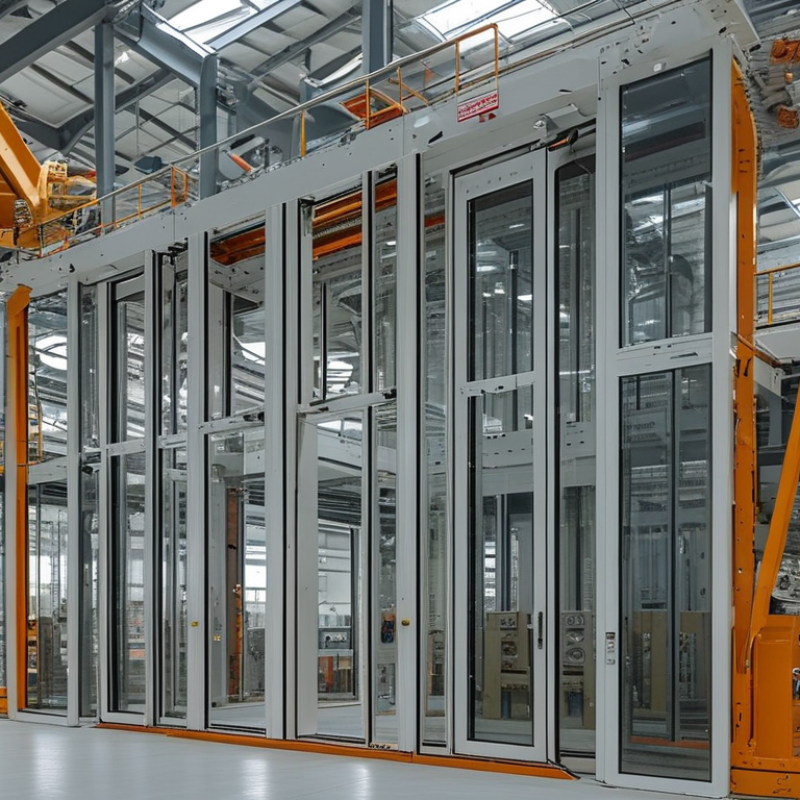
China Best Traction Lift Manufacturers for Global Buyers

What Defines a Leading Traction Lift Manufacturer in China?

China Best Traction Lift Manufacturers for Global Buyers

What defines a leading traction lift manufacturer in China? Engineering discipline comes first. A reliable supplier should design traction systems around load, travel height, duty cycle, and local voltage. It should provide load calculations, shaft drawings, safety circuits, and clear maintenance procedures. ISO 8100-1 and ISO 8100-2 offer useful benchmarks for lift safety and design verification. However, certificates alone are not enough. Factory testing should include brake response, door cycles, emergency operation, vibration, and noise levels.

Evidence matters. The European Lift Association estimates that lifts serve about one billion passenger journeys daily worldwide. Fortune Business Insights reported that the global elevator market reached approximately 88.57 billion dollars in 2023.

These figures show why component quality and after-sales support deserve serious attention. A leading Chinese manufacturer should maintain traceable parts, documented inspections, trained commissioning teams, and accessible technical support across time zones. Small details matter, such as a labeled control cabinet or a spare door sensor packed for replacement.

Tips: Ask for factory acceptance records, not only brochures. Request references for similar building heights and climates. Check response times for service questions. A polished video proves little. No supplier gets every project right. Even experienced buyers should review tolerance data, installation risks, and lifecycle costs before signing. That extra review may reveal a cheaper lift becoming expensive after five years.

Key Technologies Behind Chinese Traction Lift Systems

Chinese traction lift manufacturers increasingly compete through engineering depth, not only price. Their systems often use permanent-magnet synchronous gearless machines, reducing machine-room space and mechanical losses. In field inspections, the difference appears in smooth starts, accurate leveling, and quieter travel. A traction sheave with matched grooves limits rope slip. Small details matter.

Modern controllers coordinate variable-frequency drives, door operators, load sensors, and overspeed protection. The controller adjusts torque before movement, helping prevent rollback at landings. Regenerative drives can return braking energy to a building’s electrical network when suitable power management is available. Remote monitoring records fault codes, temperature changes, brake cycles, and unusual vibration. This evidence helps technicians plan service instead of guessing.

For global buyers, testing discipline matters as much as component selection. Suppliers should provide test records, wiring diagrams, risk assessments, and traceable inspection data. Independent verification against standards such as EN 81 or ASME A17.1 still requires local review. Some projects reveal a weakness: factory settings may not suit every building’s traffic pattern or climate. Engineers must retune acceleration, ventilation, and moisture protection on site. No traction lift is maintenance-free. Rope tension, brake clearance, and encoder alignment require regular checks. Practical honesty supports safer procurement.

How to Assess Traction Lift Manufacturers for Global Projects

For global buyers, assessing a traction lift manufacturer starts with evidence, not polished brochures. Ask about comparable installations in climates like yours. Request references with capacities, travel heights, duty cycles, and commissioning dates. A factory visit can reveal more than a sales presentation. Watch a rope sheave being machined. Check whether test records are traceable. Small details matter.

Review engineering competence before comparing prices. The manufacturer should provide load calculations, drive specifications, safety circuits, controller diagrams, and maintenance schedules. Confirm compliance with codes required in the installation country. Ask who signs the technical documents. Vague answers create expensive delays. Request a witnessed factory acceptance test covering overspeed protection, emergency operation, door performance, noise, and leveling accuracy. Test conditions should match the final project, not an ideal showroom.

Reliability also depends on support after shipment. Check spare-parts availability, remote troubleshooting, local training, and written response times. Ask for a realistic production schedule, packing method, and responsibility matrix for installation interfaces. One weakness is easy to miss: software updates and replacement components may depend on one specialist. Plan for that risk. No assessment is perfect. I would still interview a recent customer without the manufacturer present, then compare comments with warranty claims and service logs.

Certifications, Customization, and Export Support

Choosing a traction lift manufacturer in China requires more than comparing quotations. Experienced buyers inspect certification files, production records, and export procedures before signing. Ask for current certificates covering the lift, electrical components, safety devices, and factory quality systems. Documents should be traceable, readable, and matched to the proposed configuration. Paperwork matters. A certificate means little if its scope excludes your market or model.

Customization should begin with a site survey, not a colorful brochure. Engineers need shaft dimensions, travel height, rated load, traffic flow, power supply, climate, and local code requirements. Practical options may include cabin finishes, door sizes, control logic, emergency communication, and energy-saving drives. Reliable manufacturers issue drawings for approval before production. Small errors become expensive changes. Some sellers promise flexibility before confirming engineering limits. Clear exclusions build more trust than vague promises.

Export support should cover factory testing, protective packing, shipping coordination, customs documents, and installation guidance. Request packing lists, commercial invoices, manuals, wiring diagrams, and spare-parts recommendations in advance. Regional voltage and inspection rules can affect delivery schedules. Installation can fail. Remote technical support, technician training, and responsive warranty handling reduce avoidable delays. Even strong suppliers may miss a detail, so buyers should record decisions, approve revisions, and keep communication in writing.

China Best Traction Lift Manufacturers for Global Buyers - Certifications, Customization, and Export Support

Evaluation Dimension Recommended Requirement for Global Buyers Typical Evidence to Request International Relevance Priority
Quality Management A documented quality-management system covering design, procurement, production, inspection, installation support, and after-sales service. Valid ISO 9001 certificate issued by an accredited certification body; controlled inspection and testing records. Improves process consistency and provides a recognized framework for supplier audits. High
Lift Safety Compliance Design and manufacturing aligned with the applicable destination-market lift safety code and local approval process. Relevant design files, risk assessment, type-test documentation, conformity assessment records, and inspection certificates. The applicable standard depends on the importing country; buyers should confirm requirements before ordering. High
Common European Standards Capability to support projects referencing EN 81-20 and EN 81-50, subject to the required conformity-assessment route. Declaration of Conformity where applicable, technical construction file, test reports, and notified-body documentation when required. Useful for European Economic Area projects and markets adopting or referencing EN-based requirements. Medium
North American Compliance Ability to engineer and document equipment for projects using ASME A17.1/CSA B44 or other locally adopted codes. Code review, component listings where required, engineering calculations, inspection records, and local authority approval documents. Local jurisdictional approval is essential; certification of individual components does not automatically approve the complete installation. Medium
Traction System Options Geared or gearless traction configurations, with machine-room or machine-room-less layouts selected according to building conditions. System drawings, drive and motor specifications, load calculations, brake data, and maintenance-access plan. Allows adaptation to residential, commercial, institutional, and retrofit projects. High
Customization Scope Customization of rated load, rated speed, number of stops, travel height, car dimensions, door type, finishes, controls, and accessibility features. Approved general-arrangement drawings, shop drawings, interface schedules, finish samples, and change-control records. Reduces site conflicts and supports local architectural, electrical, and accessibility requirements. High
Accessibility Features Support for accessible car layouts, suitable door clear openings, handrails, tactile controls, audible announcements, and emergency communication provisions. Accessibility layout drawings, control-panel specifications, door data, and destination-market compliance checklist. Requirements vary by country and building type; early coordination helps prevent redesign. High
Energy and Ride Performance Efficient motor and drive selection, controlled acceleration and deceleration, accurate leveling, standby settings, and regenerative options where suitable. Motor and drive datasheets, no-load and full-load performance data, ride-quality test results, and standby-power information. Supports operating-cost control and user comfort, but actual results depend on traffic patterns and installation quality. High
Safety Components Traceable safety gear, overspeed governor, buffers, door locks, emergency brake functions, limit switches, and emergency rescue provisions. Component certificates, batch or serial traceability, inspection records, test reports, and maintenance instructions. Traceability supports commissioning, authority inspection, maintenance, and future replacement. High
Export Documentation A structured document package prepared for customs clearance, technical review, installation, and local approval. Commercial invoice, packing list, bill of lading or air waybill, certificate of origin when required, manuals, drawings, and conformity documents. Complete documentation reduces customs delays and improves handover to contractors and inspectors. High
Packaging and Shipping Export-grade protection for machinery, controls, panels, doors, rails, and fragile components, with clear package identification. Packing specification, package dimensions and weights, loading photos, moisture protection details, and shipping marks. Important for long-distance sea freight, port handling, warehouse storage, and site logistics. High
Installation and Commissioning Support Remote technical support, installation manuals, commissioning procedures, troubleshooting guidance, and optional field-service coordination. Installation method statement, wiring diagrams, commissioning checklist, training records, and escalation contacts. Particularly valuable when the equipment is installed by a local contractor rather than the exporting manufacturer. High
After-Sales and Spare Parts A defined warranty policy, spare-parts identification system, remote diagnosis process, and long-term support for standard wear items. Warranty terms, recommended spare-parts list, parts diagrams, response-time policy, maintenance schedule, and service contact procedure. Helps maintain equipment availability and reduces dependence on urgent international shipments. High
Buyer note: Certification, approval, and installation requirements vary by destination country and local authority. Verify the applicable code, conformity route, inspection process, and importer responsibilities before placing an order.

Choosing the Best Chinese Traction Lift Supplier

Choosing the Best Chinese Traction Lift Supplier

Global lift demand is growing with urban density. The United Nations projects that 68% of people will live in cities by 2050. Fortune Business Insights estimated the global elevator market at about USD 88 billion in 2023, with continued growth through 2032. These figures matter, but they do not prove supplier quality.

Inspect the factory, not only the website. Ask for production records, load-test results, and traceable component certificates. A reliable traction lift manufacturer should explain motor efficiency, rope design, counterweight ratios, and emergency braking clearly. Request references for projects with similar speed, travel height, climate, and traffic levels. Visit the assembly line if possible. Ask for evidence.

Check compliance with relevant standards, including ISO 8100-1 and ISO 8100-2, while confirming local certification requirements. Review the control cabinet, overspeed governor, door operator, and backup procedures during a technical meeting. Spare-parts planning also deserves attention. A low initial price can become expensive when a controller or door sensor takes weeks to replace.

Energy performance needs practical testing. CIBSE guidance shows that lift consumption varies with traffic, standby settings, and building use. Ask suppliers for measured data, not broad efficiency claims. I have seen polished specifications hide unclear maintenance responsibilities. That is a warning sign. A strong contract should define inspection intervals, response times, training, documentation, and warranty exclusions in plain language.

China Best Traction Lift Manufacturers for Global Buyers

Choosing the Best Chinese Traction Lift Supplier Through Typical Rated-Speed Requirements

The chart shows representative maximum rated-speed levels commonly associated with different building applications. Low-rise residential lifts are often specified around 1.0 m/s, while high-rise and super-high-rise traction systems may require substantially higher speeds. Buyers should confirm speed, load capacity, travel height, safety compliance, energy efficiency, and after-sales support with each supplier.

Top
error: Content is protected !!