What is China U Channel Steel Factory and Why Choose It?
The demand for quality steel products is rising globally. Among the various options available, the China U Channel Steel Factory stands out. This factory specializes in producing U channel steel, known for its versatility and strength. Many industries rely on these products for construction, manufacturing, and infrastructure projects.
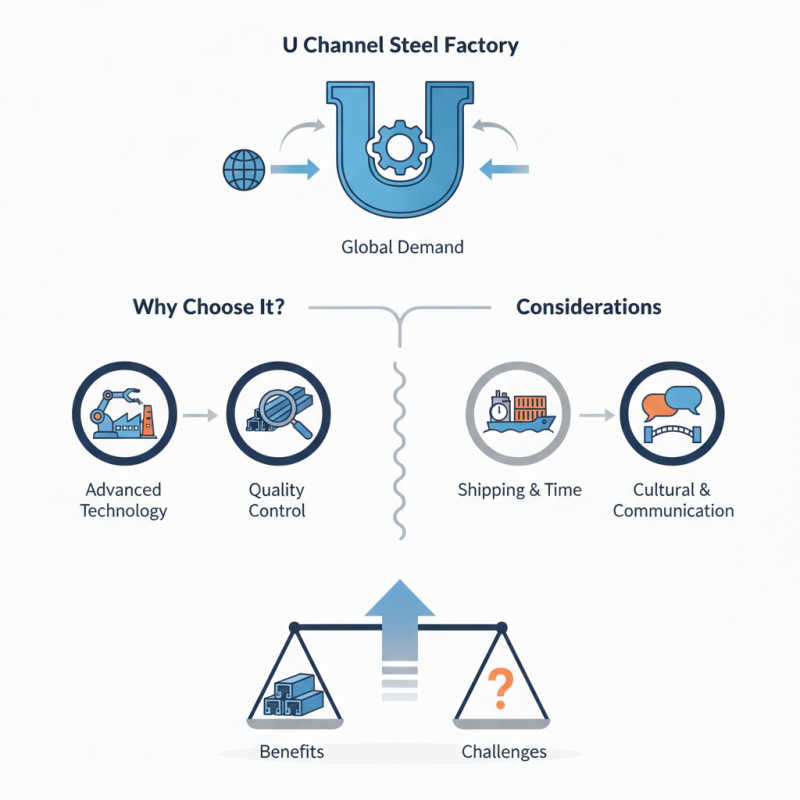
Choosing a China U Channel Steel Factory offers significant advantages. The factories implement advanced technology and skilled labor to ensure high-quality production. With rigorous quality control measures, they provide products that meet international standards. Additionally, their ability to deliver at scale makes them a preferred choice for businesses seeking reliable suppliers.
However, the decision to partner with such a factory should not be taken lightly. Companies must consider factors like shipping times and potential cultural differences. While Chinese manufacturers excel in efficiency, communication challenges can arise. Understanding these dynamics can lead to a more fruitful collaboration. Overall, the benefits of sourcing from a China U Channel Steel Factory often outweigh the challenges, making it a sensible option for many.
What is China U Channel Steel and Its Manufacturing Process?
China U Channel Steel is a vital component in various construction projects. The manufacturing process begins with high-quality steel billets. These billets are heated and then formed into U-shaped channels. The channels are cut to specific lengths and cooled. This process ensures strength and durability.
The production methods can vary. Some plants use advanced machinery for precision. Others may rely on traditional techniques. Both methods have their pros and cons. Consistency in quality is crucial. However, some manufacturers face challenges in maintaining this quality.
Moreover, U Channel Steel is versatile. It is used in building frames, supports, and even for decorative purposes. It's light yet strong, making it popular in modern architecture. Environmental factors can impact production. Manufacturers should adapt to these changes. Striving for improvement is always necessary in the industry.
Key Specifications and Standards for U Channel Steel Products
U Channel steel products are integral in construction and manufacturing. They come with specific key specifications and standards that ensure quality and performance. According to the American Institute of Steel Construction (AISC), dimension and shape standards govern U Channel steel. The typical dimensions range from 2 inches to 12 inches in depth and can have flange widths from 1 inch to 6 inches. This variety accommodates different applications, from support structures to railings.
Moreover, the ASTM (American Society for Testing and Materials) provides guidelines on the material properties. For example, U Channel steel usually meets the ASTM A36 or A572 standards, ensuring a minimum yield strength of 36 ksi or 50 ksi, respectively. These specifications enhance reliability in structural applications. However, issues like corrosion resistance can arise if the product isn’t properly treated. While some factories emphasize quality control, gaps in inspection procedures might occur.
Choosing the right U Channel steel factory involves understanding these standards and assessing whether the manufacturer adheres to them. Some factories may have inconsistent quality, raising concerns about structural integrity. Ensuring that a factory follows stringent specifications can mitigate risks associated with subpar materials. Validating certifications and compliance with international standards is crucial in making informed decisions.
Advantages of Sourcing U Channel Steel from China: Cost and Quality
China’s U channel steel industry has grown significantly due to its cost-effective production methods. A report by the China Metallurgical Industry Association states that China produces over 50% of the world’s steel. This dominance reflects its efficiency and expertise in manufacturing U channel steel. The price advantage is notable, as sourcing from China can result in savings of up to 30% compared to Western manufacturers.
The quality of U channel steel from China meets international standards. Data from the World Steel Association indicates that China's steel mills have made substantial investments in technology. This results in better strength and durability of the U channel steel products. Factories often undergo rigorous quality checks, ensuring consistency throughout their production.
However, sourcing from different countries can introduce challenges. Language barriers and time zone differences might complicate communication. Additionally, quality can vary among suppliers. It's vital to conduct thorough research before signing contracts. Ensuring suppliers adhere to quality standards will help mitigate these risks. This investment in due diligence leads to successful procurement.
Market Trends: Demand and Supply of U Channel Steel Globally
The global demand for U channel steel is fluctuating. Factors such as infrastructure development and construction activities drive this need. Many countries report a rising interest in U channel steel due to its versatility. Industries like automotive and manufacturing utilize it extensively. This steel product is vital in creating structures that require robust support.
Supply chains face challenges in meeting this growing demand. Factors like raw material availability and shipping disruptions can impact production. Some manufacturers struggle to keep pace with orders. Regional differences in supply can create disparities in pricing and availability. Companies must adapt to these conditions to remain competitive.
In essence, understanding market trends in U channel steel is crucial for industry players. Close attention to demand and supply dynamics can guide strategic decisions. The landscape remains complex, and companies should continually assess their strategies to navigate these changes. Staying informed and adaptable is key to success in this market.
Factors Influencing the Choice of a U Channel Steel Factory in China
When considering a U Channel Steel factory in China, several factors play an important role. The quality of materials is crucial. High-quality steel ensures durability. Low-quality materials may lead to safety issues. Thus, investigating the raw materials used in production is essential.
Another factor is production capacity. Factories with advanced technology can produce steel quickly and efficiently. A factory’s ability to handle large orders is significant. Some factories may lack the infrastructure needed for large-scale projects. This can lead to delays and increased costs.
Pricing is also a critical consideration. It's tempting to choose the cheapest option, but this may compromise quality. Evaluating the cost versus the expected quality can save money in the long run. Additionally, understanding shipping and handling costs is necessary. Hidden fees can add up, making a seemingly low-priced option far more expensive. Do your homework and weigh all these aspects when selecting a factory.