
Quality Products
At a Fair Price
Wholesale Provider
Of Valves & Fittings
- HOME
- Products
- Ball Valves
- Bull Plugs & Swages
- Butterfly Valves
- Check Valves
- Cushion / Flow Tees & Bleed Rings
- Enhanced Oil Recovery
- Floating Ball Valves
- Foot Valves
- Forged Steel Fittings
- Forged Steel Outlets
- Gaskets-Insulation Kits
- Gate Valves
- Gate, Globe & Check Valves
- Malleable Fittings
- Needle Valves
- Nipples
- Piston Valves
- Plug Valves
- Stainless Steel Flanges, Fittings & Nipples
- Strainers
- Studs
- Trunnion
- Unions
- Weld Fittings & Flanges
- Manufacturers
- Advance
- American Block
- Anvil
- Balon
- Bonney Forge
- Champion
- Clayton Mark
- Crane
- Daniel
- DMIC
- GMI
- Galli & Cassina
- Hackney-Ladish
- JMC
- Lone Star
- MATCO
- Marpac-McCanna
- National Flange
- National Gasket
- Nordstrom
- Nutron
- PPI
- SHARPE
- SMI
- TEXSTEAM
- TEX-THREAD
- Titan
- USA Fastner
- Vogt
- Weld Bend
- Westbrook
- Wheatley
- Williams
- WKM
- Wolar
- Locations
- Contact
- Blog
- Careers
- Get a Quote
- HOME
- Products
- Ball Valves
- Bull Plugs & Swages
- Butterfly Valves
- Check Valves
- Cushion / Flow Tees & Bleed Rings
- Enhanced Oil Recovery
- Floating Ball Valves
- Foot Valves
- Forged Steel Fittings
- Forged Steel Outlets
- Gaskets-Insulation Kits
- Gate Valves
- Gate, Globe & Check Valves
- Malleable Fittings
- Needle Valves
- Nipples
- Piston Valves
- Plug Valves
- Stainless Steel Flanges, Fittings & Nipples
- Strainers
- Studs
- Trunnion
- Unions
- Weld Fittings & Flanges
- Manufacturers
- Advance
- American Block
- Anvil
- Balon
- Bonney Forge
- Champion
- Clayton Mark
- Crane
- Daniel
- DMIC
- GMI
- Galli & Cassina
- Hackney-Ladish
- JMC
- Lone Star
- MATCO
- Marpac-McCanna
- National Flange
- National Gasket
- Nordstrom
- Nutron
- PPI
- SHARPE
- SMI
- TEXSTEAM
- TEX-THREAD
- Titan
- USA Fastner
- Vogt
- Weld Bend
- Westbrook
- Wheatley
- Williams
- WKM
- Wolar
- Locations
- Contact
- About
- Careers
- Get a Quote
Why Choose a Rotary Drilling Rig for Your Project Needs?
When considering project needs, the choice of equipment is crucial. According to Dr. Emily Carter, a noted expert in geological engineering, “A Rotary Drilling Rig can transform your project's efficiency.” Her insights underscore the importance of selecting the right drilling solution.
Rotary Drilling Rigs stand out for their versatility and power. They excel in various terrains and geological conditions. Projects requiring deep boreholes or large diameters greatly benefit from this technology. The ability to drill through tough materials makes them invaluable. However, the initial investment can be substantial. It's essential to assess whether the benefits align with project requirements.
The operational speed and depth capabilities often turn the tide in favor of Rotary Drilling Rigs. Yet, one must consider the expertise needed to operate these machines effectively. Relying purely on technology without skilled operators can lead to challenges. The decision to choose a Rotary Drilling Rig involves weighing many factors, including cost, capability, and expertise.
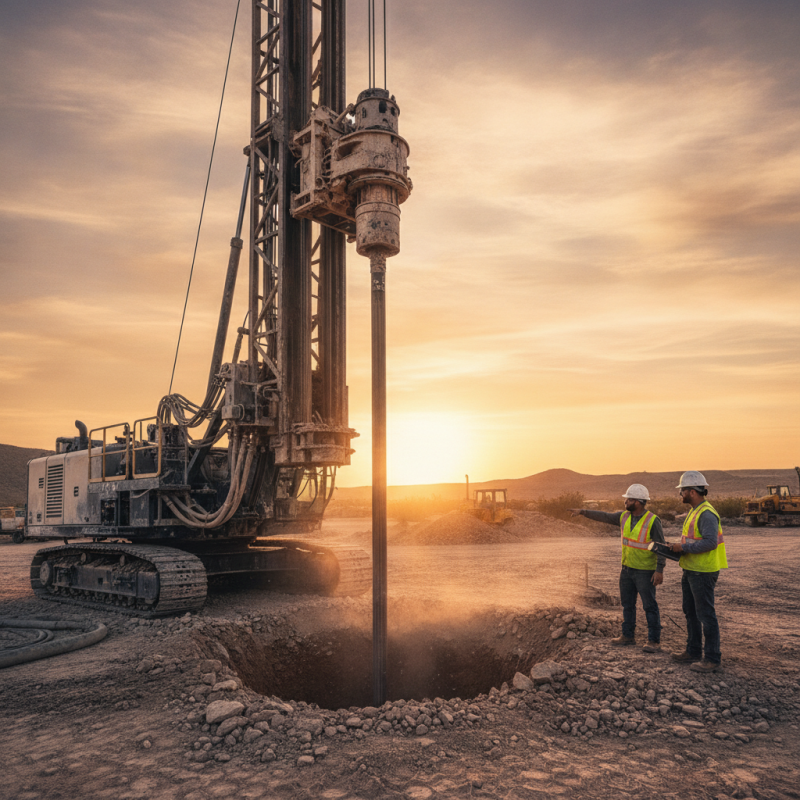
Understanding Rotary Drilling Rigs: Basics and Functionality
Rotary drilling rigs play a vital role in various construction and geological exploration projects. These machines utilize a rotating bit to penetrate the ground, allowing for the extraction of soil and other materials. Their design is robust, catering to diverse terrains, from urban to rural environments. As a result, they are preferred for deep wells, foundation work, and mining operations.
Understanding how rotary drilling rigs function enhances project efficiency. Equipped with a series of drill pipes, they can reach significant depths. The rig's rotation, combined with downward pressure, breaks up the earth effectively. However, the rig's complexity means that proper training is essential for operators. While most operators are skilled, occasional errors can lead to costly delays.
Maintenance is another crucial aspect. Regular checks are needed to keep the rig in optimal condition. Neglecting this can result in mechanical failures. Operators must be vigilant and conduct routine inspections, ensuring that every component functions seamlessly. In summary, while rotary drilling rigs are powerful tools, their effectiveness largely depends on the operator's expertise and diligent maintenance practices.
Key Advantages of Using Rotary Drilling Rigs in Various Projects
Rotary drilling rigs offer distinct advantages for various construction projects. One key benefit is their efficiency. According to industry reports, rotary drilling can reduce project completion time by up to 30%. This is especially crucial in time-sensitive projects, where delays can lead to heightened costs.
Moreover, these rigs achieve deeper penetration in complex soil conditions. They can effectively reach depths of over 1,000 feet in challenging substrates like clay and bedrock. This capability is often necessary for infrastructure projects requiring stable foundations. The versatility of rotary drilling also makes it suitable for both urban and rural environments, adapting well to different contexts.
Tip: Always assess soil conditions before selecting a drilling method. Each project has unique challenges.
While rotary drills are powerful, they come with complexity. Operators require specialized training to maximize performance. Miscalculations can lead to inefficiencies that may compromise safety and timelines. It’s essential to focus on continued training for personnel to mitigate risks.
Tip: Consider regular training sessions for your team. Investing in knowledge pays off in operational success.
Comparing Rotary Drilling Rigs to Other Drilling Techniques
When comparing rotary drilling rigs to other techniques, specific advantages become evident. Rotary drilling provides superior efficiency in a variety of soil conditions. According to a report from the International Association of Drilling Contractors, rotary rigs can achieve penetration rates up to 50% faster than percussion drills in hard rock formations. This speed can significantly shorten project timelines and reduce costs.
Rotary drilling also offers enhanced stability and precision. The continuous rotation of the drill bit allows for more consistent drilling. In sensitive environments, this means less vibration and disturbance compared to other methods like cable tool drilling. A study published in the Journal of Soil Mechanics indicates that rotary methods reduce the risk of collapses by up to 30% in unstable soils.
However, rotary drilling isn't without its challenges. It requires more specialized training and equipment, which can increase initial costs. Additionally, rotary rigs may struggle in very soft or loose soils, where auger drilling can be more effective. These considerations should be part of the decision-making process when selecting the best method for a project.
Factors to Consider When Selecting a Rotary Drilling Rig
When selecting a rotary drilling rig, several critical factors influence your decision. The soil type is paramount. For rocky terrains, a robust rig is necessary. According to the International Association of Drilling Contractors, nearly 60% of drilling failures arise from inadequate equipment for specific soil conditions. Understanding the geotechnical profile is essential.
Another key consideration is the depth of the project. Deep drilling requires advanced technology. High-performance rigs enable efficient operations, especially in challenging environments. Data from the American Society of Civil Engineers indicates that outdated rigs can double project timelines. This reality emphasizes the need for modernization in equipment selection.
**Tips:** Assess your project’s timeline when choosing a rig. An appropriate choice can significantly enhance productivity. Always consult with experts to understand your specific drilling requirements. Evaluate maintenance and operational support offered by suppliers. This can prevent costly downtime during your project. Remember, the right rig is not just about capability; it's about project alignment and long-term performance.
Why Choose a Rotary Drilling Rig for Your Project Needs?
| Factor | Description | Importance Level |
|---|---|---|
| Project Depth | Determine the required depth of drilling for the project. | High |
| Soil Conditions | Evaluate the type of soil and rock formations to be drilled. | Medium |
| Mobility | Consider how easily the rig can be transported to the site. | High |
| Power Source | Identify the availability of power sources such as electric or diesel. | Medium |
| Budget | Establish the budget allocated for drilling equipment and operations. | High |
| Rig Type | Choose between different rotary rig types based on project requirements. | High |
Applications of Rotary Drilling Rigs in Different Industries
Rotary drilling rigs play a crucial role across multiple industries. In construction, they are often used for deep foundation work. A report from the American Society of Civil Engineers states that nearly 40% of construction projects leverage rotary drilling techniques to ensure stability. These rigs can penetrate various soil types, allowing for precise site preparation.
In the oil and gas sector, rotary drilling rigs are essential. According to the International Energy Agency, around 60% of global oil production relies on rotary drilling methods. These rigs can reach depths of thousands of meters, providing access to valuable resources. The efficiency of rotary drilling enhances exploration and production rates, making it a preferred choice for operators.
Even in environmental applications, rotary drilling has its place. Geotechnical investigations utilize these rigs to gather subsurface data. This data informs decisions on pollution remediation and groundwater management. As industries evolve, the demand for reliable rotary drilling solutions continues to grow. However, the environmental impact of drilling activities must be continuously assessed and addressed. Choices made today can have long-term effects on ecological preservation.
