
Quality Products
At a Fair Price
Wholesale Provider
Of Valves & Fittings
- HOME
- Products
- Ball Valves
- Bull Plugs & Swages
- Butterfly Valves
- Check Valves
- Cushion / Flow Tees & Bleed Rings
- Enhanced Oil Recovery
- Floating Ball Valves
- Foot Valves
- Forged Steel Fittings
- Forged Steel Outlets
- Gaskets-Insulation Kits
- Gate Valves
- Gate, Globe & Check Valves
- Malleable Fittings
- Needle Valves
- Nipples
- Piston Valves
- Plug Valves
- Stainless Steel Flanges, Fittings & Nipples
- Strainers
- Studs
- Trunnion
- Unions
- Weld Fittings & Flanges
- Manufacturers
- Advance
- American Block
- Anvil
- Balon
- Bonney Forge
- Champion
- Clayton Mark
- Crane
- Daniel
- DMIC
- GMI
- Galli & Cassina
- Hackney-Ladish
- JMC
- Lone Star
- MATCO
- Marpac-McCanna
- National Flange
- National Gasket
- Nordstrom
- Nutron
- PPI
- SHARPE
- SMI
- TEXSTEAM
- TEX-THREAD
- Titan
- USA Fastner
- Vogt
- Weld Bend
- Westbrook
- Wheatley
- Williams
- WKM
- Wolar
- Locations
- Contact
- Blog
- Careers
- Get a Quote
- HOME
- Products
- Ball Valves
- Bull Plugs & Swages
- Butterfly Valves
- Check Valves
- Cushion / Flow Tees & Bleed Rings
- Enhanced Oil Recovery
- Floating Ball Valves
- Foot Valves
- Forged Steel Fittings
- Forged Steel Outlets
- Gaskets-Insulation Kits
- Gate Valves
- Gate, Globe & Check Valves
- Malleable Fittings
- Needle Valves
- Nipples
- Piston Valves
- Plug Valves
- Stainless Steel Flanges, Fittings & Nipples
- Strainers
- Studs
- Trunnion
- Unions
- Weld Fittings & Flanges
- Manufacturers
- Advance
- American Block
- Anvil
- Balon
- Bonney Forge
- Champion
- Clayton Mark
- Crane
- Daniel
- DMIC
- GMI
- Galli & Cassina
- Hackney-Ladish
- JMC
- Lone Star
- MATCO
- Marpac-McCanna
- National Flange
- National Gasket
- Nordstrom
- Nutron
- PPI
- SHARPE
- SMI
- TEXSTEAM
- TEX-THREAD
- Titan
- USA Fastner
- Vogt
- Weld Bend
- Westbrook
- Wheatley
- Williams
- WKM
- Wolar
- Locations
- Contact
- About
- Careers
- Get a Quote
CNC Turning Center What You Need to Know About Its Applications?
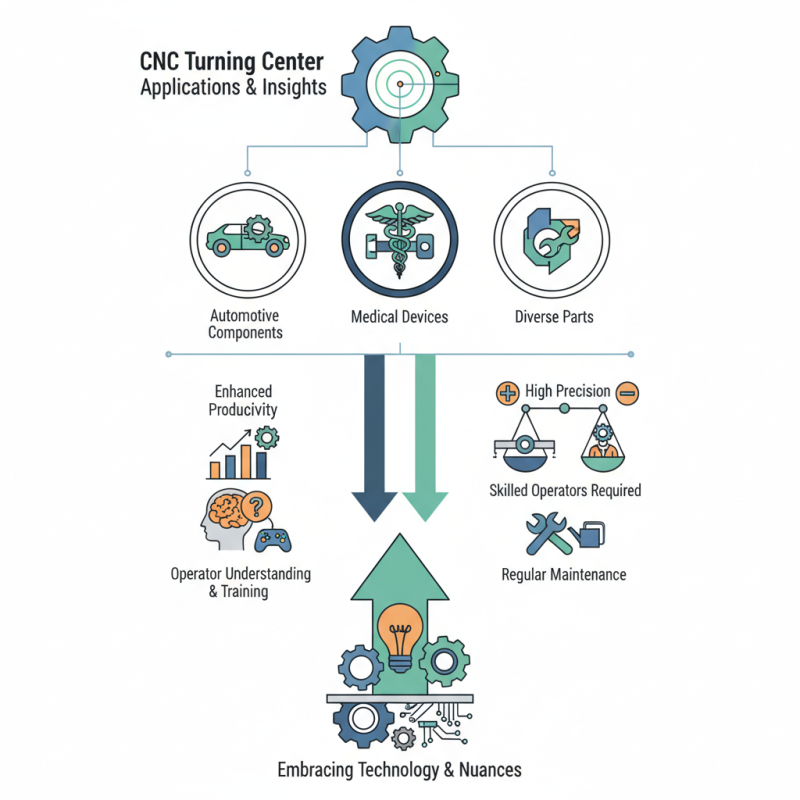
The CNC Turning Center is revolutionizing manufacturing processes across various industries. This advanced technology enables precise and efficient machining of complex parts. From automotive components to medical devices, its applications are diverse.
Using a CNC Turning Center can significantly enhance productivity. However, not all operators fully understand its capabilities. Misunderstanding software or tool changes can lead to inefficiencies. More training and resources might be necessary.
In exploring CNC Turning Centers, we must acknowledge both strengths and weaknesses. They offer high precision but require skilled operators. Regular maintenance is essential for optimal performance. Embracing this technology is not just about adoption but also understanding its nuances.
Understanding CNC Turning Centers: Definition and Functionality
CNC turning centers are vital in modern manufacturing. They automate the process of shaping materials. This machine allows precise cutting, drilling, and finishing of parts. Operators input designs, and the machine takes over. This produces high-quality components consistently.
The functionality of CNC turning centers is impressive. They use computer numerical control to execute commands accurately. The machine rotates the workpiece against cutting tools. This method reduces errors often seen in manual machining. It also increases efficiency. However, programming these machines can be challenging for some operators. A learning curve exists. Mistakes in code can lead to material waste and time loss.
Applications of CNC turning centers vary widely. They are used in automotive, aerospace, and medical industries. Each sector benefits from the precision these machines offer. Custom parts are easily produced to meet specific needs. Yet, some users may overlook the importance of regular maintenance. Failure to maintain equipment can lead to unexpected breakdowns and costly repairs. Understanding both their strengths and limitations is essential for effective use.
Key Applications of CNC Turning Centers in Modern Manufacturing
CNC turning centers are pivotal in modern manufacturing. They excel at creating cylindrical parts with precision. These machines can handle various materials, including metals and plastics. The versatility makes them suitable for different industries.
One key application is in automotive manufacturing. CNC turning centers produce critical engine components and drive train parts. They ensure high accuracy and repeatability in mass production. Aerospace also benefits from these machines. Components like landing gear and structural parts require tight tolerances that CNC turning can achieve.
Despite their advantages, challenges remain. Programming these machines can be complex. Mistakes in setup may lead to significant waste. Operators need extensive training to maximize efficiency. The balance between automation and skilled labor is a topic for reflection. Continuous improvements are essential to fully harness CNC turning capabilities.
CNC Turning Center Applications
The bar chart below illustrates the key applications of CNC Turning Centers in modern manufacturing. It highlights the percentage of use across different sectors, showcasing the versatility and importance of this technology in producing precision components.
Comparative Analysis: CNC Turning vs. Traditional Machining Methods
CNC turning centers have transformed the manufacturing landscape. They offer precision that traditional machining methods often struggle to match. Unlike manual lathes, CNC machines automate the turning process. This results in consistent quality across multiple pieces. Operators can create complex shapes without extensive training.
However, traditional methods still hold value. Manual machining allows for immediate adjustments. Craftsmen can feel the material and adapt on the fly. This tactile approach can lead to unique outcomes. The artistry involved is sometimes lost in CNC production. Moreover, initial investment costs for CNC setups are substantial. Smaller workshops might find it challenging to justify such expenses.
In essence, while CNC turning centers provide efficiency, they are not a one-size-fits-all solution. There are instances where traditional machining proves beneficial. The choice ultimately depends on specific project requirements and budget constraints. Finding the right balance between these methods is key. This requires ongoing reflection and adjustment in practices.
Industry Statistics: Growth and Investment in CNC Turning Technology
CNC turning technology is witnessing significant growth in various industries. Investing in CNC turning centers promises efficiency and precision. According to industry statistics, the market shows robust growth trends. Many manufacturers are shifting towards automation. This shift fuels demand for advanced CNC turning solutions.
Tips: Keep your machinery well-maintained. Scheduled maintenance reduces downtime. Trained operators enhance productivity rates.
As industries evolve, investing in CNC turning technology becomes crucial. Proper analysis of project requirements aids decision-making. However, the reluctance to adopt new methods can hinder growth. Companies must reflect on their strategies and adaptability.
Tips: Embrace training programs for your team. Skills development leads to better utilization of technology. Foster a culture of innovation within your organization.
Future Trends: Innovations and Advancements in CNC Turning Centers
The landscape of CNC turning centers is evolving rapidly. Innovations in robotics and AI are improving efficiency. According to a recent report, the global CNC turning center market is projected to grow at a CAGR of 5.2% by 2025. This growth is driven by increased demand for precision equipment in various industries.
One key advancement is the integration of smart technology. These machines can analyze data in real-time. This leads to reduced downtime and more accurate production. However, the reliance on such technologies raises questions about cybersecurity risks. Manufacturers must ensure that their systems are secure from potential threats.
Moreover, sustainability is becoming a priority. CNC turning centers can be designed to minimize waste. Reports indicate that 25% of all manufacturing waste stems from inefficient processes. Investing in better technology can help reduce this footprint. Yet, many companies struggle to balance cost with sustainable practices. As industries strive for innovations, these challenges must be addressed carefully.
CNC Turning Center Applications and Future Trends
| Application Area | Key Features | Materials Used | Future Trends |
|---|---|---|---|
| Automotive Manufacturing | High precision components, complex shapes | Aluminum, Steel, Plastic | Automation, IoT integration |
| Aerospace Components | Lightweight, high strength | Titanium, Composites | Additive manufacturing synergy |
| Medical Devices | Precision, biocompatibility | Stainless Steel, Plastics | Smart devices, AI-driven designs |
| Electronics | Small, intricate parts | Copper, Aluminum | Increased miniaturization |
| Construction | Large components, robustness | Steel, Alloy | Sustainability initiatives |
