What Is a DTH Boring Machine and How Does It Work?
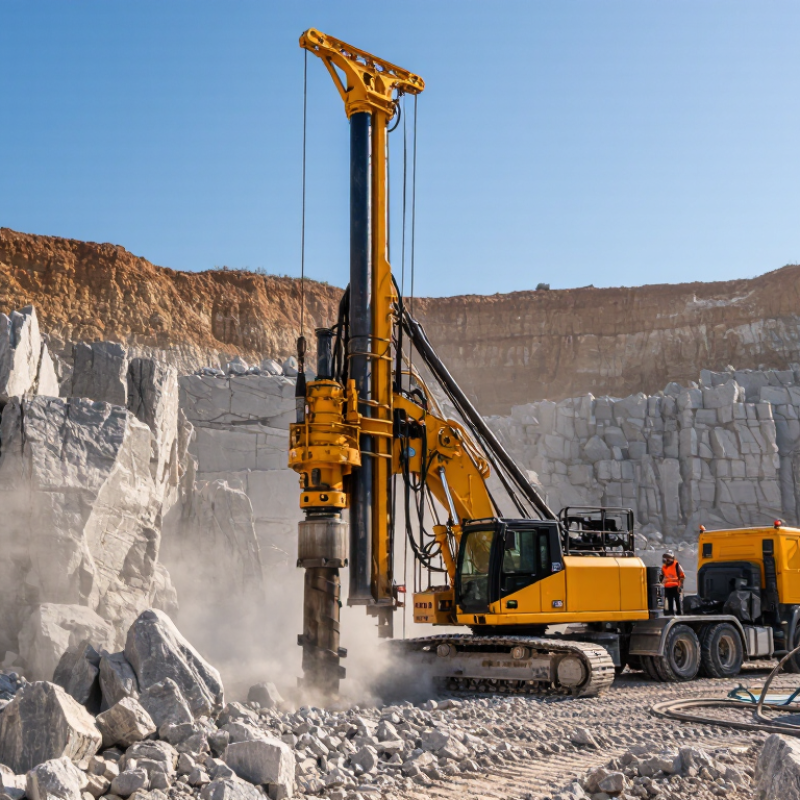
A Dth Boring Machine is a specialized drilling system designed to create accurate, deep holes in hard ground and rock. DTH means “down-the-hole,” describing the hammer’s position near the drill bit. Unlike surface-mounted hammer systems, this arrangement delivers impact energy directly at the drilling face. That design can improve drilling efficiency, especially in granite, limestone, and other dense formations.
The machine combines a crawler or truck-mounted carrier, air compressor, drill pipe, down-the-hole hammer, and rock bit. Compressed air travels through the drill string and activates the hammer behind the bit. Each impact breaks the rock into fragments. The same airflow carries cuttings back through the borehole, leaving the hole cleaner for inspection. You can often hear the difference: a sharp, repeated hammering sound replaces the slower vibration of rotary drilling.
In field work, performance depends on more than engine power. Operators must match air pressure, bit size, rotation speed, and ground conditions. A worn bit may produce crooked holes, excessive dust, and costly delays. Hole alignment also changes when fractured rock redirects the bit. This is where practical experience matters. No machine is foolproof.
Reliable results require trained operators, routine inspections, dust control, and documented maintenance. Manufacturers’ instructions and local workplace requirements should guide every project. This guide explains how a Dth Boring Machine works, where it performs best, and which limitations deserve careful attention. Some sites remain unpredictable, even with excellent planning.
DTH Boring Machine Definition: Down-the-Hole Percussion at 15–35 bar
A DTH boring machine places its percussion hammer directly behind the drill bit, inside the borehole. This design transfers impact energy through a short path. Compressed air commonly enters at 15–35 bar, drives the piston, and exhausts through ports near the bit. The bit strikes rock rapidly. Airflow then carries broken chips back through the annulus.
Pressure is not the only control. Bit diameter, rock strength, jointing, flushing velocity, and water inflow change actual performance. At lower pressure, airflow may struggle with deep cuttings removal. At higher pressure, energy use and dust-control demands increase. The 15–35 bar range is useful, but it is not a penetration guarantee.
A useful reality check comes from market scale. The USGS Mineral Commodity Summaries 2024 reported approximately 2.5 billion metric tons of global iron ore mine production in 2023. The IEA’s Global Critical Minerals Outlook 2024 recorded lithium demand growth of 30% in 2023, while nickel, cobalt, and graphite rose 8–15%. These figures support continued demand for dependable drilling, but they cannot predict one machine’s field output. Engineers should measure pressure at the hammer, not only the compressor setting. They should also record penetration speed, air loss, bit wear, and return-air clarity. Real sites are messier. My own caution is simple: specifications often look precise, while fractured rock quietly changes everything.
What Is a DTH Boring Machine and How Does It Work?
A down-the-hole (DTH) boring machine uses compressed air to drive a percussion hammer located near the drill bit. The commonly stated operating pressure range is 15–35 bar.
The chart shows representative pressure points across the 15–35 bar DTH percussion range. Actual pressure selection depends on the hammer, bit, drilling diameter, rock formation, and operating conditions.
Core Components: DTH Hammer, Drill Bit, Air Compressor, and Drill Rods
A DTH boring machine drills with the hammer positioned directly behind the drill bit. Compressed air travels through the drill rods and powers the hammer underground. Inside it, a piston strikes the bit repeatedly, breaking hard rock into chips. Rotation from the drilling rig helps the buttons attack fresh surfaces. The process is forceful, but not crude.
The DTH hammer must match the hole diameter, rock strength, and available air volume. A weak air supply can reduce impact energy and leave cuttings inside the hole. The drill bit also needs suitable carbide buttons and a face design for the formation. Small details matter. Excessive wear may create crooked holes, vibration, or slow penetration. Operators should inspect impact surfaces and replace damaged parts before performance declines.
The air compressor supplies both hammer energy and flushing air. Pressure alone is not enough; the compressor must deliver steady flow through the full rod string. Drill rods carry torque, impact loads, and compressed air, so clean threads and proper alignment are essential. A contaminated connection can leak quietly. That wastes energy. In field work, drilling data should be checked against actual ground conditions, not accepted blindly from a chart. The simple diagram is misleading. Moisture, fractured rock, and changing depth can alter results quickly. No setup is perfect, and experienced operators still adjust rotation speed, feed force, and air volume during drilling.
How Impact Energy Works: Bottom-Hole Hammering at 20–30 Hz
A DTH boring machine drills with its hammer positioned directly behind the drill bit. This design sends impact energy straight into the rock, rather than transmitting it through a long drill string. The hammer commonly strikes at 20–30 Hz, producing twenty to thirty blows each second. Each blow fractures a small area beneath the bit face.
Compressed air drives the internal piston. Air pressure pushes the piston downward, where it hits the impact surface connected to the bit. A return passage then moves the piston upward for another cycle. The process repeats rapidly. Small cracks become chips, while air carries those chips out through channels around the bit. The hole must stay clean. Otherwise, broken rock can cushion the impacts and reduce penetration.
The frequency is not a magic setting. Actual performance changes with air volume, rock strength, bit wear, and hole depth. Hard, abrasive formations may slow drilling even when the hammer still sounds consistent. Experienced operators watch penetration speed, exhaust color, vibration, and air pressure together. A sharp, regular impact usually indicates efficient energy transfer. A dull rhythm may suggest blockage, worn parts, or insufficient air. It is tempting to judge a hammer by speed alone, but that can hide poor hole cleaning and unnecessary energy loss. Field measurements should guide adjustments, because the ideal 20–30 Hz range is only a practical reference.
Step-by-Step Drilling: 90–350 mm Holes and Airborne Cuttings Removal
A DTH boring machine uses a hammer positioned behind the drill bit, directly inside the borehole. Compressed air drives the hammer against hard rock while the rotating rod keeps the hole aligned. This method commonly produces holes from 90 to 350 mm in diameter. The exact size depends on the bit, rock strength, and drilling setup.
As the bit breaks the formation, air travels through internal passages and lifts crushed rock, called cuttings, back to the surface. The cuttings become airborne around the collar, so operators need suitable dust collection, water suppression, or enclosed discharge systems. Clean airflow is essential. Too little pressure can leave debris at the bottom, slowing penetration and damaging the bit. Too much airflow may increase dust and disturb loose ground. In real work, the balance is rarely perfect.
Tips: Check alignment before starting. Watch the return air for changes in color, volume, or moisture. These clues can reveal fractured rock or a blocked passage. Keep workers away from the discharge zone and use tested protective equipment. Record drilling speed, air pressure, and hole depth for each section. Small records often expose large problems. Inspect the bit regularly, because a worn cutting face can create uneven holes and excessive vibration.
Operating Performance: 30–50 m/h Penetration and 100+ m Drilling Depth
What Is a DTH Boring Machine and How Does It Work?
Operating Performance: 30–50 m/h Penetration and 100+ m Drilling Depth
A DTH boring machine places its hammer directly behind the drill bit. Compressed air drives the hammer against the rock face. The bit breaks the formation, while air lifts dust and cuttings through the drill string. In suitable hard rock, experienced crews may achieve 30–50 m/h penetration. This rate is not guaranteed. Rock strength, fracture patterns, hole diameter, rod changes, and compressor pressure can change the result quickly. Field measurements matter more than brochure figures.
DTH systems can reach drilling depths beyond 100 meters when the rig, rods, compressor, and ground conditions match the task. Greater depth creates pressure losses inside the drill string. Cuttings may also return more slowly, especially in fractured or unstable formations. Operators should monitor air pressure, torque, vibration, flushing quality, and penetration speed. A sudden speed increase may indicate a void, not better performance. That detail deserves attention.
Tips: Keep the drill string aligned and inspect connections between shifts. Use steady feed pressure instead of forcing the bit. Record depth, time, pressure, and geology for every hole. These simple logs support safer adjustments and more reliable productivity estimates. In practice, performance is sometimes uneven. That is normal, but unexplained changes should never be ignored.