How to Choose an FTIR Spectroscopy Machine in 2026?
Choosing an Ftir Spectroscopy Machine in 2026 requires more than comparing prices and resolution numbers. The right system must fit your samples, workflow, staff, and verification requirements. A polymer laboratory may need a durable diamond ATR accessory, while a pharmaceutical team may prioritize controlled measurements, audit trails, and validated software.
Practical selection begins with the sample bench. Ask whether the instrument can analyze powders, liquids, films, or delicate surfaces without lengthy preparation. Check its spectral range, resolution, signal-to-noise performance, detector type, and accessory compatibility. A clear spectrum on a demonstration sample proves little. Request tests using your actual materials, including a dark polymer pellet or a moisture-sensitive powder. Small details often reveal major limitations.
Service quality deserves equal attention. Confirm installation support, calibration procedures, training, software updates, and response times for repairs. Independent performance records and recognized quality practices can strengthen confidence, but vendor claims still need careful checking. No shortlist is perfect. A cheaper machine may become expensive when accessories, maintenance, and operator training are added later. I have seen purchasing teams focus on resolution while overlooking sample throughput and cleaning time. That mistake is easy to repeat.
This guide explains how to compare systems with evidence rather than marketing language. It considers technical capability, ownership cost, usability, data integrity, and future expansion. The best Ftir Spectroscopy Machine is not automatically the most advanced model. It is the one that produces reliable results, supports trained users, and remains practical after daily laboratory work begins.
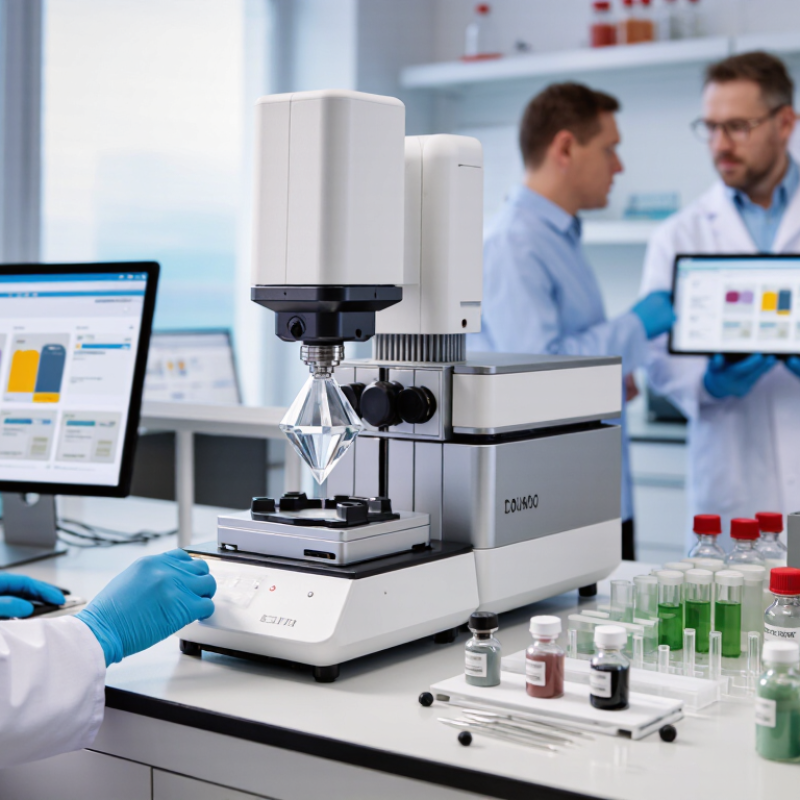
Define Your Sample Types, Testing Goals, and Required FTIR Range
How to Choose an FTIR Spectroscopy Machine in 2026?
Define Your Sample Types, Testing Goals, and Required FTIR Range
Start with the sample, not the instrument brochure. Liquids may need transmission cells or attenuated total reflectance accessories. Powders often require a diamond or germanium crystal. Films need controlled contact and consistent pressure. For gases, choose a long-path cell with stable temperature control. Sample thickness matters. A thick polymer can saturate strong absorption bands within seconds.
Clarify the testing goal before comparing resolution. Identification requires reliable spectral libraries and repeatable background correction. Quantification requires validated calibration models, controlled path length, and suitable signal-to-noise performance. ASTM E1252 describes established practices for collecting infrared spectra for qualitative analysis. NIST Chemistry WebBook provides reference spectral data for comparison, but a library match is not proof of composition. It is evidence that needs verification.
Check the required range carefully. Conventional mid-infrared analysis commonly covers about 4,000–400 cm−1, equivalent to roughly 2.5–25 micrometres. Near-infrared measurements extend toward higher wavenumbers and can support rapid moisture or composition screening. The 2024 spectroscopy market analysis from MarketsandMarkets identifies pharmaceutical, chemical, and environmental testing as major application areas, each with different sampling demands. A routine quality-control lab may value automation more than extreme resolution. I would not choose resolution alone. My first selection would probably overvalue it. Consider cleaning time, operator training, library compatibility, and the cost of replacing sampling accessories.
Compare FTIR Instrument Configurations and Sampling Accessories
How to Choose an FTIR Spectroscopy Machine in 2026?
Choosing an FTIR instrument starts with the sample, not the instrument screen. Solid powders, liquids, films, and gases need different sampling paths. A diamond ATR accessory handles many solids and liquids with minimal preparation. It is practical for routine checks, but surface contact can bias results. Transmission cells provide clearer path-length control for thin films and liquids. However, sample preparation takes more time and consistency.
Diffuse reflectance suits powders that scatter light strongly. It reduces pressing steps, although uneven packing may reduce repeatability. Gas cells require stable seals, controlled path lengths, and suitable windows. For moisture-sensitive materials, a purge system and dry environment can protect spectral quality. Small details matter. Ask how quickly accessories can be exchanged and cleaned.
During method development, compare signal strength, baseline stability, and cleaning effort. Do not choose the most expensive configuration automatically. A high-resolution setup may add little value for routine identification. Verify wavelength accuracy with certified reference materials and document each sampling condition. I have seen reliable instruments produce weak results because operators used inconsistent contact pressure. That is an operational weakness, not always an instrument failure. Service access, software traceability, training, and spare accessory availability also deserve careful review. A short demonstration using real samples often reveals more than a specification sheet.
Assess Software, Automation, Connectivity, and Ease of Use
Choosing an FTIR spectroscopy machine in 2026 requires more than comparing resolution and scanning speed. In daily laboratory work, software often determines whether reliable results arrive in minutes or after repeated troubleshooting. Look for clear workflows, guided method setup, automatic background checks, and visible quality warnings. A useful system should record operator actions, calibration history, and sample conditions without creating extra paperwork.
Automation matters when sample numbers increase. Consider automatic accessory recognition, scheduled measurements, and alerts for unstable baselines or contaminated crystals. These features reduce routine errors, but they should not replace technical judgment. I have seen analysts accept an automated pass without checking the spectrum. That shortcut can be costly. The software should make review easier, not make people careless.
Connectivity also deserves practical testing. Confirm whether the instrument can exchange data with laboratory systems through secure, documented interfaces. Check export formats, user permissions, audit trails, and offline recovery. A fast connection is not enough if data become difficult to trace. Ease of use appears in small details: a readable display, simple cleaning instructions, and quick access to help files. Ask a real operator to run a typical sample, change a method, and handle an error. Their hesitation may reveal more than a polished demonstration. Be honest about training needs. Even intuitive software requires disciplined use.
Review Safety, Service Support, Compliance, and Total Ownership Cost
How to Choose an FTIR Spectroscopy Machine in 2026?
Safety and service support should influence your FTIR decision as much as resolution. Check the instrument’s electrical and thermal safeguards against IEC 61010-1 requirements. Ask whether accessories create extra risks, including heated cells, compressed gases, or unstable samples. Request documented maintenance intervals, response times, spare-parts availability, and technician qualifications. Grand View Research estimated the global FTIR spectroscopy market at approximately USD 1.7 billion in 2023. That growth increases choice, but not necessarily service quality. I still distrust impressive brochures. Hands-on demonstrations reveal more.
Compliance requires practical evidence. For laboratories following ISO/IEC 17025:2017, request calibration certificates with traceable standards. Review software audit trails, user permissions, electronic signatures, and export controls. These features matter when results support quality decisions. Ask for sample validation protocols, not generic claims. A 2024 Lab Manager purchasing survey identified budget limitations as a major factor in laboratory equipment decisions. Therefore, compare the full ownership cost, not only the purchase price. Include accessories, installation, training, validation, consumables, annual service, downtime, software updates, and eventual disposal. The cheapest quotation may become expensive after one failed detector.
Tips: Create a five-year cost worksheet. Ask for three service scenarios. Check local response times. Calculate the cost of one lost testing day. Invite an experienced analyst to test the workflow. Their criticism may feel inconvenient, but it can expose hidden maintenance work. Leave room for uncertainty. Forecasts are not guarantees. A decision can still be well documented, transparent, and revisable.