
Quality Products
At a Fair Price
Wholesale Provider
Of Valves & Fittings
- HOME
- Products
- Ball Valves
- Bull Plugs & Swages
- Butterfly Valves
- Check Valves
- Cushion / Flow Tees & Bleed Rings
- Enhanced Oil Recovery
- Floating Ball Valves
- Foot Valves
- Forged Steel Fittings
- Forged Steel Outlets
- Gaskets-Insulation Kits
- Gate Valves
- Gate, Globe & Check Valves
- Malleable Fittings
- Needle Valves
- Nipples
- Piston Valves
- Plug Valves
- Stainless Steel Flanges, Fittings & Nipples
- Strainers
- Studs
- Trunnion
- Unions
- Weld Fittings & Flanges
- Manufacturers
- Advance
- American Block
- Anvil
- Balon
- Bonney Forge
- Champion
- Clayton Mark
- Crane
- Daniel
- DMIC
- GMI
- Galli & Cassina
- Hackney-Ladish
- JMC
- Lone Star
- MATCO
- Marpac-McCanna
- National Flange
- National Gasket
- Nordstrom
- Nutron
- PPI
- SHARPE
- SMI
- TEXSTEAM
- TEX-THREAD
- Titan
- USA Fastner
- Vogt
- Weld Bend
- Westbrook
- Wheatley
- Williams
- WKM
- Wolar
- Locations
- Contact
- Blog
- Careers
- Get a Quote
- HOME
- Products
- Ball Valves
- Bull Plugs & Swages
- Butterfly Valves
- Check Valves
- Cushion / Flow Tees & Bleed Rings
- Enhanced Oil Recovery
- Floating Ball Valves
- Foot Valves
- Forged Steel Fittings
- Forged Steel Outlets
- Gaskets-Insulation Kits
- Gate Valves
- Gate, Globe & Check Valves
- Malleable Fittings
- Needle Valves
- Nipples
- Piston Valves
- Plug Valves
- Stainless Steel Flanges, Fittings & Nipples
- Strainers
- Studs
- Trunnion
- Unions
- Weld Fittings & Flanges
- Manufacturers
- Advance
- American Block
- Anvil
- Balon
- Bonney Forge
- Champion
- Clayton Mark
- Crane
- Daniel
- DMIC
- GMI
- Galli & Cassina
- Hackney-Ladish
- JMC
- Lone Star
- MATCO
- Marpac-McCanna
- National Flange
- National Gasket
- Nordstrom
- Nutron
- PPI
- SHARPE
- SMI
- TEXSTEAM
- TEX-THREAD
- Titan
- USA Fastner
- Vogt
- Weld Bend
- Westbrook
- Wheatley
- Williams
- WKM
- Wolar
- Locations
- Contact
- About
- Careers
- Get a Quote
What Is a Low Speed Electric Car and How Does It Work?
A Low Speed Electric Car is a compact battery-powered vehicle designed for short trips, controlled speeds, and practical local travel. It usually operates below conventional passenger-car speeds, although definitions vary across markets. Some models reach 25 km/h, while others approach 45 km/h. That difference matters.
The vehicle stores electricity in a lithium-ion or lead-acid battery pack. A controller sends power to an electric motor, while regenerative braking may return limited energy during deceleration. In a quiet neighborhood, the experience is simple: press the accelerator, hear little more than tire noise, and travel without tailpipe emissions. Charging commonly takes place overnight from a household outlet, although battery size and charger quality change the result.
Industry data shows why this segment deserves attention. The International Energy Agency reported nearly 14 million electric car sales worldwide in 2023, representing about 18% of total car sales. However, that figure mainly covers conventional electric cars, not every low-speed vehicle. The global picture is therefore incomplete. Reports from BloombergNEF also identify falling battery costs as a major force supporting smaller electric mobility solutions.
Fatih Birol, Executive Director of the IEA, said, “The electric car market is undergoing an unprecedented transformation.” His observation applies here, but cautiously. A Low Speed Electric Car is not a universal replacement for a family vehicle. It may suit campuses, retirement communities, delivery routes, and dense urban districts better. Range, weather performance, safety equipment, and charging access still require honest evaluation. Small does not mean effortless.
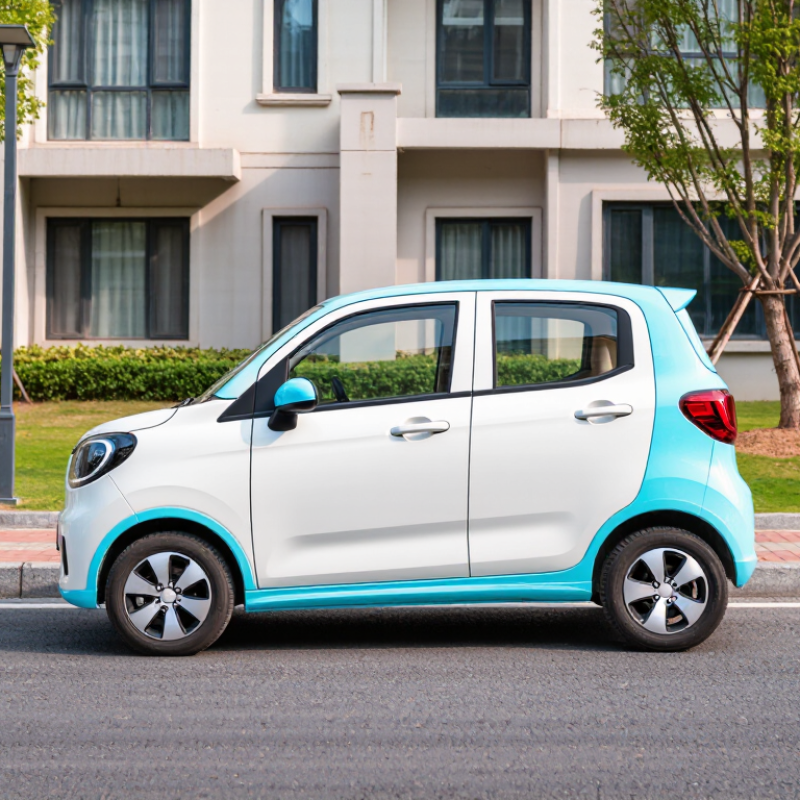
Defining Low-Speed Electric Cars: The U.S. 20–25 mph LSV Standard
A low-speed electric car is a compact, battery-powered vehicle designed for nearby travel. In the United States, the federal Low-Speed Vehicle (LSV) standard focuses on speed. An LSV must travel faster than 20 mph but no faster than 25 mph on a paved, level surface. It is typically a four-wheeled vehicle with a gross vehicle weight rating below 3,000 pounds.
This 20–25 mph range matters. It separates an LSV from a neighborhood cart or an ordinary passenger car. Federal safety rules require equipment such as headlights, turn signals, brake lights, seat belts, and mirrors. The electric motor draws power from a rechargeable battery, while a controller manages acceleration. During a short trip, the experience feels quiet and steady. Still, the small size can make the vehicle less visible in traffic. That weakness deserves attention.
Tips: Check your local rules before driving. State and city requirements may affect registration, insurance, driver licensing, and permitted roads. Measure your regular route, including hills and busy crossings. Battery range can change with temperature, passenger weight, tire pressure, and repeated acceleration. Do not assume a vehicle is street-legal because it looks complete. Ask for its classification and safety equipment in writing. Some information may seem obvious, yet owners often discover restrictions only after purchase.
Tracing the Powertrain: Batteries, Motors, Controllers, and 72-Volt Systems
A low speed electric car uses a compact powertrain designed for short urban trips, neighborhood roads, and controlled speeds. Its battery stores direct-current energy, while a controller regulates that energy before it reaches the motor. In many vehicles, the controller adjusts current thousands of times per second, responding to throttle position, load, and battery voltage. Smooth acceleration depends on this coordination.
A 72-volt system is common because it can deliver useful power with lower current than a 48-volt system. For example, producing 7.2 kilowatts requires about 100 amperes at 72 volts, before efficiency losses. Lower current can reduce cable heating and allow smaller conductors. It does not make the vehicle automatically safer or faster.
The motor converts electrical energy into wheel torque. Permanent-magnet motors are compact, while induction designs can tolerate demanding conditions. Battery capacity determines range, but temperature, hills, tire pressure, and passenger weight often matter more than advertised figures. The U.S. Department of Energy’s Alternative Fuels Data Center reports that electric vehicles typically convert 77–82% of grid energy into movement, compared with about 12–30% for conventional vehicles. BloombergNEF’s 2024 battery survey placed the average lithium-ion pack price at 115 dollars per kilowatt-hour. That figure is useful, but small-vehicle packs may cost more per kilowatt-hour because production volumes are lower. A battery-management system monitors cell voltage and temperature, although inexpensive systems can still leave uncomfortable gaps in protection.
Measuring Performance: Typical 15–50 Mile Ranges and Regenerative Braking
A low-speed electric car is built for short, controlled trips rather than motorway travel.
In the United States, federal low-speed vehicle rules generally limit speed to 20–25 mph. Many models offer about 15–50 miles of rated range. That figure depends on battery size, payload, temperature, tire pressure, and driving style.
The U.S. Department of Energy’s Alternative Fuels Data Center explains that cold weather can reduce electric-vehicle range because batteries deliver less usable energy. A small battery may feel adequate for neighborhood errands, but less comfortable for repeated long trips.
Regenerative braking sends some kinetic energy back to the battery when the driver lifts the accelerator or brakes. The motor works as a generator during deceleration.
Energy recovery is not free, however. Conversion losses occur, and low-speed braking provides limited recovery time. The U.S. Department of Energy’s Vehicle Technologies Office identifies regenerative braking as an efficiency feature, not a replacement for friction brakes.
Industry testing also shows that real-world range rarely matches laboratory ratings. That gap matters. A 50-mile estimate can shrink quickly on hills, in winter, or with extra passengers.
Tips:
- Charge after regular use, not only when the battery is nearly empty.
- Check tire pressure monthly.
- Use gentle acceleration and anticipate stops.
- Test the vehicle on your actual route before buying.
- The overlooked detail is winter range. Plan a safety margin of 20–30 percent, because published figures are not promises.
Understanding Safety: FMVSS 500, Seat Belts, Lamps, Mirrors, and Brakes
What Is a Low Speed Electric Car and How Does It Work?
A low-speed electric car uses a battery, electric motor, controller, and charger. Its speed is usually limited to 25 mph under FMVSS 500. The design suits short trips, campuses, neighborhoods, and private roads. Quiet operation feels comfortable, but pedestrians may hear it late. That matters.
NHTSA reported 7,522 pedestrian deaths in 2022, the highest number recorded since 1981. This broader safety data does not measure low-speed cars directly, but it highlights the need for clear vehicle lighting and driver awareness.
FMVSS 500 requires specific equipment, not just a small motor. Each seating position needs a safety belt. Use it on every trip, even at low speeds. Required lamps include headlamps, turn signals, taillamps, stop lamps, and reflex reflectors. These parts help others judge distance and movement in daylight or darkness.
A rearview mirror is also required, while additional side mirrors can reduce blind spots. Check mirror adjustment from the normal driving position. Small changes matter.
Braking performance deserves practical attention. The standard requires a parking brake, but owners should inspect service brakes, tires, and pedal response regularly. Industry maintenance guidance commonly recommends checking brake wear and tire condition during routine service, especially after storage.
NHTSA crash data cannot prove that every low-speed vehicle is safe. FMVSS 500 is a minimum standard, not a promise of full-car protection. That distinction is easy to miss. A seat belt may restrain the occupant, yet it cannot replace cautious speed, visibility, or a careful route.
Mapping Their Use: Neighborhood Mobility, Fleet Transport, and Charging Needs
Low-speed electric cars use rechargeable batteries, an electric motor, and a controller that regulates power. The controller translates accelerator input into smooth motor movement. Their lower speeds usually suit short trips on local roads, private campuses, and planned communities. Exact limits and equipment requirements vary by location.
Neighborhood mobility is their clearest use. Residents can reach shops, clinics, schools, or transit stops without starting a full-sized vehicle. They are easier to park and produce little noise near homes. That sounds simple. Reality is messier. Poor weather, steep streets, and limited passenger space can reduce their usefulness. A route that looks perfect on a map may feel uncomfortable at night or during heavy rain.
Fleet transport creates a different advantage. Hotels, warehouses, campuses, and maintenance teams can assign these vehicles to repeated daily routes. Fleet managers should track distance, payload, temperature, and charging time before choosing vehicle numbers. One vehicle may handle local deliveries, while another needs stronger range for longer shifts. Charging plans should include overnight parking, safe cable placement, and spare capacity for busy days. Standard outlets may work for light use, but larger fleets often need dedicated electrical circuits. Charging can also slow during cold conditions. This detail is easy to overlook. A careful operator measures real-world performance, not only the advertised range. Mistakes remain possible, especially when usage changes with seasons or staff schedules.
What Is a Low Speed Electric Car and How Does It Work? — Mapping Their Use: Neighborhood Mobility, Fleet Transport, and Charging Needs
| Data Dimension | Typical Low-Speed Electric Car | Neighborhood Mobility | Fleet Transport | Charging and Operating Implications |
|---|---|---|---|---|
| Primary Definition | A compact battery-electric vehicle designed for short trips and controlled, low-speed environments. | Suitable for residential streets, campuses, retirement communities, resorts, and local errands. | Useful for predictable routes such as facility logistics, maintenance, security, and last-stage passenger movement. | Its value comes from low energy use, simple charging, and reduced operating speed rather than highway performance. |
| Maximum Speed | Commonly about 20–25 mph (32–40 km/h). In the United States, a federally defined low-speed vehicle is generally limited to 25 mph. | Matches low posted speed limits and short-distance travel where traffic moves slowly. | Helps reduce risk and energy consumption in warehouses, airports, campuses, and industrial sites. | Not intended for limited-access highways or routes requiring sustained high-speed travel. |
| Typical Seating Capacity | Usually 2–6 occupants, depending on body configuration and payload requirements. | Supports individual travel, family errands, neighborhood shuttles, and community transportation. | Multi-seat versions can move staff, visitors, students, or guests over short internal routes. | More seats increase vehicle weight and can reduce practical range, especially on slopes or with frequent stops. |
| Driving Range per Charge | Commonly approximately 40–100 miles (64–161 km), with actual range affected by battery size, load, temperature, terrain, and driving style. | Usually sufficient for repeated local trips and daily neighborhood use without mid-day charging. | Route planning should include reserve capacity for detours, passenger loads, weather, and battery aging. | A practical fleet target is to finish the operating shift with a meaningful state-of-charge reserve rather than relying on full battery depletion. |
| Battery Chemistry | Modern models commonly use lithium-ion batteries; some lower-cost or legacy vehicles use lead-acid batteries. | Lithium-ion batteries generally provide lower weight, higher usable energy, and longer service life than lead-acid systems. | Battery selection affects payload, maintenance schedules, replacement planning, and total operating cost. | Charging should follow the battery maker’s limits and temperature requirements; damaged batteries require professional inspection. |
| Battery Energy Capacity | Often approximately 5–20 kWh for compact low-speed configurations, depending on range and payload design. | A smaller battery can meet short daily journeys while keeping vehicle weight and purchase cost lower. | Larger packs support longer shifts but require more charging time and greater electrical capacity. | Energy use can be estimated from battery capacity, charging losses, and the percentage of battery used each day. |
| Charging Method | AC charging through a standard household outlet or a dedicated higher-power circuit is common. | Overnight charging at home or at a community parking area is often sufficient. | Depots can use multiple dedicated charging points, scheduled charging, and basic load management. | Charging equipment must match the vehicle voltage, connector, circuit rating, and local electrical code. |
| Typical Charging Time | Approximately 4–12 hours for a near-empty battery, depending on battery capacity and charging power. | Overnight charging usually aligns well with low daily mileage and predictable parking patterns. | Fleets may require overnight charging, opportunity charging during breaks, or additional vehicles to cover charging downtime. | Actual time depends on state of charge, charger output, battery temperature, and the vehicle’s charge-acceptance rate. |
| Energy Consumption | A typical compact vehicle may use roughly 150–300 Wh per mile under moderate conditions. | Low speeds and frequent short trips can keep energy demand relatively modest, although repeated acceleration increases consumption. | Route optimization, smooth driving, correct tire pressure, and reduced idling can improve fleet efficiency. | Electricity used from the grid is higher than battery output because charging introduces energy losses. |
| Payload and Cargo | Often designed for light cargo, groceries, tools, or small equipment; payload limits vary by vehicle configuration. | Appropriate for daily shopping, personal items, and limited household transport. | Cargo-bed and utility configurations can support maintenance supplies, cleaning equipment, and internal deliveries. | Exceeding the rated payload can reduce braking performance, range, tire life, and component durability. |
| Best-Fit Operating Environment | Low-speed roads, private developments, campuses, industrial properties, and other controlled areas. | Residential neighborhoods, local commercial districts, parks, and community facilities. | Hotels, resorts, hospitals, universities, warehouses, airports, and large private sites. | Operational rules, road access, lighting, safety equipment, and registration requirements vary by jurisdiction and site. |
| Main Advantages | Quiet operation, zero tailpipe emissions, compact dimensions, simple drivetrain, and low-speed controllability. | Convenient for short trips and can reduce dependence on full-size cars for local travel. | Can lower fuel use, local exhaust emissions, and noise on repetitive internal routes. | Total benefits depend on electricity generation, vehicle utilization, battery durability, and responsible end-of-life recycling. |
| Main Limitations | Limited speed, range, weather protection, cargo capacity, and road access compared with full-size passenger cars. | Less suitable for long commutes, high-speed roads, severe weather, or routes with heavy traffic. | Fleet productivity may be affected by charging downtime, battery degradation, and limited carrying capacity. | A site assessment is needed before installation to confirm parking space, electrical capacity, ventilation, and safety procedures. |
| How It Works | The battery stores direct-current electricity; a controller regulates power to the electric motor, which turns the wheels through a reduction drive. | Immediate motor torque supports smooth starts and frequent stop-and-go movement. | Regenerative braking may recover some kinetic energy during deceleration, depending on system design. | The onboard charger converts AC electricity from the supply into the DC energy required by the battery. |
