
Quality Products
At a Fair Price
Wholesale Provider
Of Valves & Fittings
- HOME
- Products
- Ball Valves
- Bull Plugs & Swages
- Butterfly Valves
- Check Valves
- Cushion / Flow Tees & Bleed Rings
- Enhanced Oil Recovery
- Floating Ball Valves
- Foot Valves
- Forged Steel Fittings
- Forged Steel Outlets
- Gaskets-Insulation Kits
- Gate Valves
- Gate, Globe & Check Valves
- Malleable Fittings
- Needle Valves
- Nipples
- Piston Valves
- Plug Valves
- Stainless Steel Flanges, Fittings & Nipples
- Strainers
- Studs
- Trunnion
- Unions
- Weld Fittings & Flanges
- Manufacturers
- Advance
- American Block
- Anvil
- Balon
- Bonney Forge
- Champion
- Clayton Mark
- Crane
- Daniel
- DMIC
- GMI
- Galli & Cassina
- Hackney-Ladish
- JMC
- Lone Star
- MATCO
- Marpac-McCanna
- National Flange
- National Gasket
- Nordstrom
- Nutron
- PPI
- SHARPE
- SMI
- TEXSTEAM
- TEX-THREAD
- Titan
- USA Fastner
- Vogt
- Weld Bend
- Westbrook
- Wheatley
- Williams
- WKM
- Wolar
- Locations
- Contact
- Blog
- Careers
- Get a Quote
- HOME
- Products
- Ball Valves
- Bull Plugs & Swages
- Butterfly Valves
- Check Valves
- Cushion / Flow Tees & Bleed Rings
- Enhanced Oil Recovery
- Floating Ball Valves
- Foot Valves
- Forged Steel Fittings
- Forged Steel Outlets
- Gaskets-Insulation Kits
- Gate Valves
- Gate, Globe & Check Valves
- Malleable Fittings
- Needle Valves
- Nipples
- Piston Valves
- Plug Valves
- Stainless Steel Flanges, Fittings & Nipples
- Strainers
- Studs
- Trunnion
- Unions
- Weld Fittings & Flanges
- Manufacturers
- Advance
- American Block
- Anvil
- Balon
- Bonney Forge
- Champion
- Clayton Mark
- Crane
- Daniel
- DMIC
- GMI
- Galli & Cassina
- Hackney-Ladish
- JMC
- Lone Star
- MATCO
- Marpac-McCanna
- National Flange
- National Gasket
- Nordstrom
- Nutron
- PPI
- SHARPE
- SMI
- TEXSTEAM
- TEX-THREAD
- Titan
- USA Fastner
- Vogt
- Weld Bend
- Westbrook
- Wheatley
- Williams
- WKM
- Wolar
- Locations
- Contact
- About
- Careers
- Get a Quote
Why Choose a Lamination Machine for Your Business?
A Lamination Machine can turn fragile printed materials into durable, professional products. It protects menus, labels, certificates, packaging sleeves, and promotional cards from moisture, scratches, and repeated handling. A laminated menu feels different in the customer’s hands. It survives spilled coffee better. Small details matter.
Printing-technology expert Dr. Helmut Kipphan offers a relevant production principle: “A process is only as stable as its controls.” This idea applies directly to lamination. Stable roller pressure, accurate temperature, and consistent feeding help reduce bubbles, wrinkles, silvering, and uneven edges. These problems waste film and printed stock. They also damage customer confidence. Modern equipment can improve speed, repeatability, and output quality. It may support thicker films, wider formats, and larger daily volumes. However, buying a machine is not automatically the right decision. The answer is not always yes.
This guide examines practical reasons for choosing a Lamination Machine. It considers production volume, labor costs, film consumption, maintenance, and operator training. A business producing only a few sheets weekly may prefer outsourcing. A busy print shop may recover its investment through faster turnaround and fewer external fees. There is also a learning curve. Operators must monitor temperature, pressure, alignment, and cleaning. One overlooked roller can affect an entire batch. Real savings depend on disciplined use, not impressive specifications alone. The best machine is the one that fits your workflow, floor space, materials, and honest growth expectations. Sometimes, careful measurement reveals that a smaller model performs better.
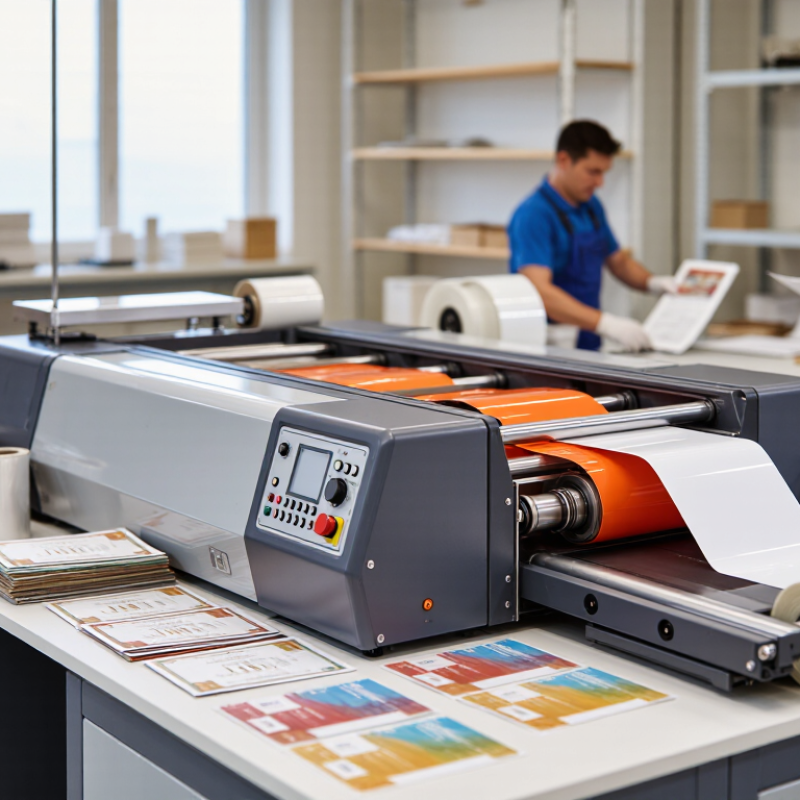
What Is a Lamination Machine and How Does It Work?
A lamination machine joins a printed sheet with a protective film.
It uses heat, pressure, or adhesive to create a stronger surface. In thermal lamination, the operator feeds the sheet into heated rollers. The film softens, bonds with the print, and cools under pressure. The result feels smoother and resists moisture, scratches, and handling damage. The process looks simple. It is not foolproof.
For many businesses, lamination protects menus, product cards, labels, training materials, and retail displays. A 2024 Smithers report, The Future of Global Packaging to 2028, valued the global packaging market above one trillion US dollars and forecast continued growth. This supports demand for durable printed materials, although lamination alone cannot fix poor design or weak materials. Operators must match film thickness, roller temperature, and feed speed. A small temperature error can cause bubbles, wrinkles, or uneven edges. Those defects waste time and materials.
Tips: Test three sheets before full production. Check the film’s adhesive type and thickness. Keep rollers clean and aligned. Record successful settings for repeat jobs. The 2023 PMMI report on packaging automation also highlights the value of consistent, repeatable processes. Still, automation needs judgment. Humid paper may curl, and heavily inked sheets may require slower feeding. A machine can improve finish quality, but careless setup can quietly increase costs.
Which Business Materials Can Be Laminated?
Businesses laminate materials that face constant handling, moisture, dust, or frequent transport. Common examples include restaurant menus, price lists, product catalogs, service cards, maps, training sheets, and instruction guides. A laminated menu can survive spilled drinks and repeated wiping. A protected price list also looks cleaner during customer consultations.
Small businesses often laminate certificates, appointment cards, staff badges, event passes, and promotional signs. Retail shops may protect shelf labels, return instructions, measurement charts, and seasonal displays. Offices can laminate workflow cards, emergency contact sheets, meeting-room signs, and equipment instructions. Clean edges matter. A clear pouch makes printed information easier to read and harder to tear.
Material choice still requires judgment. Standard paper usually works well for menus and notices, while thicker paper gives signs more stiffness. Glossy film creates stronger color, but it can reflect overhead lighting. Matte film reduces glare, although fingerprints may show more clearly. I have seen carefully printed sheets ruined by poor alignment or trapped dust. That part is easy to underestimate. Leave a narrow, even seal around the paper, and match the pouch thickness to the machine’s settings. Before laminating official records, certificates, or documents with security features, check the issuing organization’s requirements. Some materials should remain unaltered.
Why Choose a Lamination Machine for Your Business?
Laminating protects frequently handled materials from moisture, stains, tearing, and surface wear. The chart shows common film thickness recommendations for everyday business materials.
Typical film thickness recommendations are shown in mils; 1 mil equals 0.0254 mm.
How Does Lamination Improve Product Quality and Durability?
Lamination joins multiple layers into one controlled structure. It can protect printed surfaces from scuffing, moisture, oxygen, and light. A thin adhesive layer also helps prevent delamination during filling, folding, and transport. On a production floor, the difference appears in fewer cloudy patches and cleaner seals. ASTM F88 testing can measure seal strength after production. The result is more useful than visual inspection alone.
Grand View Research valued the global flexible packaging market at USD 268.82 billion in 2023. It projects a 4.9% compound annual growth rate through 2030. Smithers also identifies barrier performance and material efficiency as major development priorities in flexible packaging. These figures show strong market demand for durable structures. They do not prove that every product needs more layers. That assumption deserves review.
A well-designed laminate can extend shelf life and reduce damage during distribution. For example, a snack pouch may resist pinholes when cartons move across rough warehouse floors. A medical sachet may retain stronger seals after sterilization processes. Testing should include puncture resistance, bond strength, moisture transmission, and aging. It is not magic. Poor adhesive coating, trapped dust, or incorrect curing can create hidden failures. More layers may also complicate recycling and increase material cost. Practical trials should compare protection, waste, and end-of-life performance before production approval.
What Business Benefits Does a Lamination Machine Provide?
A lamination machine protects printed sheets from moisture, abrasion, fingerprints, and frequent handling. This protection can reduce reprints for menus, training cards, product labels, and outdoor notices. Smithers’ 2024 study on digital print for packaging forecasts market growth at roughly 10% annually through 2029. That expansion reflects stronger demand for durable, short-run materials. A machine helps smaller print teams respond without outsourcing every urgent order.
The financial benefit appears in several places. Laminated work usually lasts longer, so customers may replace damaged materials less often. Faster finishing also improves daily capacity. A trained operator can process a stack of sheets while another employee prepares the next job. FESPA’s 2023 Print Census found that 59% of respondents expected sales growth. Capacity matters when demand arrives unevenly. Very much so.
A lamination machine can also create new service options, including matte, gloss, anti-slip, and soft-touch finishes. These options support higher-value menus, classroom resources, event graphics, and retail displays. However, the investment is not automatically profitable. Film waste, warm-up time, maintenance, and operator errors can quietly reduce margins. A practical evaluation should compare monthly outsourcing costs, material waste, labor time, and expected order volume. The numbers may look less impressive after testing. That is useful.
| Business Benefit | Measurable Dimension | Illustrative Current Process | With an In-House Lamination Machine | Calculated Business Impact |
|---|---|---|---|---|
| Higher Production Productivity | Processing capacity for A4-sized sheets | Manual application at approximately 5 sheets per minute | A practical machine output of approximately 20 sheets per minute, depending on equipment settings and operator handling | Up to 75% less active processing time for the same batch |
| Lower Direct Labor Requirements | Labor hours per 500-sheet batch | Approximately 100 minutes of manual processing | Approximately 25 minutes of machine processing plus 10 minutes for setup and loading | About 65 minutes saved per 500-sheet batch; at $25 per labor hour, this equals approximately $27.08 saved per batch |
| Faster Customer Turnaround | Time from print completion to finished delivery | External finishing may add approximately 1–2 business days, depending on pickup and supplier schedules | Finishing can begin immediately after printing and may be completed on the same business day | Potentially 1–2 business days faster order completion |
| Improved Document Durability | Resistance to moisture, scuffing, handling, and surface contamination | Unprotected paper is more vulnerable to fingerprints, water exposure, edge wear, and repeated handling | A properly applied film creates a protective surface around the printed sheet | Longer usable life for menus, signs, training materials, cards, and frequently handled documents |
| Fewer Reprints and Material Losses | Damaged sheets requiring replacement | Illustrative damage rate of 8% on a 500-sheet batch, equal to 40 replacement sheets | Illustrative damage rate reduced to 3%, equal to 15 replacement sheets, when lamination is suitable for the application | 25 fewer replacement sheets per batch; at $1.50 per finished sheet, approximately $37.50 avoided waste per batch |
| More Consistent Finishing Quality | Quality-control variables | Results may vary with operator pressure, alignment, temperature, and manual handling | Adjustable temperature, pressure, and feed settings provide a repeatable production process | More uniform appearance and fewer customer complaints caused by wrinkles, bubbles, misalignment, or uneven sealing |
| Expanded Product and Service Options | Number of products that can receive protective finishing | Limited to uncoated paper products or outsourced finishing services | Supports products such as menus, instructional sheets, price lists, posters, identification cards, covers, and promotional materials | Creates opportunities for value-added services and premium finished products |
| Better Control Over Production Scheduling | Dependency on external suppliers | Production depends on supplier availability, transport arrangements, minimum order quantities, and external deadlines | Finishing capacity is available during the business's own operating hours | Greater control over urgent orders, short runs, revisions, and customized production schedules |
How Should a Business Choose the Right Lamination Machine?
Choosing the right lamination machine starts with your daily workload, not the lowest purchase price. A small print shop may need 10–20 sheets per minute, while a packaging operation may require continuous feeding and wider working widths. Mordor Intelligence estimates the laminating machine market will grow at about 4% annually through the forecast period. That growth reflects rising demand for protected, longer-lasting printed materials.
Measure twice. Buy once.
Check the substrate range carefully. Paper, synthetic sheets, labels, and adhesive films can require different temperatures and pressures. A machine that handles 250-micron film may struggle with thicker materials. Ask for sample testing using your real media. Watch for silvering, curling, trapped air, and uneven edges. These defects create hidden waste. The Smithers report on digital packaging print highlights shorter production runs and increasing version changes. Therefore, fast setup and simple film changes can matter more than maximum speed.
Calculate total cost over three years. Include electricity, film waste, operator time, maintenance, and downtime. ENERGY STAR reports that efficient commercial equipment can reduce operating costs, but actual savings depend on usage and maintenance. Safety features deserve equal attention, especially heat shielding, emergency stops, and guarded rollers. My practical view is imperfect: faster machines are not always better. A slower unit with stable feeding may produce more saleable sheets. Review your last three months of orders, then choose capacity with modest room for growth.
