
Why Choose Malleable Fittings for Global Projects?
Global projects rarely fail because a pipe fitting looks unsuitable on paper. They fail through small mismatches: thread standards, coating requirements, pressure expectations, or unclear installation practices. Malleable fittings offer a practical response because they combine strength, adaptable connection options, and proven performance in demanding piping systems. Their compact shapes also help contractors work inside crowded plant rooms, utility tunnels, and agricultural facilities.
Field experience shows that reliable results begin before the fittings reach the site. Engineers should confirm dimensions, pressure ratings, material grades, and applicable regional standards. A fitting selected for a dry indoor system may need different protection in a humid coastal environment. Inspection records, traceable manufacturing, and consistent testing add confidence when shipments cross several borders. These details support safer decisions and reduce costly replacement work.
Small choices matter.
Malleable fittings are also valuable when project teams need flexible assembly and straightforward maintenance. Threaded connections can simplify repairs, extensions, and phased construction, especially where welding equipment is impractical. Still, no product suits every application. Poor alignment, excessive tightening, incompatible fluids, or inadequate corrosion protection can weaken an otherwise sound installation. That limitation deserves attention.
Responsible suppliers explain these boundaries instead of promising universal performance. They provide technical documentation, inspection evidence, and practical guidance for installers. For global buyers, dependable communication can matter as much as the fitting itself. A carefully specified malleable fittings system may support efficient construction, stable operation, and long-term confidence across different climates and project conditions. Yet every project should validate the final choice through qualified engineering review and local compliance checks.
What Are Malleable Fittings and How Do They Work?
Why Choose Malleable Fittings for Global Projects?
What Are Malleable Fittings and How Do They Work?
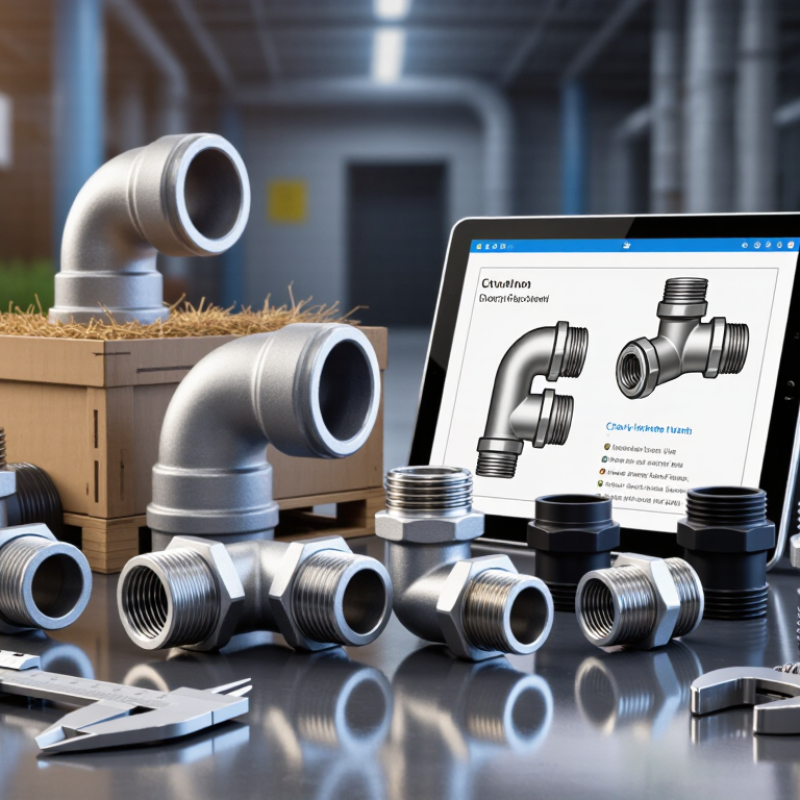
Malleable fittings are threaded connection components made from heat-treated malleable iron. Common shapes include elbows, tees, couplings, and unions. Heat treatment improves toughness after casting. It also helps the fitting resist vibration and moderate mechanical stress.
Their operation is simple but precise. An external pipe thread enters the fitting’s internal thread. A sealant fills tiny thread gaps and reduces leakage. Tightening creates a compact metal-to-metal joint. The joint can later be opened for inspection or replacement. That matters in temporary installations and remote maintenance work.
ASTM A197/A197M defines material requirements for malleable iron pressure fittings. ASME B16.3 specifies dimensions, pressure-temperature ratings, and testing expectations. Ratings are not universal. Temperature, thread quality, wall thickness, and fluid type can change performance. Engineers should verify the applicable class and operating conditions before selection.
Grand View Research’s 2024 pipe-fittings market assessment projects annual growth above 4% through 2030. However, such reports often combine several fitting materials and applications. They show market direction, not automatic proof of suitability. In practice, galvanized surfaces help resist external corrosion, while correct sealing remains essential. A rushed installation can still fail. That uncomfortable detail deserves attention on every global project.
Why Choose Malleable Fittings for Global Projects? - What Are Malleable Fittings and How Do They Work?
| Data Dimension | Verified Technical Information | How It Works in Practice | Value for Global Projects |
|---|---|---|---|
| Basic Definition | Malleable fittings are pipe fittings made from malleable cast iron, a cast iron that has been heat-treated to improve toughness and ductility. | The fitting changes the direction, size, or branching of a threaded pipe system while maintaining a mechanically strong connection. | A standardized solution for assembling durable piping networks without field welding. |
| Manufacturing Process | The material is cast into the required shape and then annealed, or heat-treated, to reduce brittleness and improve mechanical performance. | Heat treatment allows the fitting to tolerate normal installation stresses, vibration, and moderate system movement better than untreated gray cast iron. | Consistent factory production supports repeatable quality across different construction locations. |
| Common Material Standard | ASTM A197/A197M covers malleable iron castings used for pipe fittings. European projects may specify malleable cast iron grades under EN 1562. | The applicable material standard defines requirements such as chemical composition, mechanical properties, and testing. | Project teams can match the fitting specification with local procurement and inspection requirements. |
| Connection Method | Most malleable fittings use tapered or parallel pipe threads, depending on the selected regional standard. | Threads create mechanical engagement, while an approved sealing material fills the helical clearance between the pipe and fitting. | Threaded assembly reduces dependence on welding equipment, specialist welders, and hot-work permits. |
| Thread Standards | Common systems include ASME B1.20.1 NPT, ISO 7-1 pipe threads where pressure-tight joints are made on the threads, and ISO 228-1 parallel pipe threads for applications requiring a separate seal. | The pipe thread and fitting thread must have matching profiles, pitch, size, and sealing requirements. | Clear thread selection helps prevent leakage and compatibility problems between international suppliers. |
| Typical Fitting Forms | Common forms include elbows, tees, crosses, couplings, unions, reducers, bushings, caps, plugs, and street elbows. | Each form changes flow direction, connects branches, adapts pipe sizes, or provides a removable termination point. | A broad fitting range simplifies modular layouts for water, air, drainage, and general utility piping. |
| Nominal Size Availability | Commercial product ranges commonly cover small and medium nominal pipe sizes, often from approximately 1/8 inch to 6 inches, although the exact range depends on the standard and fitting type. | The nominal size identifies the compatible pipe size; it is not necessarily the measured outside diameter. | The range suits many building services and industrial utility systems while remaining easy to source in standard dimensions. |
| Surface Protection | Fittings are commonly supplied black, meaning uncoated, or galvanized with a zinc coating for improved resistance to atmospheric corrosion. | The zinc layer provides barrier protection and can offer sacrificial protection where the coating is locally damaged. | Finish options allow the same basic fitting concept to be adapted to dry indoor areas or more demanding environments. |
| Pressure Rating | Pressure capacity is not universal. It depends on the fitting design, size, material grade, thread standard, temperature, and the applicable product standard. | The system must be designed and tested using the lowest pressure rating of the pipe, fitting, valve, seal, and other connected components. | Using standard-specific ratings avoids unsafe assumptions when components are purchased from different regions. |
| Temperature Capability | Temperature limits depend on the fitting standard, pressure class, surface finish, sealing compound, and conveyed medium. The manufacturer’s rating must be followed. | Increasing temperature can reduce allowable working pressure and may affect the sealing material before it affects the metal fitting. | A documented temperature-pressure review supports safer use across different climates and process conditions. |
| Installation Requirements | Installation requires correctly prepared threads, suitable sealing material, proper alignment, and controlled tightening torque. | Excessive tightening can damage threads or split a fitting, while insufficient tightening can result in leakage. | Simple tools and repeatable procedures can shorten installation time and support local workforce training. |
| Maintenance and Modification | Threaded connections can generally be disassembled and replaced without cutting or re-welding the surrounding pipework. | A union or removable threaded joint permits easier access to equipment, valves, and individual pipe sections. | Repairs and future layout changes can be completed with less downtime and fewer hot-work controls. |
| Typical Applications | Typical uses include water distribution, compressed air, heating services, fire-protection-related piping where specifically approved, and general industrial utilities. | The fitting directs and joins pipe sections in systems operating within its approved medium, pressure, and temperature limits. | Versatility makes malleable fittings practical for building, infrastructure, and industrial projects in multiple markets. |
| Key Limitations | They are not automatically suitable for every fluid, pressure, temperature, seismic condition, or underground environment. | Designers must verify code approval, corrosion resistance, thread compatibility, pressure-temperature ratings, and sealing-material compatibility. | Early compliance checks reduce the risk of rejected materials, leakage, rework, and cross-border procurement delays. |
| Selection Checklist | Confirm material standard, nominal size, thread type, finish, pressure class, temperature range, conveyed medium, certification, and inspection requirements. | The fitting is selected only after all operating and regulatory conditions are compared with the product documentation. | A unified checklist creates consistent purchasing and quality-control practices for international project teams. |
Related Posts
-

How to Choose the Right Needle Valve for Global Industrial Applications
-
7 Tips for Choosing Stainless Steel Valves
-

10 Essential Tips for Choosing the Right Flanges and Fittings
-

Exploring Alternative Weld Fittings: Innovative Solutions for Global Procurement Needs
-
2026 Top Foot Valves Types for Efficient Fluid Control Solutions?
-

Top 10 Benefits of Using Plug Valves in Industrial Applications?