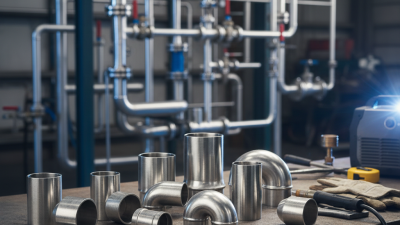
What Are the Best Stainless Steel Fittings in 2026?
Choosing the best stainless steel fittings in 2026 is not about picking the shiniest elbow or the lowest quote. The right choice depends on the fluid, pressure, temperature, connection style, and environment around the pipe. A fitting beside a salt-spray coastline faces different demands from one inside a dry processing room. Small details matter. Grade, dimensions, surface finish, and thread or weld compatibility can affect service life and maintenance. No single grade fits every job. Grades 304 and 316 are commonly considered, but suitability depends on exposure, design conditions, and supplier documentation.
A reliable shortlist should include clear material identification, dimensional tolerances, pressure ratings, and traceable test records where the application requires them. Check whether stated performance applies to the exact size, connection, and operating conditions—not just a product family. That check can prevent an expensive mismatch. This guide compares elbows, tees, reducers, unions, and couplings, while weighing fabrication quality, availability, and total ownership cost. Price still matters, but the cheapest option may require more inspection or earlier replacement. Some specifications are unclear. Treat supplier claims without supporting details as questions to resolve, not proof. The goal is a practical 2026 buying framework, not a universal winner. It should help engineers, maintenance teams, and buyers compare evidence and choose stainless steel fittings suited to a specific system.
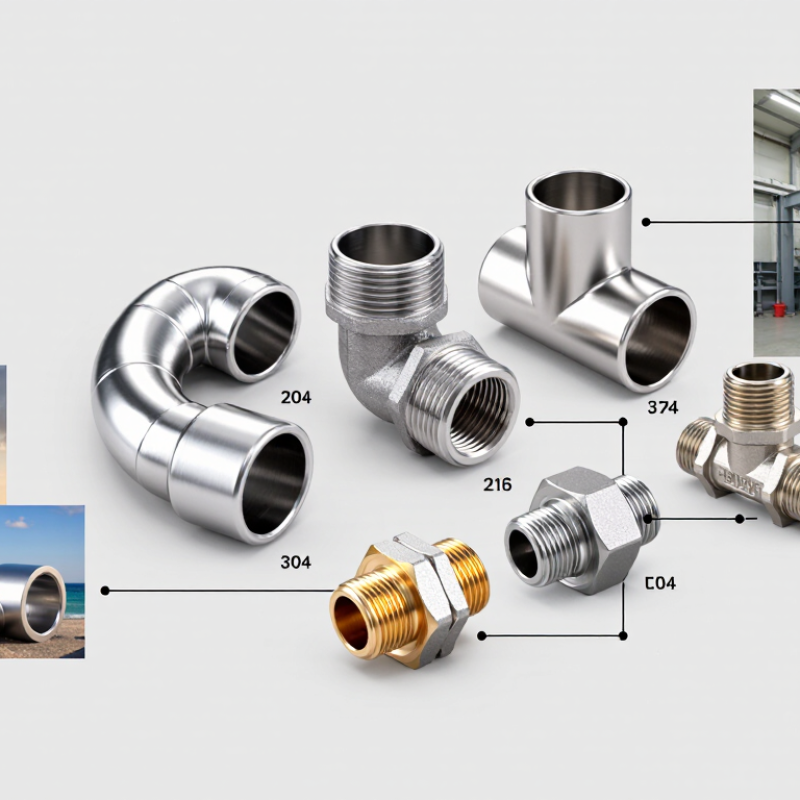
How Stainless Steel Fittings Are Classified by Type and Connection
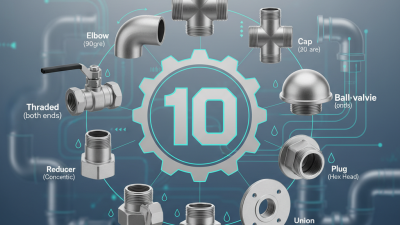
Stainless steel fittings are classified in two useful ways: by shape and by connection. Shape describes how a fitting changes or directs flow. Elbows turn a line, tees create a branch, and reducers join pipes of different diameters. Couplings connect two pipe ends, while caps close an open line. Simple, but easy to mix up.
Connection describes how the fitting attaches. Threaded ends screw together and can be convenient where welding is impractical. Socket-weld fittings accept pipe inside a recessed opening, while butt-weld fittings join pipe ends directly. Compression fittings use a nut and ferrule to grip tubing. Flanged fittings bolt together with a gasket between faces, which can make inspection or removal easier.
Check more than the fitting’s name. Confirm pipe size, wall thickness, stainless grade, pressure, temperature, and fluid compatibility. A fitting that looks right may still have the wrong end connection. Small details matter. In real specifications, terms can vary between suppliers, so drawings and dimensions deserve a close look. I would also verify the applicable product standard and joining procedure before ordering; that step is sometimes missed when a replacement seems obvious.
Which Stainless Steel Grades Suit Different Operating Conditions
What Are the Best Stainless Steel Fittings in 2026?
Which Stainless Steel Grades Suit Different Operating Conditions
Choosing a fitting grade starts with the fluid, temperature, pressure, and cleaning routine. For indoor water lines or mild, low-chloride service, 304 stainless steel is often a practical option. It resists everyday corrosion, but salt spray and chloride-rich water can cause pitting. Small details matter. Check whether stagnant liquid can collect inside joints.
For coastal equipment, food-processing washdown areas, or many chloride-bearing environments, 316 stainless steel is often a stronger candidate. Its molybdenum content improves resistance to pitting and crevice corrosion. It is not immune to corrosion, though; chemical concentration, temperature, and exposure time all matter. For welded fittings, 316L’s lower carbon content can reduce sensitization near welds. Good fabrication still matters.
Where strength and chloride stress-corrosion resistance are important, duplex 2205 may suit demanding piping systems. It can provide higher strength than common austenitic grades, but welding and heat control require care.
For sustained high-temperature service, engineers may consider heat-resistant grades such as 310, after checking the full temperature range and process conditions. Not every case fits. A grade name alone cannot confirm compatibility: review the actual fluid, pressure cycles, joint design, and manufacturer’s material data before specifying fittings.
How to Compare Fittings by Corrosion Resistance, Pressure, and Cost
In 2026, the best stainless steel fitting depends on its service conditions, not its price tag. For wet or mildly corrosive settings, 304 stainless steel may be adequate. Chloride exposure, such as near saltwater or cleaning solutions, can increase pitting risk; 316 often offers better resistance, but it is not immune. AMPP’s 2016 IMPACT study estimated corrosion costs at about US$2.5 trillion globally, based on 2013 data. That figure is a reminder: material choice can affect maintenance budgets, not just purchase costs.
Pressure ratings need equal care. Compare the fitting’s material, connection type, temperature, and pressure against the applicable pressure-temperature tables, such as those in ASME standards. A rating at room temperature may not apply at elevated temperatures. Check the full specification. For cost, compare total installed expense: fitting price, fabrication, inspection, replacement access, and expected downtime. The lowest quote can become the expensive option. Honestly, estimating service life is imperfect without site-specific water chemistry and operating data.
Tips: Ask for material certificates and verify the grade before installation. Match the fitting to the actual fluid and temperature. For chloride exposure, review the design with a qualified corrosion or piping specialist; 316 is not a universal fix. Keep records of leaks and inspections. They can reveal whether a cheaper choice is costing more over time.
What Are the Best Stainless Steel Fittings in 2026?
Compare common stainless steel fitting materials by their approximate resistance to chloride pitting.
How to read this: Higher PREN generally indicates better resistance to localized pitting corrosion in chloride environments. Approximate values shown are 19 for 304, 25 for 316, and 35 for duplex 2205, calculated from representative alloy chemistry using PREN = %Cr + 3.3 × %Mo + 16 × %N. Actual values vary by product and heat analysis.
Pressure and cost: Material grade alone does not determine a fitting’s pressure rating; size, wall thickness, fitting design, temperature, and applicable standard matter. Costs vary with market prices, manufacturing, and availability. Confirm pressure ratings and obtain current quotations for the specific fitting and service conditions.
Which Fitting Types Work Best for Common Industrial Applications
For general plant piping, stainless steel butt-weld fittings are often a strong choice when a permanent, smooth-bore connection matters. Elbows and reducers can help keep flow paths compact, while welded joints reduce the number of threaded leak points. They suit many process lines, but installation quality matters. Poor alignment can create stress that is hard to spot later.
Threaded fittings are useful for smaller utility lines and places that may need frequent adjustment. They are practical. Yet threads can loosen under vibration, and sealant choice must suit the service conditions. For instrument tubing, compression fittings allow clean connections without welding. Check tube hardness, dimensions, pressure, and temperature limits; a fitting that looks right may still be the wrong match.
Flanges work well around pumps, valves, and equipment that needs inspection or replacement. They make maintenance easier, though the added space and bolting require attention. Grade selection matters too: 304 stainless steel may suit many indoor services, while 316 can offer better resistance in some chloride-bearing environments. Neither is universal. Verify the fluid, cleaning chemicals, temperature, and applicable engineering specifications before selection. A neat drawing can miss a real installation constraint, so review access and support conditions on site.
How to Select and Verify Stainless Steel Fittings in 2026
Selecting stainless steel fittings starts with the service conditions, not the catalogue. Record the fluid, chloride exposure, temperature, pressure, and cleaning chemicals. Small details matter. A fitting suitable for a dry indoor line may pit in warm, salty water. Match the material specification and dimensions to the piping design; ASTM A403 covers wrought austenitic stainless steel pressure-piping fittings, while ASME B16.9 sets dimensions for factory-made butt-welding fittings. Check the applicable edition and project requirements.
The World Stainless Association reported 62.6 million tonnes of global stainless steel production in 2024, about 7% above 2023. That figure describes the market, not the quality of any fitting. Verify each shipment instead. Match the heat number on the fitting to its material test report, then check grade, specification, dimensions, and heat-treatment records. Use positive material identification when appropriate, but remember that handheld X-ray fluorescence generally cannot measure carbon or prove strength. It is one check, not a complete certificate.
Inspect the ends for dents, cracks, contamination, and uneven bevels. Measure wall thickness at several points; one reading can miss local thinning. Confirm pressure-temperature suitability and weld compatibility with the system designer. In practice, paperwork can look perfect while a marking is faint or mismatched. Pause and resolve that discrepancy before installation. That extra check is easy to skip. Don’t.