
Quality Products
At a Fair Price
Wholesale Provider
Of Valves & Fittings
- HOME
- Products
- Ball Valves
- Bull Plugs & Swages
- Butterfly Valves
- Check Valves
- Cushion / Flow Tees & Bleed Rings
- Enhanced Oil Recovery
- Floating Ball Valves
- Foot Valves
- Forged Steel Fittings
- Forged Steel Outlets
- Gaskets-Insulation Kits
- Gate Valves
- Gate, Globe & Check Valves
- Malleable Fittings
- Needle Valves
- Nipples
- Piston Valves
- Plug Valves
- Stainless Steel Flanges, Fittings & Nipples
- Strainers
- Studs
- Trunnion
- Unions
- Weld Fittings & Flanges
- Manufacturers
- Advance
- American Block
- Anvil
- Balon
- Bonney Forge
- Champion
- Clayton Mark
- Crane
- Daniel
- DMIC
- GMI
- Galli & Cassina
- Hackney-Ladish
- JMC
- Lone Star
- MATCO
- Marpac-McCanna
- National Flange
- National Gasket
- Nordstrom
- Nutron
- PPI
- SHARPE
- SMI
- TEXSTEAM
- TEX-THREAD
- Titan
- USA Fastner
- Vogt
- Weld Bend
- Westbrook
- Wheatley
- Williams
- WKM
- Wolar
- Locations
- Contact
- Blog
- Careers
- Get a Quote
- HOME
- Products
- Ball Valves
- Bull Plugs & Swages
- Butterfly Valves
- Check Valves
- Cushion / Flow Tees & Bleed Rings
- Enhanced Oil Recovery
- Floating Ball Valves
- Foot Valves
- Forged Steel Fittings
- Forged Steel Outlets
- Gaskets-Insulation Kits
- Gate Valves
- Gate, Globe & Check Valves
- Malleable Fittings
- Needle Valves
- Nipples
- Piston Valves
- Plug Valves
- Stainless Steel Flanges, Fittings & Nipples
- Strainers
- Studs
- Trunnion
- Unions
- Weld Fittings & Flanges
- Manufacturers
- Advance
- American Block
- Anvil
- Balon
- Bonney Forge
- Champion
- Clayton Mark
- Crane
- Daniel
- DMIC
- GMI
- Galli & Cassina
- Hackney-Ladish
- JMC
- Lone Star
- MATCO
- Marpac-McCanna
- National Flange
- National Gasket
- Nordstrom
- Nutron
- PPI
- SHARPE
- SMI
- TEXSTEAM
- TEX-THREAD
- Titan
- USA Fastner
- Vogt
- Weld Bend
- Westbrook
- Wheatley
- Williams
- WKM
- Wolar
- Locations
- Contact
- About
- Careers
- Get a Quote
How to Choose Butterfly Valves in 2026?
Choosing butterfly valves in 2026 requires more than comparing price, diameter, and delivery time. The correct choice depends on media, pressure, temperature, flow direction, operating frequency, and maintenance access. A DN100 valve for chilled water may need an EPDM seat and a stainless-steel disc. A similar valve handling abrasive slurry needs different materials and stronger wear resistance.
Philip L. Skousen, author of The Valve Handbook, offers a useful principle: “A valve is only one component in a complete piping system.” That reminder matters because many failures begin outside the valve body. Misaligned pipes can overload the shaft. Incorrect actuator sizing can leave the disc partly open. Poor gasket selection can create leakage after only a few operating cycles. Experienced engineers inspect the whole assembly before approving butterfly valves.
The 2026 selection process should also consider automation, sensor feedback, cybersecurity, emissions control, and lifecycle cost. Lug-style, wafer-style, and double-flanged designs each fit different installation conditions. A resilient-seated valve may suit clean water, while a high-performance or triple-offset design may better handle heat and demanding shutoff requirements. Check the pressure class carefully. Do not trust a familiar model automatically.
A neat spreadsheet can still mislead. Real site conditions are often less tidy. Small details, such as suspended solids, outdoor temperature swings, or limited wrench clearance, can change the decision. This guide examines those practical factors, compares current butterfly valves technologies, and explains where common selection assumptions fail. The goal is not to choose the most expensive valve. It is to choose a dependable valve that matches the system, the operator, and the consequences of failure.
What Butterfly Valves Are and How They Work
How to Choose Butterfly Valves in 2026?
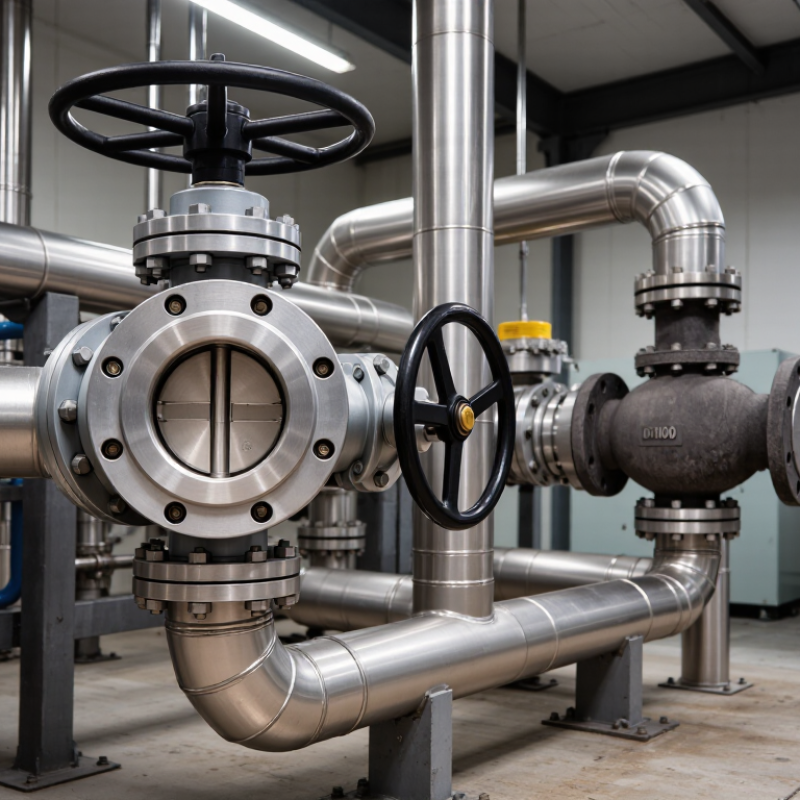
A butterfly valve controls flow with a circular disc mounted on a rotating shaft. The disc turns 90 degrees inside the pipe. When aligned with the flow, it creates an open passage. When rotated across the passage, it blocks movement. This design is compact, lightweight, and suitable for large pipelines. The valve usually includes a resilient seat, metal seat, or high-performance sealing arrangement. Seat material must match temperature, pressure, and fluid chemistry.
According to Grand View Research, the global industrial valves market was estimated at about USD 78 billion in 2023. Water infrastructure remains a major application. The United Nations reports that agriculture accounts for roughly 70% of global freshwater withdrawals. These figures explain why reliable flow control matters in treatment plants, irrigation systems, and process facilities.
A butterfly valve can reduce installation space and operating weight, but it may create pressure loss when partly open. That detail is easy to overlook.
For selection, check the pipe diameter, pressure class, temperature range, and medium first. Then compare wafer, lug, and flanged connections. A concentric valve often suits general water service. Double-offset designs can reduce seat friction in demanding duty. Actuator torque also needs verification, especially with sticky fluids or long idle periods.
A neat selection chart can still mislead. Real operating conditions are rarely perfect. Field inspection remains essential.
Which Butterfly Valve Types Suit Different Applications
How to Choose Butterfly Valves in 2026?
Which Butterfly Valve Types Suit Different Applications
Concentric butterfly valves suit clean water, HVAC systems, and general utility lines. Their centered disc gives simple operation and moderate cost. Choose resilient seats when temperatures remain within the seat material’s limits. Check the liner carefully. Poor compatibility can cause swelling, leakage, or early failure.
Double-offset valves fit higher-pressure water, steam, and process service. Their disc moves away from the seat during opening, reducing friction and wear. Triple-offset valves use a metal seat for demanding heat and pressure conditions. They are useful in thermal oil, hot gas, and critical isolation duties. However, metal seats may need tighter installation control.
Wafer valves save space between flanges and work well in compact piping. Lug-style valves allow more flexible removal and maintenance. For corrosive chemicals, consider lined bodies and discs after checking the full media composition. Abrasive slurry requires extra caution because repeated particle impact can damage sealing surfaces. It may need a specialized design instead.
Match the actuator to actual torque, not valve diameter alone. Include pressure, temperature, shutoff frequency, and possible deposits. Field technicians often find that undersized actuators fail during startup, not normal operation. That detail is easy to miss. I would also question every catalogue rating against current test data and site conditions. A technically correct valve can still perform poorly when the pipeline is misaligned.
How to Choose Butterfly Valves in 2026?
Which Butterfly Valve Types Suit Different Applications?
The chart shows representative continuous temperature limits commonly associated with major butterfly valve designs. Concentric resilient-seated valves are widely used for water, HVAC, and general utility service. Double-eccentric valves reduce seat wear and are suitable for larger pipelines, water treatment, and many industrial services. Triple-eccentric metal-seated valves are selected for high-temperature applications such as steam, thermal oil, and demanding process duties. Actual limits depend on the body, disc, shaft, seat material, pressure class, and service medium; always confirm the final selection against the applicable technical datasheet.
How to Select Valve Materials, Sizes, and Pressure Ratings
How to Choose Butterfly Valves in 2026?
Selecting a butterfly valve starts with the fluid, not the pipe. Water, seawater, chemicals, and abrasive slurries demand different materials. Ductile iron may suit clean water, while stainless steel offers stronger corrosion resistance. The disc, stem, seat, and body must work as one system. A compatible body can still fail if the seat swells or cracks. Temperature matters too. Always verify the media concentration and operating range against current technical data.
Valve size should match the pipeline and required flow, not simply the pipe diameter. Check the flow coefficient, pressure loss, and expected velocity. An oversized valve may operate near its closed position, causing unstable control. An undersized valve can create excessive noise and wear. Pressure rating requires equal care. Compare maximum operating pressure, temperature derating, shutoff pressure, and possible water hammer. Do not rely only on the line’s nominal pressure class. I still recheck these figures because field conditions are often less tidy than design drawings.
Tips: Record normal and peak conditions separately. Confirm flange standards and actuator torque. Ask for test certificates and material documentation. Leave room for inspection. A cheaper seat is not always cheaper after replacement. When data is missing, pause. Guessing is the weak part of valve selection.
How to Choose Actuators, Controls, and Connection Methods
How to Choose Butterfly Valves in 2026?
How to Choose Actuators, Controls, and Connection Methods
A butterfly valve performs well only when its actuator, control signal, and connection match the pipeline. Start with operating data, not a catalog image. Record the medium, temperature, pressure, torque, cycle frequency, and available power. For clean water, electric actuators often provide precise positioning and straightforward feedback. Pneumatic units suit fast cycling, but they need dry, regulated air and safe exhaust planning. Hydraulic actuation delivers high torque, although leaks and maintenance require serious attention. Not every installation needs automation.
Select controls that operators can understand during a fault. A basic open-close signal may be enough for isolation. Modulating service requires position feedback, compatible communication, and a control loop tuned to the process. Check fail-open or fail-closed behavior against the actual hazard, not habit. I have seen commissioning delays caused by an overlooked signal voltage or missing handwheel clearance. Small details matter. Verify enclosure protection, ambient temperature, cable entries, and manual override access before ordering.
Connection method affects leakage risk, installation time, and future replacement. Wafer connections save space, while lugged designs support more flexible removal practices. Flanged connections help with alignment and maintenance but require correct bolt patterns and gasket selection. For lined pipes, inspect flange faces carefully. Threaded connections may appear convenient, yet they suit fewer larger or highly stressed lines. Confirm material compatibility and torque requirements using verified technical documents. Do not assume the first configuration is perfect. A field review often reveals access, vibration, or condensation problems missed on drawings.
How to Assess Safety, Performance, Maintenance, and Total Cost in 2026
How to Choose Butterfly Valves in 2026?
In 2026, valve selection should begin with risk, not purchase price. Check pressure class, temperature, media, flow direction, and emergency position. ISO 5208 leakage testing helps compare shutoff performance under defined conditions. For hazardous or high-temperature service, verify fire-testing and material requirements against the applicable standard. A valve that closes quickly may still create damaging water hammer. That detail is often missed.
Performance affects energy and control quality. The U.S. Department of Energy reports that pumping systems can represent about 25% of industrial electricity use. Therefore, disc design, opening angle, actuator sizing, and pressure loss deserve calculation. Request tested torque curves, not only catalog flow coefficients. Oversized actuators waste money and may reduce control accuracy. Small errors become expensive at constant operating hours.
Maintenance evidence should be practical. Ask about shaft sealing, seat replacement, inspection access, cycle ratings, and spare-part life. ISO 55000 frames asset management around value, risk, and lifecycle decisions, not isolated purchases. Build a five-year cost model covering energy, downtime, labor, inspection, and replacement. The cheapest valve can become costly after one unplanned shutdown. My cautious view is simple: no spreadsheet can replace a site walkdown. Dust, vibration, poor alignment, and limited clearance often change the correct choice.
Related Posts
-
How to Choose Butterfly Valves in 2026?
-
Best Valves Fittings for Optimal Performance in Your Projects?
-
Best Check Valve Manufacturers in China for Global Buyers
-
Why Are Plug Valves Essential for Industrial Applications?
-
How to Choose the Right Valves Fittings for Your Plumbing Needs
-
How to Choose the Best Stainless Steel Weld Fittings?